The legacy of Hungarian composer György Kurtág stands as one of the most profound pillars of 20th and 21st-century contemporary classical music. Renowned for his extreme economy of language, his miniature compositions, and his ability to distill human emotion into a few precise notes, Kurtág’s influence remains a subject of intense academic study and artistic reverence. As the musical world continues to grapple with the shifting landscapes of modern composition, the "Hommage à György Kurtág" serves not merely as a tribute to a singular individual, but as a critical examination of the "abyss of glories"—a term often associated with the depth and complexity of his life’s work.
The Architect of Silence: A Chronological Overview
Born in 1926 in Lugoj, Romania, Kurtág’s trajectory was defined by the turbulent political and cultural climate of Eastern Europe. His early years were marked by the rigid constraints of post-war communist Hungary, a period that forced him to develop a language of interiority.
- 1946–1955: Formal studies at the Franz Liszt Academy of Music in Budapest, where he encountered the works of Bartók and Webern, which would become the twin poles of his aesthetic development.
- 1957–1958: A pivotal year in Paris, where he encountered the works of Samuel Beckett and the serialism of the Darmstadt school, leading to a profound personal crisis and a subsequent "reset" of his compositional style.
- 1959: The composition of his String Quartet, Op. 1, which marked his definitive arrival as a major voice in European music.
- 1980s–1990s: The international recognition of his major works, including Messages of the Late R.V. Troussova and Kafka-Fragmente, cementing his status as a master of the aphoristic style.
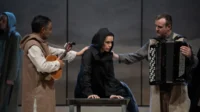
- 2018: The premiere of his first opera, Fin de partie (Endgame), based on Beckett’s play, at La Scala in Milan—an event that signaled his enduring vitality even in his nineties.
The Aesthetics of Economy
Kurtág’s music is famously characterized by its brevity. In an era often defined by grand symphonic statements, he chose to operate in the realm of the microscopic. Musicologists have frequently noted that his work functions like a magnifying glass, focusing on the decay of a sound, the tension between two intervals, or the silence that precedes a gesture.
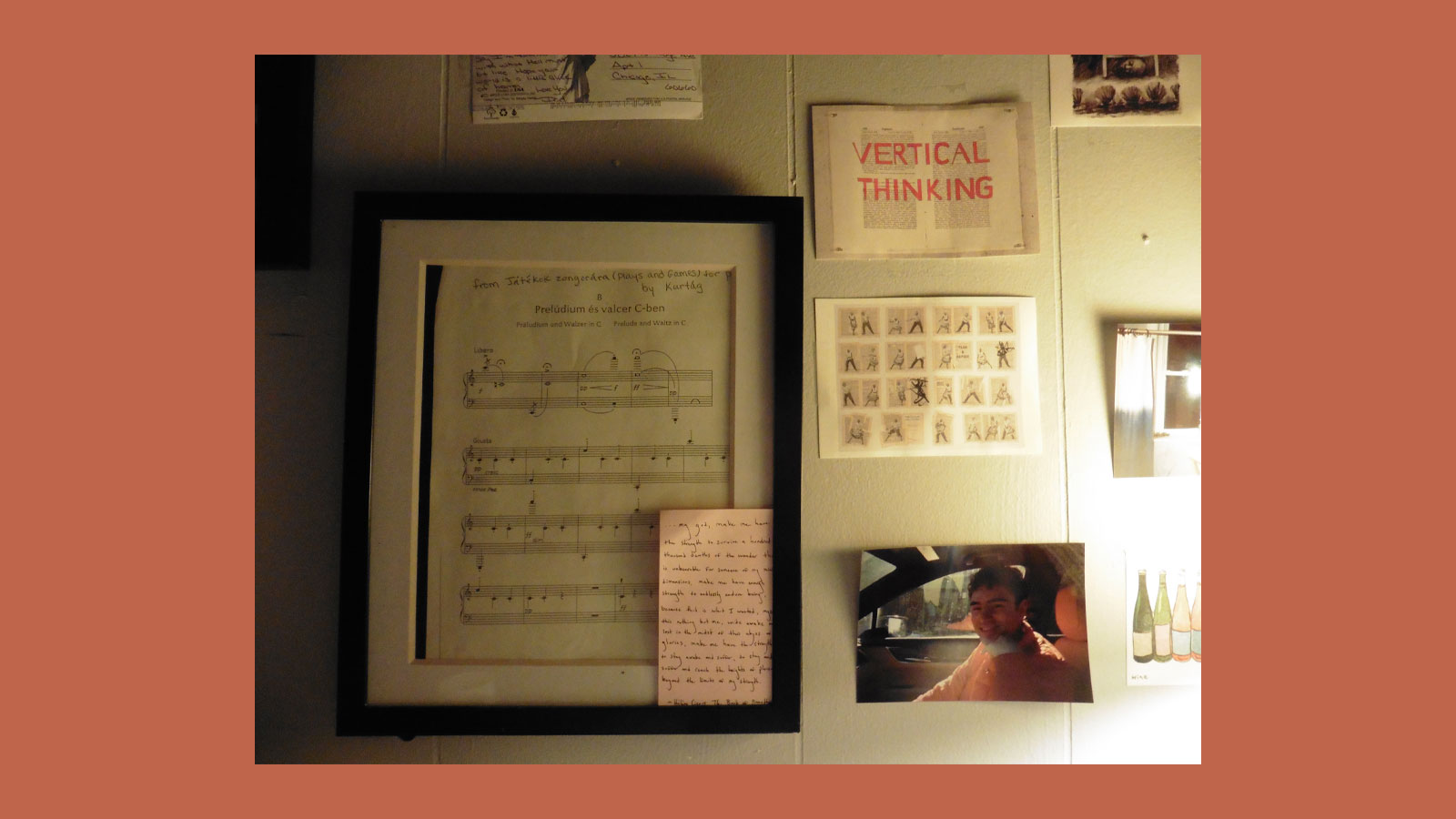
Data analysis of his scores reveals a distinct shift in density. While his early works leaned into traditional forms, his later output—such as the Játékok (Games) series for piano—disassembles the very architecture of the instrument. These works are not merely pieces for performance but pedagogical tools that encourage pianists to touch the keys with a specific, tactile intimacy. This commitment to the physical act of music-making has made him a mentor to generations of performers, including those within the avant-garde tradition who view his scores as maps for exploration rather than rigid instructions.
The Abyss of Glories: Philosophical Implications
The concept of the "abyss of glories" is a fitting metaphor for the paradox of Kurtág’s work. His music is often perceived as dark, mourning, and intensely introspective, yet it possesses a radiance that is rare in contemporary composition. It is an "abyss" because it confronts the void of existence—the silence, the loss, and the ephemeral nature of life—yet it finds "glory" in the precise, crystalline realization of those states.
For practitioners of contemporary opera and chamber music, Kurtág represents a standard of integrity. His refusal to conform to the commercial demands of the music industry or the trend-chasing of the avant-garde has established him as a moral compass for younger generations. In his work, one finds the "slippery histories" of music—the way the past is constantly being reinterpreted through the lens of current trauma and joy.
Critical Reception and Scholarly Impact
The scholarly consensus on Kurtág is near-universal. His compositions are standard repertoire for major ensembles like the Ensemble Intercontemporain and the Arditti Quartet. His influence extends beyond composition into the realm of music theory, where his "Kurtágian" approach to pitch and rhythm is taught as a masterclass in structural economy.
Responses from contemporary composers and conductors highlight his role as a "composer’s composer." Following his milestone birthdays, tributes have proliferated globally, not as mere celebrations, but as deep-dives into the technical challenges he presents to performers. Statements from leading institutions, such as the Berlin Philharmonic and the Paris Conservatory, emphasize that Kurtág’s music does not "age" because it is not tethered to the stylistic fashions of any specific decade. Instead, it is tethered to the fundamental acoustic properties of the human experience.
The Role of Mourning in Modern Music
A recurring theme in the discourse surrounding Kurtág is the concept of mourning. His works are frequently dedicated to friends, fellow composers, or historical figures, acting as sonic monuments. This is not mourning in the sense of static grief, but a dynamic, active process of remembering. By dedicating his works to others, he creates a community of the living and the dead, a dialogue that transcends the limitations of time.
This approach has informed the work of contemporary writers and critics who analyze his music. As noted by observers of his recent contributions, Kurtág’s music forces the listener to confront the "sensual body"—the physical reality of a string being bowed or a key being pressed—as a proxy for the human condition. It is a music of vulnerability.
Future Perspectives: The Kurtág Legacy
As the musical landscape continues to evolve, the challenge for future generations will be to preserve the integrity of Kurtág’s scores while navigating the digital age. The increasing accessibility of his music through digital archives and high-resolution recordings allows a broader audience to engage with his work. However, the inherent fragility of his music means it requires a level of performance practice that is rare and precious.

The "Hommage à György Kurtág" serves as a vital reminder that the value of art is not determined by its scale, but by its depth. Whether through his massive, long-gestated opera or his smallest, three-second piano piece, Kurtág has proven that the most profound human truths are often those that require the least amount of space to express. As long as there are performers willing to sit in the silence and composers willing to seek the truth in the smallest interval, the abyss of his work will continue to offer its particular, uncompromising glory.
In conclusion, the study and performance of Kurtág’s music remain a central duty for those committed to the preservation of the classical canon’s intellectual and emotional rigor. He remains a bridge between the radical experimentation of the mid-20th century and the nuanced, pluralistic landscape of the current day, ensuring that his influence will be felt for decades to come.