The Singular Vision of Steve Lacy: A Retrospective on the 1960 Candid Sessions and the Evolution of the Soprano Saxophone

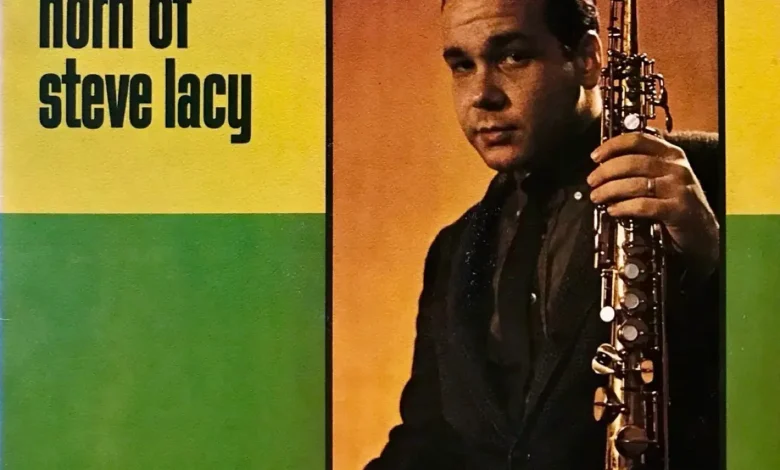
Forty years after Mark Gilbert first chronicled the idiosyncratic brilliance of Steve Lacy in the pages of Jazz Journal, the 1960 Candid Records sessions remain a cornerstone of avant-garde jazz history. These recordings, which captured Lacy alongside baritone saxophonist Charles Davis, bassist John Ore, and drummer Roy Haynes, serve as a testament to an artist who bypassed the traditional lineage of the bebop era to forge a path entirely his own. To understand the significance of this 1960 output—comprising tracks such as "Louise," "Introspection," "Donna Lee," "Air," and "Criss Cross"—one must examine the cultural landscape of the 1950s and the radical departure Lacy represented from his contemporaries.
The Maverick’s Trajectory: From Dixieland to the Avant-Garde
Steve Lacy’s career trajectory was anything but linear. Born in New York in 1934, Lacy entered the professional jazz circuit at a time when the genre was undergoing a violent period of reinvention. His early associations included traditional Dixieland stalwarts like Max Kaminsky, yet he found himself temperamentally and musically mismatched with the revivalist movement. Rather than migrating toward the then-dominant bebop vocabulary, which relied on rapid-fire harmonic navigation and virtuosic improvisation over standard chord progressions, Lacy gravitated toward the structural challenges posed by Thelonious Monk and the experimentalism of Cecil Taylor.
This detour through the "outer reaches" of the jazz world allowed Lacy to develop a unique musical lexicon. While his peers were perfecting the "licks" and phrasing associated with Charlie Parker or Dizzy Gillespie, Lacy was occupied with the inherent possibilities of the soprano saxophone. In the 1950s, the soprano was considered an "eldritch" or difficult instrument, largely abandoned by jazz modernists after Sidney Bechet. By choosing the soprano as his primary vehicle, Lacy effectively claimed a vacuum, operating without the shadow of immediate instrumental peers. This isolation allowed him to cultivate a "strange jazz patois"—a personal language that, while initially perceived as alien, provided the foundation for the next several decades of free jazz and improvised music.
The 1960 Candid Sessions: A Technical Breakdown
The 1960 recording session for Candid (Candid 9007) serves as the definitive capture of Lacy’s early maturation. The personnel selection is telling: the inclusion of Charles Davis on baritone saxophone creates a stark contrast between the two voices. Davis, representing a more conventional negotiation of jazz harmony, acts as an anchor against which Lacy’s abstract lines can be measured.
In the interpretation of Charlie Parker’s "Donna Lee," the difference in approach is palpable. While the rhythm section maintains the traditional pulse, Lacy skirts the harmonic framework of the piece. He is clearly "in touch" with the changes—he acknowledges the underlying structure—but he views them from a distant, parallel perspective. This is not a failure of technique; it is a deliberate aesthetic choice. He treats the soprano saxophone not as a melodic instrument meant to decorate a chord, but as a textural device capable of producing a "piping" quality that is both unsentimental and, by the standards of the day, intentionally unpretty.
The track listing itself highlights this dichotomy:
- Louise / Introspection / Donna Lee (18:17): A sequence that challenges the listener to reconcile standard repertoire with Lacy’s unconventional phrasing.
- Played Twice / Air / Criss Cross (17:48): These tracks further emphasize the focus on thematic construction over bebop-derived pyrotechnics.
Chronological Evolution and Contextual Impact
Lacy’s development did not occur in a vacuum. To understand the gravity of his 1960 performance, one must look at the timeline of his early professional life:
- 1952–1955: Professional debut in traditional jazz settings; growing disillusionment with the limitations of early jazz forms.
- 1955–1957: Association with Cecil Taylor; exposure to the rigorous demands of free-form, atonal improvisation.
- 1958–1960: The Monk connection; Lacy becomes one of the few musicians to deeply internalize the idiosyncratic logic of Thelonious Monk’s compositions, which would inform his playing for the rest of his life.
- 1960: The Candid session, marking the crystallization of his "piping" style and his transition into a bandleader capable of defining his own harmonic universe.
Critics of the time, including Mark Gilbert, noted that the themes and harmonies often mattered less than the consistency of Lacy’s eccentric approach. Viewed through the lens of mid-century convention, his playing was often categorized as harsh or lacking in the "swing" sentimentality expected of jazz at the time. However, history has validated Lacy’s resolve. By choosing to sound like "nothing else in jazz," he carved out a niche that would influence subsequent generations of soprano players, including Evan Parker and Lol Coxhill, who took the instrument into even more experimental territories.
Analysis of Implications: The Legacy of Non-Conformity
The broader implication of the 1960 sessions lies in the legitimization of the "maverick" status. In the post-war jazz economy, musicians were often incentivized to conform to the bebop or cool jazz models to secure recording contracts and club dates. Lacy’s refusal to do so—bypassing the "children of bebop"—represented a significant shift in the autonomy of the jazz musician.
By analyzing the reception of the record, one observes a clear divide. Traditionalists found his tone thin and his phrasing disjointed. Modernists, however, began to see the potential for a "new" way of improvising that prioritized timbre, duration, and silence over the relentless accumulation of notes. This shift in priority would eventually become a hallmark of the European free-jazz scene in the 1970s.
Furthermore, Lacy’s insistence on the soprano saxophone during a period of its near-total obscurity served as a case study in instrumental reinvention. He demonstrated that the instrument’s inherent "piping" qualities—once viewed as a liability—could be harnessed to create a highly personalized sonic signature. This was not merely an aesthetic preference; it was an act of musical reclamation.
Institutional and Contemporary Perspectives
Reflecting on the Candid output decades later, contemporary musicologists often point to the "tenuousness" mentioned in the original 1986 Jazz Journal critique as a primary strength. In retrospect, what appeared to be a lack of harmonic engagement was actually a sophisticated exercise in melodic deconstruction.
Lacy himself was rarely prone to explaining his "deviant" methods in simplistic terms. In various interviews throughout his later life, he emphasized the importance of "the work"—a constant, daily practice of refinement that focused on tone production and the architecture of the solo. The Candid recordings were merely the first public evidence of this lifelong discipline.
When observing the trajectory of jazz since 1960, it becomes clear that Lacy’s influence is pervasive. While he may not have achieved the widespread commercial visibility of a Miles Davis or a John Coltrane, his role as a stylistic architect is undeniable. He proved that an artist could survive, and eventually thrive, by operating on the periphery. The 1960 Candid session remains the definitive map of that periphery, providing a blueprint for any musician interested in the intersection of tradition and total artistic freedom.
In conclusion, the 1960 Candid recordings are more than just a historical artifact; they are a manifesto for the individualist. By refusing to conform to the established hierarchies of the era, Steve Lacy did not just play the soprano saxophone—he redefined its purpose. As Mark Gilbert noted four decades ago, Lacy’s playing was "worth his while to sound like nothing else in jazz," a statement that remains the most accurate assessment of his career. The legacy of these sessions persists, reminding us that in the pursuit of artistic truth, the path of most resistance is often the one that yields the most enduring results.
Related posts: