Ana Lua Caiano Redefines Modern Portuguese Folk on Her Sophomore Album Devagar Que A Vida É Curta

The contemporary European musical landscape is undergoing a quiet, radical transformation, driven largely by artists who refuse to choose between the preservation of ancient heritage
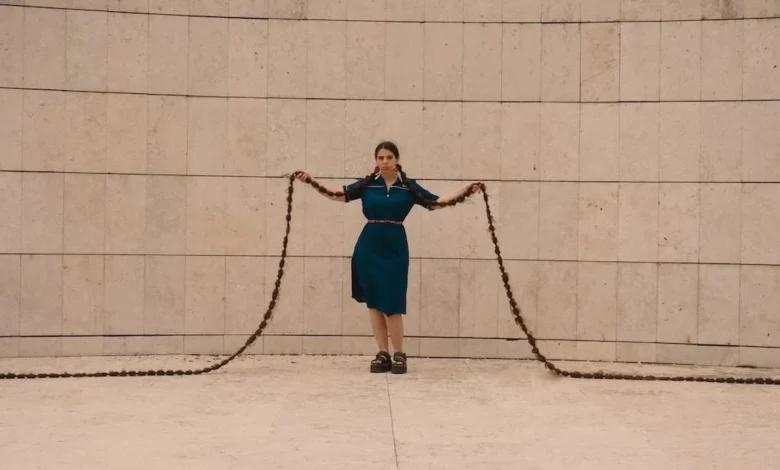
and the aggressive pulse of electronic experimentation. At the forefront of this movement is Lisbon-born composer, multi-instrumentalist, and vocalist Ana Lua Caiano. Following the widespread critical acclaim of her 2024 debut full-length release, Vou Ficar Neste Quadrado, Caiano returns with her sophomore album, Devagar Que A Vida É Curta, slated for official release on November 6, 2026, via the Glitterbeat imprint. Translated from Portuguese as "slowly, as life is short," the album represents a masterclass in controlled musical implosion—a meticulous assembly of traditional Lusitanian folk forms, hyper-modern glitch production, and deeply personal ruminations on mortality, grief, and modern alienation.
The Evolution of a Singular Soundworld
To understand the weight of Caiano’s second full-length effort, one must examine the trajectory that led her to this point. Emerging steadily from the vibrant underground scene of Lisbon, Caiano quickly established a reputation for defying genre constraints. Her debut album laid the foundational blueprints for her unique style: a stark, minimalist setup featuring crisp, acoustic percussion, loops created entirely from the human voice, and traditional Portuguese instruments—most notably the bombo and the adufe—merged with modern synthesizers and digital audio workstations.
With Devagar Que A Vida É Curta, this sonic architecture is no longer merely experimental; it is fully perfected. The album opens with Procissão Dos Dias, a striking sonic journey lasting barely thirty seconds. Composed of thunderous, echoing drums and heavily processed, wordless vocal layers, the track mimics a futuristic invocation. Listeners are immediately enveloped in an atmosphere that feels simultaneously ancient and hyper-contemporary, recalling the private, arcane rituals of rural European history translated through a futuristic digital lens.
Critics have frequently drawn comparisons between Caiano and Icelandic iconoclast Björk, yet such comparisons only scratch the surface. While both artists share an affinity for avant-garde vocal techniques and sudden structural shifts, Caiano’s sonic palette is earthier, deeply hot-blooded, and inextricably linked to the specific cultural memory and traditional musical forms of her native Portugal.
Structural Audacity and Lyrical Depth
Throughout the ten-minute and sixteen-second landscape of the record—divided thoughtfully across short, punchy tracks that actively resist modern streaming-era bloat—Caiano utilizes sudden twists and jarring transitions to keep the listener thoroughly engaged. This structural unpredictability is not deployed for mere shock value; rather, it mirrors the fragmented nature of modern communication and the jarring intrusions of grief into daily life.
On Duas Mil Horas, musical phrases tumble and jolt as if physically cut up and physically rearranged on an analog mixing desk. Lyrically, the track delves into the heavy themes of death, mourning, and the tangible, physical dimension of missing another person’s presence. Similarly, Um Mais Um features a traditional, comforting melody that is repeatedly ruptured by intense, electronically manipulated screeches. The song abruptly pivots into a nostalgic piano motif before dissolving into an irresistible, haunting vocal refrain.
The album’s lead single, Uma Vida A Menos, perfectly encapsulates this methodology. Beginning with a brief, deceptively straightforward piano flourish, the track suddenly trips over itself, rights its trajectory, and plunges down an entirely unforeseen path where traditional bagpipe melodies seamlessly intertwine with dancefloor-primed sub-basslines. Midway through, the introductory piano pattern returns, effectively resetting the listener’s neurological expectations.
Tracks such as Se A Cabeça Anda Manca further push these boundaries, wedding a churning, sub-heavy bassline to glitchy hyperpop structures. Near the track’s conclusion, a dramatic, unresolved piano progression rips a gaping hole straight through the song’s melodic architecture—a compositional technique that is mirrored in the subsequent, ultra-short title track, Devagar Que A Vida É Curta.
Collaboration and Global Ambitions
While Caiano is very much an auteur—writing, performing, and producing the vast majority of her material—she is not entirely isolated from the broader European musical ecosystem. A prime example of her collaborative spirit is found on the track A Bala Nunca Fez Amigos / Du Sang Sur Les Mains, featuring the acclaimed indie-folk duo Sages Comme des Sauvages. Incorporating French lyrics alongside her native Portuguese, the track functions as a kinetic, hyper-modern homage to the experimental French chanson work of Brigitte Fontaine.
Furthermore, Caiano’s production choices consistently elevate her lyricism. Her vocals are positioned precisely parallel to crisp, crunchy percussion. Her delivery remains fiercely impassioned yet rigorously controlled. Songs like Come, Come, Cresce demonstrate an innate understanding of negative space within musical arrangement, proving that Caiano possesses the rare restraint needed to know precisely how much studio processing to apply without obscuring the organic emotional core of the performance.
On Meu Amor, Fui, the boundary between human physiology and digital manipulation becomes entirely permeable. Lurching, asymmetrical rhythms and headlong vocal deliveries eventually give way to organic handclaps and a traditional folk melody that progressively gathers momentum, transforming into an unstoppable, cascading wave of sound.
Addressing Modern Isolation
Beneath the intricate sound design and avant-garde pop structures lie profound meditations on the human condition. A significant portion of Caiano’s songwriting is dedicated to the examination of loss, geographical displacement, and the barriers that contemporary society erects against genuine human connection.
Ai, Digo, Digo squarely addresses the latter theme, exploring the futility of repetitive cycles and modern emotional disconnection through biting, poignant lyrics. Yet, rather than descending into pure nihilism, Caiano frames her music as a deliberate act of protest. Her art acts as a conduit, bridging the gaps where conventional language and standard modes of interpersonal communication fail.
This thematic arc reaches its explosive zenith in Vem Dançar, a track that consolidates grief, bereavement, existential futility, and sensual release into a single, breathtaking rush. Driven by a high-wire piano line and elaborately multi-tracked vocal harmonies, the song serves as the album in microcosm: a heady, uncompromising synthesis of the confrontational, the cathartic, and the audacious.
Critical Implications and Upcoming Tour Dates
The release of Devagar Que A Vida É Curta on November 6, 2026, through Glitterbeat marks a pivotal moment in the international recognition of contemporary Portuguese music. By proving that experimental electronic production and traditional folk idioms are not mutually exclusive, Caiano has carved out a distinct, highly influential niche for herself within the global independent music scene.
Industry analysts and cultural critics note that Caiano’s rise coincides with a broader resurgence of interest in regional European folk traditions recontextualized through electronic lenses. Her ability to translate complex socio-emotional themes—such as modern isolation, economic precarity, and grief—into engaging, danceable, and intellectually stimulating compositions ensures that her work resonates far beyond the borders of the Iberian Peninsula.
In support of the new album, Ana Lua Caiano has announced an extensive international tour schedule, culminating in a highly anticipated live performance in the United Kingdom. Fans and industry professionals will have the opportunity to experience her singular, genre-defying performance style live when she takes the stage at the Jazz Cafe in London on Wednesday, February 17, 2027.
As Devagar Que A Vida É Curta officially enters the public sphere, it solidifies Ana Lua Caiano’s status not merely as a promising regional talent, but as one of the most vital, daring, and structurally inventive sonic architects working in European music today.
Related posts: