The contemporary instrumental music scene has witnessed a compelling new addition with the recent release of Northern Earth, the latest full-length offering from Bradford-based electric guitarist and composer Dean McPhee. Issued last month via the independent label Bass Ritual and distributed internationally through Cargo Records, the album has already drawn critical praise for its innovative approach to solo electric guitar composition. Among the standout tracks on the record is Appleby Fair, a complex and evocative piece that bridges contemporary minimalist guitar techniques with deep-rooted folk traditions. To celebrate the album’s rollout, McPhee has released an intimate self-produced live performance video that offers listeners and aspiring musicians alike a rare, transparent look into his creative process, looping techniques, and specific gear configurations.
Main Facts and the Genesis of Appleby Fair
Appleby Fair serves as one of the emotional and sonic centerpieces of Northern Earth. The composition departs from conventional guitar-driven ambient music by employing intricate layering and looping to simulate the texture and dynamic range of a traditional folk ensemble. Critics have been quick to note the track’s distinctive sonic architecture. Reviewing the album for KLOF Mag, writer Glenn Kimpton observed that the overlaid guitars on Appleby Fair effectively mimic the parts of traditional instruments, weaving in echoes of Balkan and Far Eastern stylings alongside distinct hints of bagpipes, all anchored by a rhythmic, bodhrán-like kick drum resonance.
McPhee’s creation of the track is deeply rooted in personal observation and cultural immersion. The piece draws direct inspiration from the historic Appleby Horse Fair, widely recognized as Europe’s largest gathering of Romanies, Gypsies, and Travellers. Held annually in the town of Appleby-in-Westmorland in Cumbria, England, the fair has a history spanning centuries, officially chartering back to the reign of James II in 1685, though its unwritten traditions stretch back far further into the history of nomadic communities in Britain.
Chronology and Background Context of the Appleby Horse Fair
To fully appreciate the cultural resonance of McPhee’s musical tribute, one must understand the unique historical and geographical framework of the event that inspired it. The Appleby Horse Fair takes place every June, drawing thousands of Travellers and Romanies from across the British Isles and continental Europe, alongside tens of thousands of other visitors and tourists.
The chronology of the fair follows a distinct rhythm that has remained largely unchanged for generations. The event traditionally begins on the second Thursday of June and lasts for roughly a week. In the days leading up to the official opening, caravans and bowtop wagons—often pulled by traditional heavy horses—converge on the fairground, locally known as "Fair Hill."
A central feature of the fair is the trading and selling of horses, particularly traditional Cob horses prized for their strength, stamina, and striking appearance. A key landmark during the proceedings is the "Flashing Lane," a sloping stretch of grass where dealers and owners trot, gallop, and display horses at high speeds to demonstrate their agility, temperament, and health to prospective buyers. Another vital focal point is the nearby River Eden, where horses are traditionally driven into the water to be washed and cooled down—a vibrant spectacle that combines utilitarian animal care with a powerful visual tradition.
For McPhee, these elements transcended mere tourism; they provided a profound aesthetic stimulus. Having visited the fair twice, the Bradford musician found himself struck not only by the scale of the gathering and its centuries-old commerce, but also by the unexpected parallels in his immediate environment. Noting that his home city of Bradford possesses a surprisingly robust and visible horse culture, McPhee found a natural bridge between his urban northern surroundings and the rural traditions of Cumbria.
Artist Statements and Behind-the-Scenes Insights
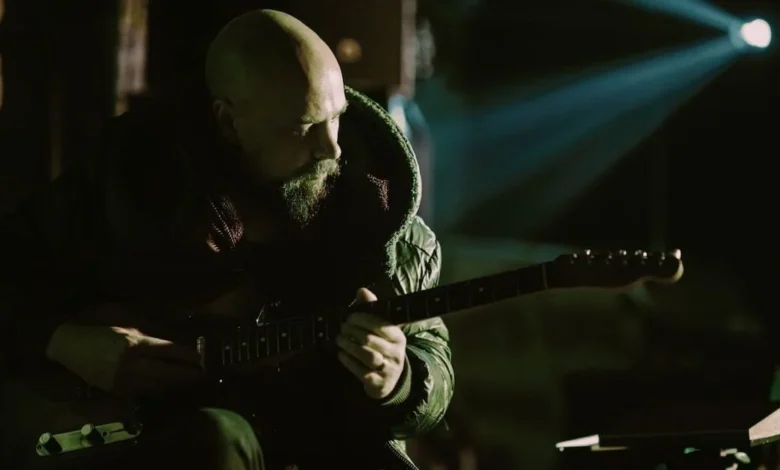
The newly released live performance video provides an invaluable window into how McPhee translates these sprawling, outdoor spectacles into meticulous studio and live arrangements. Filmed and edited entirely by the artist at his home in Bradford, the video strips away studio artifice to reveal the scaffolding of his sound.
Detailing the creation of the piece, McPhee explained: "It gives an insight into the track and how it’s performed, with a look at the looping process and some of the gear I used to record the album. The track is inspired by the annual Appleby Horse Fair, one of Europe’s largest gatherings of Travellers, Gypsies and Roma. There’s a real horse culture in Bradford, and I’ve been to Appleby twice. Both visits were really inspiring—I got to see the horse trading markets, the famous ‘Flashing Lane’, where horses are trotted at speed, and the River Eden, where my wife took her horse for a swim. It was great to have a beer, explore the massive car boot sale and wander around, soaking up the sights and sounds…"
Through the video, viewers can observe McPhee utilizing real-time looping pedals and custom amplification to build dense, harmonically rich soundscapes. Rather than relying on post-production trickery, the performance demonstrates the physical dexterity required to sustain multi-layered acoustic-electric textures, utilizing sustain and delay effects to create modal drones that evoke transnational folk idioms without appropriating them directly.
The Sonic Landscape of Northern Earth
Northern Earth as a whole represents a continuation of McPhee’s distinctive trajectory within the British underground music landscape. Over the past decade and a half, the guitarist has carved out a singular niche, utilizing the electric guitar not as an instrument of rock-and-roll aggression, but as a vehicle for modal exploration, meditation, and folk-infused minimalism. Drawing comparisons to pioneering guitarists such as Robbie Basho, Richard Thompson, and Earth’s Dylan Carlson, McPhee’s work frequently explores the intersections of landscape, history, and spiritual resonance.
The album title itself points toward an overarching thematic preoccupation with the geography, folklore, and weather-beaten topography of Northern England. Yet, as demonstrated by Appleby Fair, McPhee’s lens is broad enough to incorporate influences that transcend regional boundaries. The modal shifts and rhythmic cadences found on Northern Earth reflect an inquisitive ear that listens just as closely to traditional modal music from Eastern Europe and the Middle East as it does to British folk revivalism.
Industry Distribution and Availability
The release of Northern Earth on Bass Ritual—a label known for championing boundary-pushing independent music—alongside distribution through Cargo Records, ensures that McPhee’s work continues to reach a dedicated international audience of cognoscenti and vinyl collectors. The album is currently available across major physical and digital platforms, with high-resolution streaming, compact disc, and vinyl editions accessible via the artist’s official Bandcamp page.
Broader Impact and Critical Implications
The favorable critical reception of Northern Earth and the warm public response to the Appleby Fair performance video underscore a growing appetite for contemplative, unhurried instrumental music in an era dominated by hyper-compressed digital singles and ephemeral media consumption. By anchoring his complex compositions in tangible, lived experiences—such as the vibrant, dusty, and ancestral atmosphere of Fair Hill—McPhee demonstrates how contemporary avant-garde and folk traditions can successfully converse with one another.
As live performance videos continue to serve as vital bridges between artists and audiences in the modern music ecosystem, McPhee’s self-shot documentation of Appleby Fair offers a masterclass in transparency. It reminds listeners that behind the reverberant, otherworldly soundscapes of Northern Earth lies rigorous musicianship, deep cultural empathy, and an enduring fascination with the sights, sounds, and rhythms of the British landscape.