Navigating the Modern Music Landscape: The Definitive Digital Distribution Review and Comparison for Independent Artists

The modern independent music industry has evolved at a dizzying pace over the past two decades. Gone are the days when securing physical placement on record store shelves was the primary hurdle for aspiring musicians. Today, the democratization of music creation has shifted the bottleneck entirely to digital infrastructure, making the choice of a digital music distributor one of the most critical decisions an independent artist will make.
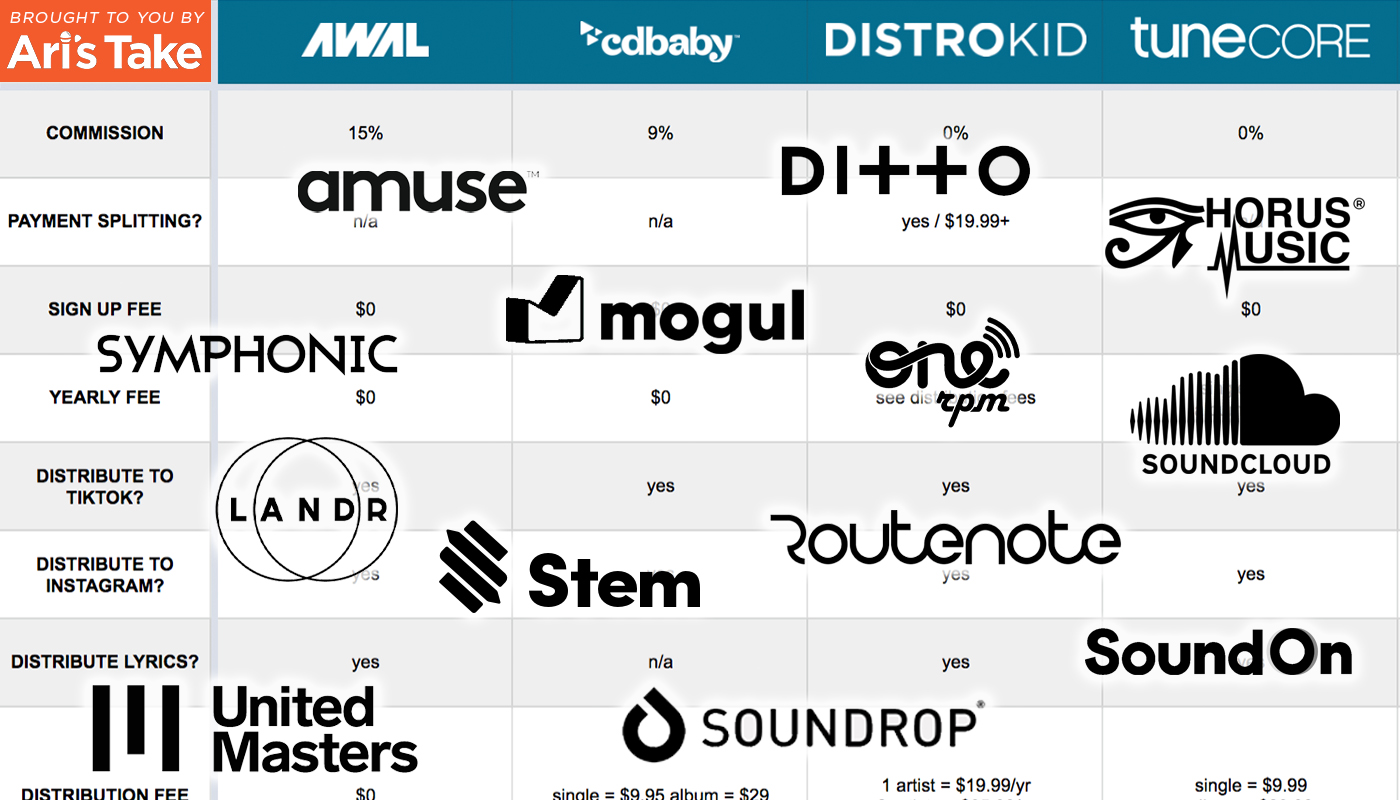
Independent musicians are no longer just creators; they are small business owners navigating a complex web of Digital Service Providers (DSPs), global royalty collections, compliance checks, and automated marketing tools. To help artists decipher this crowded marketplace, industry analysts, legal scholars, and veteran musicians continually evaluate the landscape. This comprehensive review examines the leading standalone independent digital music distribution services, highlighting their operational models, fee structures, strengths, and systemic flaws.
Understanding the Function and Limits of Independent Distributors

At its core, a digital distributor serves as the vital pipeline between an independent creator and platforms like Spotify, Apple Music, Amazon Music, TikTok, Instagram Stories, Tidal, Deezer, and regional powerhouses like NetEase in China. Without a distributor, an artist’s catalog cannot reach these global storefronts.
Crucially, independent distribution companies are not record labels. None of the platforms evaluated in this industry review claim ownership of an artist’s master recordings, copyrights, or publishing rights. Even those offering advanced "label services" or taking a commission on specialized tiers operate strictly as service providers, leaving 100% of the underlying rights securely in the hands of the creator.

Furthermore, industry standards dictate release architecture: while an artist can utilize multiple distributors for different releases across their career, each individual release must be managed exclusively by a single distributor to prevent duplicate indexing and fractured stream counts on DSPs. Moving a live catalog between distributors is entirely possible, though it requires meticulous adherence to preserving original International Standard Recording Codes (ISRCs) to safeguard accumulated playlist placements and streaming metrics.
The Evolution of the DIY Distribution Business Model

The digital distribution sector has undergone seismic shifts since the early days of open-access uploading. Early pioneers like CD Baby and TuneCore disrupted the major-label monopoly by opening digital storefronts to the masses, though they initially relied on per-release fees or revenue-share commissions.
The industry was upended in 2013 with the launch of DistroKid, which introduced the revolutionary model of unlimited music distribution for a flat annual subscription fee. This strategy anticipated the modern streaming era’s hyper-frequency release cycle, where artists prioritize dropping standalone singles every few weeks over traditional, spaced-out album rollouts.

Today, nearly every major DIY distributor has adopted an annual subscription model, leading to an over-saturated marketplace. To stand out, these tech-forward platforms are rapidly evolving into one-stop financial and operational hubs. Modern features now frequently include:
- Automated payment splitting, which automatically routes royalties directly to collaborators without placing the tax and accounting burden on the primary artist.
- Data-driven revenue advances, offering upfront capital based on historical streaming metrics.
- Comprehensive credit distribution, accommodating the detailed metadata requirements mandated by platforms like Apple Music, Tidal, and Amazon Music.
- Enhanced fraud prevention protocols, utilizing Know Your Customer (KYC) identity verification to combat artificial streaming and protect innocent creators from mass takedowns.
Comprehensive Breakdown of Leading Distributors

Amuse
Amuse has transitioned significantly from its original mobile-first, free-distribution model. Following leadership changes, the company now operates entirely on paid, tiered annual plans ranging from the basic "Artist" tier to advanced "Professional" packages. While Amuse offers competitive features like streaming-data-driven cash advances and a streamlined interface for re-releasing catalog tracks with matching ISRCs, it falls short by omitting native lyric distribution for Spotify and lacking sophisticated recoupment configurations within its payment-splitting tools.
AWAL (Artists Without a Label)
Acquired by Sony Music Entertainment in 2021, AWAL continues to operate as an independent entity tailored specifically for artists demonstrating measurable traction and upward momentum. Operating primarily on a commission-based model (averaging around 15%), AWAL offers three distinct tiers: AWAL Core, AWAL+ (providing white-glove service and dedicated account reps), and AWAL Recordings. While prestige and high-level sync and playlist pitching attract major independent acts, artists who lack early traction often report feeling underserved by customer support.

CD Baby
As one of the oldest names in independent distribution, CD Baby pioneered open access for independent artists before being acquired by Downtown Music Group. However, the company has faced significant headwinds in recent years. Following the discontinuation of its "CD Baby Pro Publishing" arm and a severe reduction in human customer support—often replaced by automated AI ticketing systems—longtime users have expressed growing frustration. Despite offering physical CD and vinyl distribution alongside digital services, CD Baby’s once-stellar reputation has been dulled by operational changes.
DistroKid
DistroKid remains the most popular music distributor globally, responsible for a vast percentage of the world’s independent catalog. Founded by Philip Kaplan, the platform’s strength lies in its speed, sleek interface, and unlimited upload model. However, its automated scaling has created friction points. Recent industry-wide clampdowns on streaming fraud resulted in controversial mass takedowns across various distributors, and DistroKid’s policy of charging an additional annual fee per collaborator for payment-splitting features can become financially prohibitive for artists working with large teams of session musicians and co-writers.

LANDR
Originally recognized for automated online mastering, LANDR has successfully expanded into a comprehensive creative ecosystem for modern producers. Beyond its core distribution service—which features straightforward, all-inclusive pricing and free payment splitting—LANDR’s "Studio" offerings include sample libraries, vocal isolation tools, plugin bundles, and a professional creator marketplace. LANDR provides a streamlined option for bedroom producers seeking an all-in-one suite for creation, mastering, and global delivery.
Mogul
Mogul enters the distribution space backed by a robust core business in royalty accounting, auditing, and publishing administration. Founded by industry veteran Jeff Ponchick, Mogul offers competitive administrative publishing services and transparent reporting. However, its standalone distribution arm is still maturing, currently lacking crucial industry features such as automated payment splitting, native lyric distribution, and TikTok timestamp customization, making it more suitable for artists deeply integrated into its broader financial auditing ecosystem.

OFFstep
Spun off from the established infrastructure of ONErpm to focus exclusively on DIY creators, OFFstep provides a sleek, budget-friendly interface for independent artists. Offering unlimited distribution plans starting at competitive price points, OFFstep uniquely includes free payment splitting and full credit distribution without penalizing collaborators with mandatory platform fees. While it does not support cover song licensing, its connection to ONErpm gives it a sturdy backend pedigree.
ONErpm
Operating a hybrid model where roughly 20% of its business serves DIY artists and 80% focuses on traditional label services, ONErpm maintains a massive global footprint with particular strength in emerging markets across Latin America and Eastern Europe. Operating on a free-distribution, commission-based structure (typically 15%), ONErpm excels in YouTube Multi-Channel Network (MCN) monetization and personalized label-tier backing for acts showing organic growth.
RouteNote
RouteNote provides a reliable, accessible entry point for emerging artists, offering both free (commission-based) and paid annual tiers. Headquartered with a strong international presence, RouteNote has notably secured deep distribution pipelines into Asian markets—particularly India and China—where emerging digital service providers are experiencing exponential growth.
Songtradr
Originally launched as a dedicated sync licensing platform and music library, Songtradr expanded into digital distribution to capture the full lifecycle of independent music. While its sync placement connections and direct pitching opportunities remain major assets, its reliance on third-party European distribution infrastructure has historically presented challenges with currency conversions and complex royalty reporting structures.

SoundCloud
SoundCloud has successfully transitioned from a social discovery and demo-uploading platform into a fully fledged DSP distributor via its paid Artist and Artist Pro plans. Offering unlimited uploads, free payment splitting, and direct fan-insight messaging tools, SoundCloud bridges the gap between community engagement and global distribution. Its integration with fan-powered royalty models on its native streaming platform further underscores an artist-centric philosophy, though its release configuration workflow can occasionally feel less polished than dedicated standalone distributors.
Soundrop
Soundrop occupies a highly specialized niche within the digital distribution ecosystem. Designed explicitly for artists and creators whose catalogs consist primarily of cover songs, Soundrop offers ultra-low-cost cover licensing and built-in payment splitting. However, its minimal reporting infrastructure provides little more than raw data spreadsheets, making it an unviable option for complex original catalogs.

Stem
Stem operates on an invite-only, submission-based model that prioritizes hands-on project management and robust playlist pitching. Known for pioneering sophisticated payment-splitting infrastructure that requires mutual approval from all listed collaborators before funds are dispersed, Stem maintains high standards for its roster, taking a 10% commission in exchange for personalized attention and high-level curation.
Symphonic Distribution
Symphonic has carved out a respected position as a selective, high-integrity distributor with deep roots in Latin, electronic, and urban music genres. Offering both a curated "Partner" tier for established acts and an open "Starter" tier for emerging DIY creators ($19.99/year), Symphonic provides comprehensive tools—including physical distribution, TikTok analytics, and neighboring rights collection—while keeping its core operational ethos artist-focused.

Too Lost
Founded as a bootstrapped alternative to venture-backed legacy platforms, Too Lost has rapidly scaled to service hundreds of thousands of artists. Noteworthy for implementing mandatory photo ID verification to combat artificial streaming and fraud, Too Lost offers extensive global DSP reach, copyright registration add-ons, and detailed analytics dashboards. However, rapid scaling has strained its customer support operations, leading to response bottlenecks that have drawn scrutiny from the independent artist community.
TuneCore
Owned by French music conglomerate Believe, TuneCore remains a titan in the independent distribution space. Following its historic shift to an unlimited annual subscription model, TuneCore undercuts many competitors while maintaining world-class sales analytics, territory-specific carving options, and revenue advance programs. Its integration with admin publishing services further cements its status as a robust enterprise option for serious independent professionals.

UnitedMasters
Backed by heavy-hitting corporate investments and spearheaded by industry executive Steve Stoute, UnitedMasters serves as a major pipeline for hip-hop and urban music creators. Operating on a hybrid model that blends DIY distribution with high-level brand partnerships, sync placements (with entities like the NBA, Apple, and Hulu), and label-services backing for viral acts, UnitedMasters positions itself as a career-accelerator for artists ready to scale.
Analyzing the Strategic Implications for Independent Artists

The proliferation of digital distribution options highlights a fundamental truth of the modern music business: there is no single "best" distributor. An artist prioritizing zero upfront costs and global reach will view the landscape differently than a legacy act requiring advanced royalty accounting, physical distribution, or aggressive sync licensing.
As streaming fraud regulations tighten and international markets—particularly across Asia and Latin America—continue to mature, independent artists must weigh upfront subscription costs against hidden commission structures, payout transparency, and customer support reliability. The modern digital distributor is no longer merely a conduit for uploading audio files; it is a vital operational partner shaping an artist’s financial future and global trajectory.
Related posts: