The Provenance of the Recordings
The material featured on Black Lion BLP 12150 originates from BBC transcriptions recorded over a period of approximately two years. While the exact recording dates remain undocumented in the formal sleeve notes, the personnel involved provide a clear timeline for the sessions. The inclusion of guitarist John Williams—a frequent collaborator at the Wavendon arts center founded by the Dankworths—places these sessions in a specific era of British jazz and crossover performance.
The album is partitioned into two distinct sets, each featuring a slightly different ensemble, yet both anchored by the compositional and instrumental direction of John Dankworth. The first set, clocking in at 19 minutes, features Tony Hymas on piano and electric piano, John Williams on guitar, Daryl Runswick on bass, and Roy Jones on drums. The second set, spanning 24 minutes, transitions to Richard Rodney Bennett on piano, while retaining Williams on guitar and introducing Kenny Baldock on bass and Chris Karan on drums.
Artistic Range and Technical Versatility
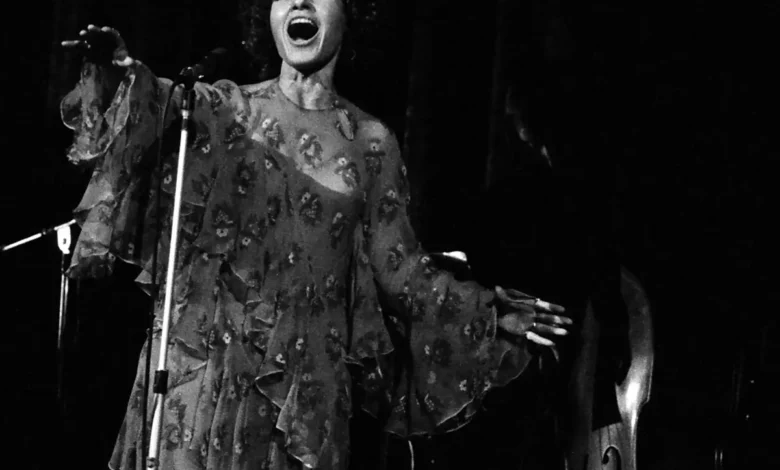
Cleo Laine has long been recognized for a vocal range that defies the conventional boundaries of popular entertainment. Her ability to navigate disparate genres—from the complexities of contemporary classical music to the nuances of traditional jazz—is fully realized in this collection. Notably, her track record includes critically acclaimed performances of Arnold Schoenberg’s work, a testament to her technical training and intellectual approach to song interpretation.
The tracklist for this release reflects a deliberate curatorial effort to highlight this range:
- Contemporary and Jazz Standards: The inclusion of "Eleanor Rigby" and "Perdido" demonstrates Laine’s ability to reinvent familiar melodies.
- Expressionistic Works: Tracks like "Dr. David Mantle" emphasize her capacity for dramatic, near-expressionistic delivery, a rarity in vocal performances of that era.
- Humor and Whimsy: The selection of "Lorelei," "Control Yourself," and "Go and Catch a Falling Star" highlights a lighter, more playful side of her repertoire, proving that technical precision does not preclude emotional accessibility.
The Role of Accompaniment and Arrangement
A significant factor in the success of this album is the minimalist approach to arrangement. In the landscape of mid-1970s recording, it was common practice to augment vocal performances with expansive, often overwhelming string sections. By opting for a stripped-back, ensemble-based backing, this production allows the listener to engage directly with the vocal performance and the interplay between the instrumentalists.
John Dankworth’s role as both an accompanist and an arranger is central to the album’s cohesion. As a duo, the Dankworths demonstrated a level of professional synchronicity that is rarely achieved in the industry. The presence of Richard Rodney Bennett, a multifaceted musician known for his work in both jazz and film scoring, adds a layer of harmonic sophistication to the second set. Similarly, John Williams—primarily recognized as a classical virtuoso—displays a remarkable adaptability, proving that his technical skill transcends traditional genre labels. The "gel" of these groups, as observed by contemporary critics, is a direct result of the musicians’ familiarity with the Wavendon performance environment.
Comparative Analysis: Wavendon vs. RCA
This release holds a distinct position in the discography of Cleo Laine, particularly when compared to her contemporaneous output on major labels such as RCA. Where the RCA releases often favored polished, high-budget studio production, the Black Lion collection benefits from the "live" energy inherent in BBC transcription sessions. The simplicity of the backing tracks on the Black Lion release serves to foreground Laine’s vocal nuance. For purists and followers of Laine’s career, this recording offers an unadulterated view of her artistry that is often obscured in more commercially oriented studio sessions.
Industry Implications and Legacy
The release of Black Lion BLP 12150 reflects a broader trend in the 1970s of re-evaluating the value of broadcast archives. The BBC transcription service, originally intended for international broadcast distribution, became a treasure trove for independent record labels looking to capitalize on high-quality recordings that had not yet seen a wide commercial release.
From an analytical standpoint, the album serves as a masterclass in vocal dynamics. Laine’s ability to transition from the sheer charm of "It’s a Pity to Say Goodnight" to the rhythmic complexity of jazz standards provides a comprehensive overview of her professional capabilities. For the music industry, it underscored the viability of the "small group" format, suggesting that the quality of the arrangement and the talent of the performers are far more critical to the longevity of a record than the density of the instrumentation.
Chronology of Production and Personnel
The following breakdown provides an overview of the two distinct recording configurations found on the album:
Set A (19 Minutes):
- Vocal: Cleo Laine
- Alto Sax/Clarinet: John Dankworth
- Piano/Electric Piano: Tony Hymas
- Guitar: John Williams
- Bass: Daryl Runswick
- Drums: Roy Jones
Set B (24 Minutes):
- Vocal: Cleo Laine
- Alto Sax/Clarinet: John Dankworth
- Piano: Richard Rodney Bennett
- Guitar: John Williams
- Bass: Kenny Baldock
- Drums: Chris Karan
The total running time of 43 minutes represents a compact yet dense collection of high-caliber performances. The pricing of £2.99 at the time of the initial release positioned the record as an accessible point of entry for listeners looking to explore the more artistic side of the popular music spectrum.
Conclusion
Black Lion BLP 12150 is more than a mere collection of outtakes; it is a significant contribution to the legacy of Cleo Laine. It reinforces the argument that Laine is an artist who occupies a space outside the standard classifications of "pop" or "jazz" singer. Her professional discipline, combined with the understated brilliance of her supporting musicians, ensures that these recordings remain relevant.
By avoiding the common pitfalls of the era—namely, excessive instrumentation and over-production—the album stands as a testament to the power of the human voice when supported by genuine musicality. For historians of British jazz and vocal performance, this record remains an essential document of a partnership that shaped the sound of British entertainment for decades. The album highlights not only the individual talent of the performers but also the enduring importance of the Wavendon scene as a hub for artistic innovation and collaboration. As such, it continues to serve as a benchmark for what can be achieved when professional standards meet creative intent in the recording studio.