Afrika Bambaataa, A Foundational Architect of Hip-Hop and Global Cultural Pioneer, Dies at 68

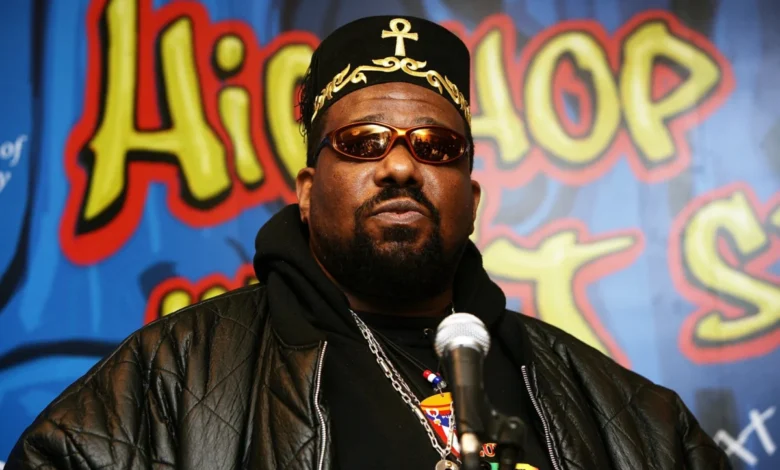
The global music community is mourning the loss of Afrika Bambaataa, a seminal figure widely recognized as one of the founding fathers of hip-hop culture. Born Lance Taylor, the legendary rapper, DJ, and producer passed away on Thursday, April 9, at the age of 68 in Pennsylvania. His legal counsel confirmed to the Associated Press that the cause of death was complications related to prostate cancer. Bambaataa’s passing closes the chapter on a monumental yet deeply controversial life, one that profoundly shaped modern popular culture while remaining overshadowed by severe legal and ethical scandals in his later years.
As a principal architect of hip-hop, Bambaataa’s influence stretched far beyond the borders of the South Bronx. Alongside contemporaries such as DJ Kool Herc and Grandmaster Flash, he helped establish the foundational pillars of a cultural movement that eventually permeated every facet of global art, fashion, language, and music. Yet, his death also forces a complicated reckoning within the entertainment industry, as cultural institutions and fans grapple with his immense artistic contributions weighed against credible and legally adjudicated allegations of sexual abuse.
Early Life, The Black Spades, and the Birth of the Universal Zulu Nation
Born in the South Bronx during the mid-20th century, Lance Taylor grew up amidst the socio-economic turmoil of New York City during the 1960s and 1970s. Like many young men of his generation navigating urban decay, civil rights shifts, and changing neighborhood dynamics, Taylor initially gravitated toward street organizations. He became a prominent member and warlord of the notorious Black Spades street gang. However, rather than remaining trapped in cycles of violence, Taylor possessed a transformative vision for redirection and community mobilization.
Inspired by the global consciousness of the era—taking his moniker from the historical Zulu leader Bambatha, who led an anti-colonial rebellion in South Africa—he shifted his focus from gang warfare to cultural preservation and community upliftment. In the 1970s, Bambaataa founded the Universal Zulu Nation, an international hip-hop awareness group and art collective.
The Zulu Nation served as a vehicle to divert youth away from gang violence by channeling their energies into the four foundational elements of hip-hop culture: DJing, MCing, breakdancing (b-boying/b-girling), and graffiti writing. Bambaataa famously envisioned hip-hop as a positive force built on peace, unity, love, and having fun. Under his leadership, the movement transitioned from localized park jams and community centers into a structured, globally minded philosophy that offered marginalized urban youth an identity, a voice, and a sense of collective power.
The Musical Revolution of Planet Rock and Electro-Rap
While Bambaataa’s cultural organizing laid the ideological groundwork for hip-hop, his contributions as a recording artist fundamentally altered the trajectory of electronic dance music and hip-hop production. During the late 1970s and early 1980s, he established himself as a master selector on the turntables, blending obscure funk, soul, and rock breaks to hypnotize crowds at Bronx block parties.
His defining commercial and artistic breakthrough arrived in 1982 with the release of Planet Rock, a collaborative track with the Soulsonic Force. Produced by Arthur Baker, Planet Rock was a watershed moment in contemporary music history. The song boldly integrated the futuristic, synthesized melodies of German electronic pioneers Kraftwerk (specifically sampling Trans-Europe Express and Numbers) with the heavy, syncopated breakbeats of the funk era, courtesy of James Brown’s Soul Power.
Planet Rock cracked the top 50 of the Billboard Hot 100 and went on to sell millions of copies, proving that hip-hop could achieve commercial viability on a mass scale while maintaining its avant-garde edge. The single single-handedly birthed the electro-funk and electro-rap subgenres, directly influencing the development of Miami bass, freestyle music, techno, and early house music. By demonstrating how disparate sonic landscapes could be stitched together through turntable mastery, Bambaataa expanded the technical boundaries of what producers could achieve in a recording studio.
Official Reactions and Industry Tributes
Following the announcement of his passing, figures across the entertainment landscape and institutional organizations issued statements acknowledging his profound artistic impact alongside the inescapable complexities of his personal life.
Kurtis Blow, speaking in his capacity as the executive director of the Hip-Hop Alliance, released an official statement reflecting on Bambaataa’s monumental historical footprint. "Today, we acknowledge the transition of a foundational architect of Hip Culture, Afrika Bambaataa," Blow stated. "[He] helped shape the early identity of Hip Hop as a global movement rooted in peace, unity, love, and having fun. His vision transformed the Bronx into the birthplace of a culture that now reaches every corner of the world. At the same time, we recognize that his legacy is complex and has been the subject of serious conversations within our community."
The dual nature of these statements highlights the ongoing challenge faced by cultural historians, musicians, and fans: how to honor the creation of a transformative global art form while transparently addressing the misconduct of its founding figures. Cultural institutions and music historians have increasingly grappled with this dichotomy, attempting to separate the structural architecture of the genre from the flawed humanity of its pioneers.
A Complicated Legacy Tarnished by Abuse Allegations
Despite his pioneering status, the final decade of Afrika Bambaataa’s life was heavily overshadowed by deeply troubling accusations of sexual abuse involving minors, casting a profound shadow over his public standing.
The controversy broke into the public consciousness in 2016 when Ronald Savage, a community activist and former hip-hop figure, publicly accused Bambaataa of sexually abusing him in the early 1980s when Savage was a young teenager. The allegations sent shockwaves through the hip-hop community, prompting widespread debate and leading to Bambaataa stepping down from his leadership role within the Universal Zulu Nation. At the time, Bambaataa vehemently denied the accusations. Years later, in 2024, Savage walked back aspects of his initial claims in an interview with AllHipHop, stating, "Bambaataa is not a pedophile and, in my eyes, he was doing something that was consensual with someone that he thought was of age."
However, Savage’s initial public disclosure opened the floodgates for other individuals to come forward. In the wake of his claims, multiple other men alleged that Bambaataa had subjected them to sexual abuse while they were teenagers in the 1980s and 1990s.
The legal turning point arrived in 2021 when an anonymous plaintiff filed a civil lawsuit against Bambaataa. The complainant alleged that the music pioneer had sexually abused and trafficked him for a period of four years, beginning in 1991 when the victim was only 12 years old and Bambaataa was in his 30s. Throughout the legal proceedings, the "Planet Rock" creator repeatedly failed to respond or mount a defense. Consequently, in 2025, a civil court ruled against him by default, awarding a significant judgment to the survivor. The legal defeat solidified a dark coda to his biography, ensuring that his public obituary would forever be tied to allegations of predatory behavior against children.
Chronology of Key Events in Afrika Bambaataa’s Life and Career
- 1957: Lance Taylor is born in the South Bronx, New York City.
- Early 1970s: Becomes a high-ranking member and warlord of the Black Spades street gang.
- Mid-1970s: Founds the Universal Zulu Nation, establishing the four foundational elements of hip-hop culture.
- 1982: Releases the landmark single Planet Rock with the Soulsonic Force, merging electronic music with hip-hop breaks and launching the electro-rap genre.
- 2016: Ronald Savage publicly accuses Bambaataa of sexually abusing him as a teenager in the 1980s, triggering additional allegations from other men.
- 2021: An anonymous plaintiff files a civil lawsuit accusing Bambaataa of sexual abuse and trafficking beginning in 1991.
- 2024: Savage modifies his public stance in an interview with AllHipHop regarding his historical claims.
- 2025: Bambaataa loses a civil lawsuit by default after failing to appear in court, resulting in a judgment in favor of his accuser.
- April 9, 2026: Passes away at the age of 68 in Pennsylvania due to complications from prostate cancer.
Broader Cultural Implications and Historical Assessment
The death of Afrika Bambaataa presents a profound dilemma for cultural historians, educators, and archivists documenting the history of modern music. Hip-hop has grown from a localized expression of marginalized youth in the post-industrial Bronx into the dominant commercial and cultural force in global entertainment, generating billions of dollars annually and driving global youth culture.
The structural scaffolding of that culture—its emphasis on community building, artistic collaboration, turntable innovation, and physical self-expression—bears the indelible fingerprints of Bambaataa’s early organizational efforts. Without his curation of the Universal Zulu Nation and his cross-genre sonic experiments on Planet Rock, the global trajectory of modern popular music would look fundamentally different.
At the same time, the modern era demands an unvarnished examination of accountability, particularly regarding the protection of youth within subcultures and artistic movements. The allegations, subsequent lawsuits, and default legal judgments against Bambaataa serve as a sobering reminder that historical contributions to art do not grant immunity from ethical and legal accountability. As schools, museums, and media outlets continue to chronicle the history of hip-hop’s first half-century, the narrative surrounding Afrika Bambaataa will inevitably remain dual-layered: celebrated as a visionary architect who helped build a global culture, yet condemned for the serious harms he inflicted upon vulnerable individuals in his personal orbit.