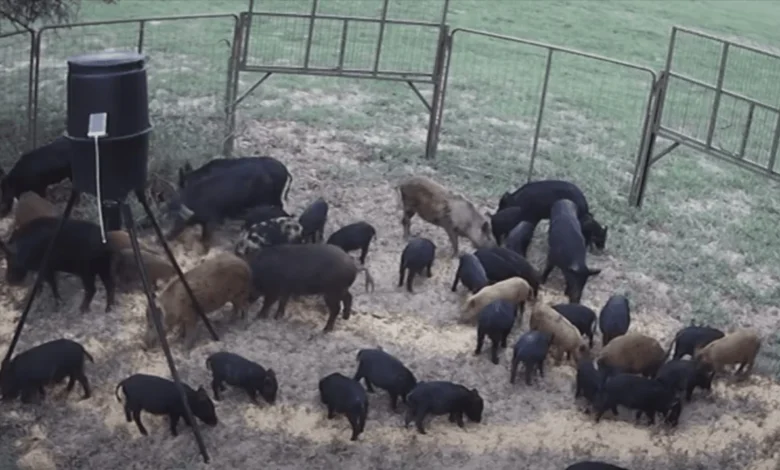
The presence of feral swine in the United States has evolved from a historical curiosity into one of the most pressing agricultural and ecological crises of the 21st century. With an estimated population exceeding 6 million nationwide—and some projections suggesting figures as high as 10 million—these invasive animals cause an estimated $1.5 billion to $3 billion in damages annually. From the destruction of native vegetation to the contamination of water sources and the decimation of critical infrastructure, feral hogs have proven to be an unstoppable force, primarily due to their biological resilience and a lack of natural predators.
A Historical Chronology of an Invasive Species
The origin of the North American feral hog population is a classic case study in unintended consequences. While swine were not native to the continent, their introduction began in the 16th century. In 1539, Spanish explorer Hernando de Soto landed in what is now Tampa, Florida, bringing with him a modest contingent of 13 pigs to serve as a mobile food source for his expedition.
The biological success of those 13 animals was immediate. By the time de Soto died three years later, the population had reportedly grown to 700, a figure that did not include the hundreds consumed, traded with indigenous populations, or lost to the wild. Because pigs possess a high level of genetic adaptability and lack the need for the rigorous environmental requirements of other species, they flourished. Over the subsequent centuries, these animals expanded their range through natural migration and human transport. By the late 20th century, the expansion had accelerated significantly, with data from the Texas Parks and Wildlife Department indicating that the number of states with feral hog populations jumped from 18 in 1982 to 35 by 2016.
The Mathematics of Prolific Reproduction
The primary driver behind the persistent feral hog crisis is the species’ reproductive strategy. Unlike most native North American wildlife, feral hogs are not restricted to a specific breeding season. A sow can reach sexual maturity in as little as five to six months. With a gestation period of just under four months, a single sow can produce multiple litters per year, with litter sizes ranging from two to twelve piglets.
This "r-selection" reproductive strategy—characterized by high growth rates and early maturity—allows for exponential population expansion. A small sounder of hogs can evolve into a significant threat to a landowner’s property in less than a year. Because they are "generalist" foragers, they consume almost any food source, including crops, carrion, and the eggs of ground-nesting birds, which places them in direct competition with native fauna and threatens local biodiversity.
The Economic Toll on Agriculture and Infrastructure
The financial implications of this population surge are staggering. According to the United States Department of Agriculture (USDA), feral hogs damage agricultural interests, property, and cultural resources at a rate of approximately $300 per hog per year. In regions like Texas, which holds the largest concentration of these animals, the damage is visible in decimated corn and soybean fields, ruined irrigation systems, and the destruction of sensitive riparian zones.
Beyond the agricultural sector, these animals pose a significant public health risk. Feral hogs are known carriers of various diseases and parasites, including pseudorabies, brucellosis, and tuberculosis, which can be transmitted to livestock, domestic pets, and occasionally humans. Their rooting behavior causes severe soil erosion and water degradation, as the silt and fecal matter from these large groups wash into local streams and rivers, compromising water quality for downstream communities.
Control Methods: From Trapping to Aerial Operations
Given the scale of the crisis, traditional hunting methods have proven insufficient for population management. Landowners and state agencies have turned to more intensive control measures, including advanced trap designs capable of capturing entire sounders at once. These traps, often equipped with remote-controlled gates and cellular cameras, allow for the removal of dozens of animals in a single operation, which is critical given the social structure of the sounder.
In Texas, the state has authorized aerial gunning, a controversial but effective method for controlling hog numbers in vast, inaccessible terrain. The practice involves using helicopters and semi-automatic rifles to cull populations from the air. While critics often label the practice as inhumane or lacking in "sporting" merit, supporters, including wildlife biologists and agricultural advocates, argue that it is a necessary management tool. They maintain that the objective is not sport, but rather the mitigation of a catastrophic environmental and economic burden.
Expert Perspectives and Legislative Action
The debate surrounding aerial control has reached a national audience, with public figures like Ted Nugent advocating for the necessity of these measures. During discussions on the impact of invasive species, proponents of aggressive culling point to the "win-win" scenario that includes the reduction of environmental degradation, the protection of food security, and the donation of harvested meat to charitable organizations.
Legislation, such as the measures facilitated in Texas to legalize aerial hunting, reflects a growing recognition that the feral hog population is beyond the reach of standard conservation methods. State agencies emphasize that while these methods are effective in small, controlled environments, they are merely a stopgap. The consensus among wildlife experts remains that without a revolutionary change in control technology or a comprehensive, multi-state management strategy, the expansion of the feral hog population will likely continue.
Broader Implications and Future Outlook
The expansion of feral hogs into 35 states suggests that the species is capable of adapting to a wide variety of climates, from the humid marshes of the Southeast to the arid plains of the Southwest and even the colder environments of the Midwest. This geographic plasticity makes them one of the most successful invasive species in history.
The economic cost, currently estimated at $1.5 billion to $3 billion annually, is likely to climb as the population grows at an estimated rate of 18–21% per year. Researchers are currently exploring novel methods, including oral contraceptives and targeted toxicants, to manage the population, but these solutions face regulatory and environmental hurdles.
As it stands, the feral hog remains an apex "nuisance" species. The legacy of the original 13 pigs brought by Hernando de Soto serves as a cautionary tale regarding the introduction of non-native species. For farmers, conservationists, and policymakers, the goal is no longer the total eradication of the species—which is widely considered impossible—but rather the containment of their numbers to prevent total ecological and economic collapse. Until a more efficient, scalable solution is found, the fight against feral hogs will continue to be a multi-faceted battle involving technology, labor, and a significant commitment of resources to protect the nation’s land and livelihoods.