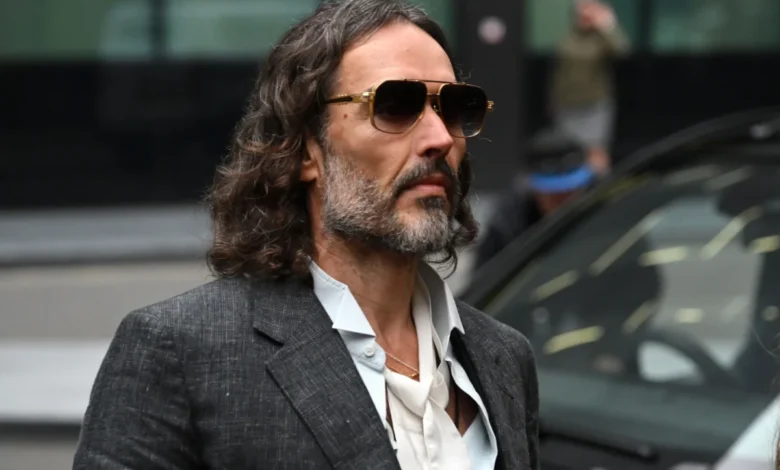
British comedian and actor Russell Brand has been sentenced to 10 years and six months in prison following his conviction on multiple charges of rape and sexual assault. The sentencing, handed down at Southwark Crown Court by Judge Justice Bennathan, marks the culmination of a high-profile legal proceeding that scrutinized events dating back two decades. Brand, 51, was found guilty by a jury following a grueling four-week trial that exposed a pattern of predatory behavior during the height of his mainstream celebrity career.
The court’s final judgment encompasses convictions on four specific counts: one count of raping a fan, and three counts of sexual assault against separate women. While the Crown prosecuted him on a broader indictment involving multiple complainants, the jury ultimately acquitted Brand of two additional rape charges and one count of attempted indecent assault. Nevertheless, the accumulated convictions warranted a substantial custodial sentence, with the presiding judge indicating that Brand will be required to serve at least two-thirds of the 10-and-a-half-year term behind bars before being eligible for release on license.
The breakdown of the sentencing details the severity attributed to each proven offense. Brand received a nine-year sentence for the primary rape conviction, alongside concurrent and consecutive terms for the remaining charges: 18 months for count five, nine months for count three, and eight months for count seven. Throughout the proceedings, prosecutors characterized the defendant as a manipulative figure who leveraged his fame, cultural capital, and professional power dynamics to isolate and victimize vulnerable individuals within his orbit.
Judicial Reasoning and Mitigated Sentencing Factors
In delivering the sentence, Justice Bennathan addressed the complex legal arguments surrounding mitigation. The defense presented evidence concerning Brand’s post-offense conduct, highlighting a 17-year gap since his last proven crime and emphasizing his extensive public work in recent years supporting individuals struggling with substance abuse and addiction.
The judge noted that while an established history of "good character" and rehabilitation efforts would not ordinarily justify a reduction in a prison sentence for grave sexual offenses, completely disregarding these factors would run contrary to established sentencing guidelines. Consequently, the court applied a one-year reduction to the sentence that would have otherwise been imposed for the rape conviction.
Despite this mitigation, the court offered a stern rebuke of the defendant’s behavior throughout both the alleged incidents and the subsequent trial. Justice Bennathan specifically commended the extraordinary determination and bravery displayed by the complainants. The judge noted that the victims were forced to endure intense public scrutiny and aggressive defense strategies that frequently sought to discredit their testimonies and paint them as dishonest.
Chronology of the Investigation and Legal Proceedings
The legal reckoning facing Russell Brand did not materialize overnight; rather, it represents the culmination of a multi-year investigative trajectory that fundamentally altered the public standing of one of Britain’s most recognizable entertainment personalities. The timeline of the allegations, public disclosures, and judicial milestones underscores the complex path from initial reportage to criminal conviction.
The events for which Brand was convicted occurred between 2004 and 2009—a period during which his career experienced exponential growth across British television, radio, and international film projects. For over a decade, rumors and industry whispers circulated, but it was not until late 2023 that the allegations crystallized into public view.
In September 2023, a joint investigative reporting project conducted by Channel 4’s Dispatches, The Sunday Times, and The Times published detailed accounts from multiple women accusing Brand of rape, sexual assault, and severe emotional abuse spanning the late 1990s and late 2000s. The broadcast and accompanying print articles sent shockwaves through the British media landscape, prompting an immediate institutional response.
Following the media exposé, the Metropolitan Police in London established a dedicated investigative team and formally urged any additional victims to come forward. This public appeal led several women to approach law enforcement directly, providing statements that significantly bolstered the evidentiary foundation of the police inquiry.
By the following year, the Crown Prosecution Service (CPS) announced that it had authorized criminal charges against Brand, citing sufficient evidence to proceed to trial. The initial charges encompassed three counts of rape, three counts of sexual assault, and one count of attempted indecent assault, brought forward by a total of six complainants. Throughout the pre-trial phase, Brand consistently denied all allegations. In public statements and through his legal representatives, he maintained that the sexual encounters in question were entirely consensual and claimed that the historical narratives presented by the complainants were fabricated or fundamentally re-imagined.
The trial itself experienced logistical delays, including a six-month postponement that pushed court dates further into the legal calendar. When the proceedings finally commenced at Southwark Crown Court, the jury listened to weeks of emotional and detailed testimonies from the complainants, contrasted with defense arguments challenging the reliability of memories spanning nearly twenty years. Last Thursday (November 5), the jury reached its verdict, convicting Brand on four of the seven counts submitted to deliberation.
Law Enforcement and Institutional Reactions
Outside the courtroom, senior representatives of the Metropolitan Police addressed the media, framing the outcome as a critical vindication for the victims and a stark reminder of the complexities inherent in prosecuting historical sexual offenses.
Detective Superintendent Andy Furphy, who oversaw aspects of the police response, praised the resilience of the women who participated in the arduous judicial process. "My thoughts today are with the women who came forward and made this investigation possible," Furphy stated during a press briefing. "Reporting sexual offences can be incredibly difficult, and they have shown immense bravery, dignity, and resilience throughout what has been a lengthy investigation and challenging trial process."
Furphy acknowledged the profound personal toll exacted upon the complainants, who were forced to revisit deeply traumatic experiences while enduring intense public curiosity and media speculation. Law enforcement officials expressed hope that the sentencing would offer a definitive measure of closure, allowing the survivors to reclaim their lives and move forward.
Furthermore, the Metropolitan Police used the platform of the sentencing to issue a broader public appeal, encouraging other potential victims of sexual violence to report crimes regardless of the perpetrator’s social standing or the passage of time. Authorities reiterated that specialized support services remain available to guide survivors through the reporting and investigative stages.
Broader Implications for the Entertainment Industry and Public Discourse
The conviction and subsequent imprisonment of Russell Brand carry profound implications for the British entertainment industry and the broader cultural conversation surrounding accountability, power imbalances, and institutional oversight.
For years, Brand successfully transitioned from a controversial shock-jock and mainstream comedian into a prominent digital commentator, wellness guru, and self-help author, cultivating a vast online following through independent video channels and global speaking tours. His ability to pivot his personal brand in the digital era highlighted a growing trend wherein public figures facing reputational damage in traditional media can bypass legacy gatekeepers to build insulated ecosystems of supporters.
The revelations of 2023 and the subsequent legal verdict have intensified scrutiny regarding how media organizations, talent agencies, and production companies managed allegations or warning signs during the height of Brand’s mainstream career in the 2000s. Critics and advocacy groups have raised persistent questions about whether institutional cultures prioritized commercial viability and ratings over the safety and welfare of junior staff, fans, and vulnerable participants within the broadcasting ecosystem.
Legal analysts note that the case serves as a significant test of the criminal justice system’s capacity to handle historical sexual assault allegations involving high-profile defendants. The successful prosecution underscores the vital role played by investigative journalism in uncovering patterns of misconduct that might otherwise remain hidden behind nondisclosure agreements, informal settlements, or the protective machinery of celebrity status.
As Brand begins his custodial sentence, advocacy organizations across the United Kingdom have reiterated the importance of accessible support infrastructure for survivors of sexual violence. Specialist charities emphasize that while high-profile trials capture public attention, the daily reality for countless victims involves navigating systemic barriers to justice. Organizations such as Rape Crisis England & Wales and international networks like RAINN continue to provide confidential crisis intervention, counseling, and legal advocacy resources for individuals seeking assistance.
The conclusion of the Russell Brand trial closes a turbulent chapter of legal and public reckoning, yet it leaves behind an enduring legacy regarding the responsibilities of cultural institutions, the resilience of survivors, and the evolving standards of accountability within the modern public sphere.