Russ Andrews DeltaBlock Review: Engineering Power Delivery and Mains Conditioning for High-Fidelity Audio Systems

The modern domestic environment presents an increasingly hostile electrical landscape for high-fidelity audio equipment. Alongside traditional household appliances such as refrigerators, washing machines, and central-heating thermostats, today’s listening rooms must contend with a proliferation of digital infrastructure, including Wi-Fi routers, smart-home hubs, and continuous smartphone chargers. This dense web of electrical activity introduces significant electromagnetic interference (EMI) and radio frequency interference (RFI) into the domestic mains supply. Consequently, clean power delivery has transitioned from an esoteric audiophile pursuit into a critical engineering requirement for optimal system performance.
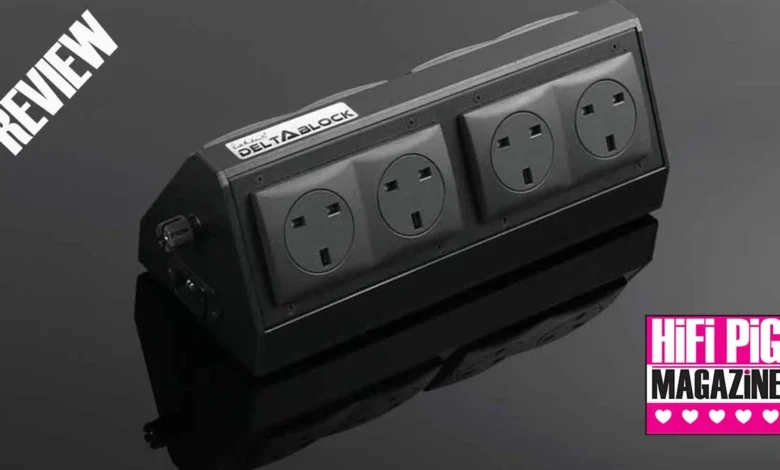
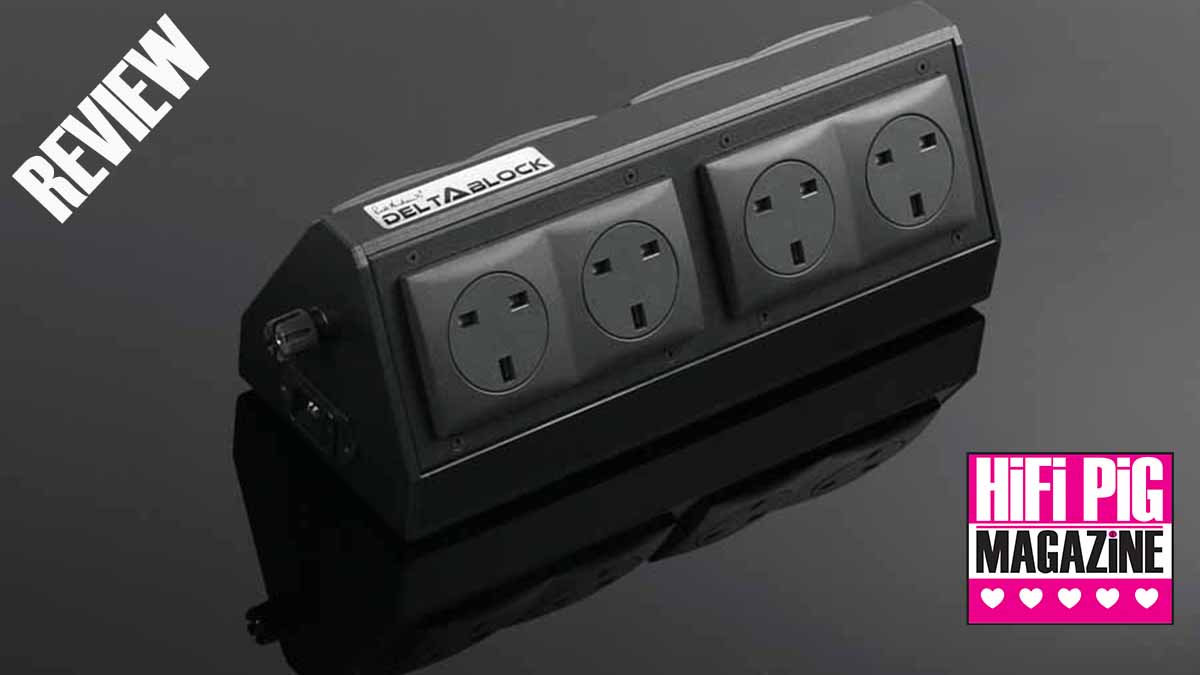
Addressing this ongoing challenge, British accessories specialist Russ Andrews has expanded its catalog with the introduction of the DeltaBlock. Positioned directly between the mid-range XBlocks and the flagship, visually similar Signature PowerBlock, this eight-way mains extension unit bridges the gap between high-end surge protection and passive line conditioning. Priced at £949 in its standard configuration, the review sample tested incorporates the optional MegaClamp surge-protection upgrade, bringing the total retail price to £1,184.
The Evolution of Russ Andrews and Mains Conditioning
The trajectory of Russ Andrews is deeply intertwined with the history of the British high-end audio market. The enterprise originated as a specialist hi-fi retail operation in the late 1960s before its founder established Russ Andrews Hi-Fidelity in Edinburgh by the mid-1970s. During this retail tenure, observational anomalies regarding system performance discrepancies led to sustained investigations into mains quality, internal cabling, and ancillary system components.
By 1986, these investigations culminated in the launch of an dedicated mail-order and online enterprise based in Kendal, Cumbria. Concurrently, 1985 marked the beginning of a long-standing commercial relationship with Ray Kimber, establishing Russ Andrews as the exclusive UK importer of Kimber Kable products since 1986. Over the subsequent decades, the company evolved from a retailer into a developer and manufacturer of proprietary audio enhancements, equipment modifications, and acoustic consulting services for various domestic loudspeaker and cartridge manufacturers. Having recognized the detrimental effects of mains pollution decades before it became a mainstream audio concern, the company is widely acknowledged as a pioneer in domestic power conditioning.
Design and Architectural Engineering
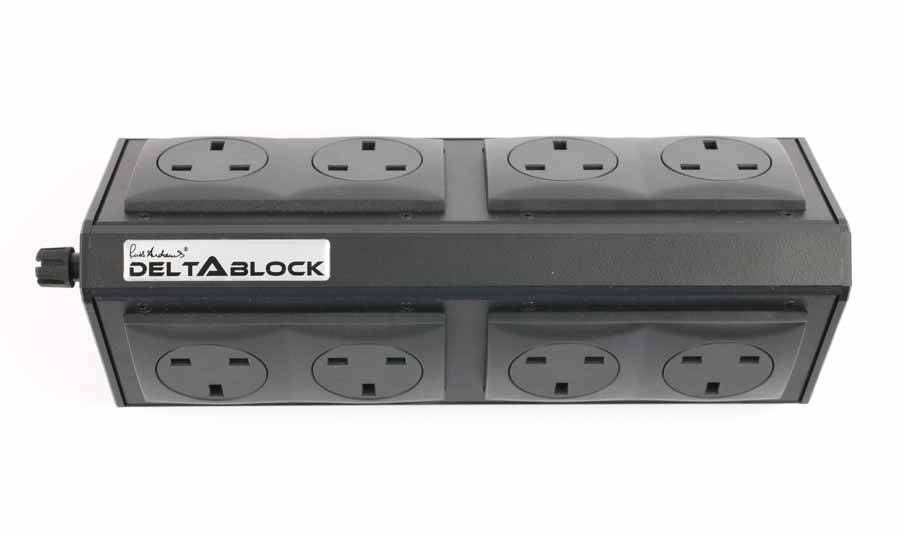
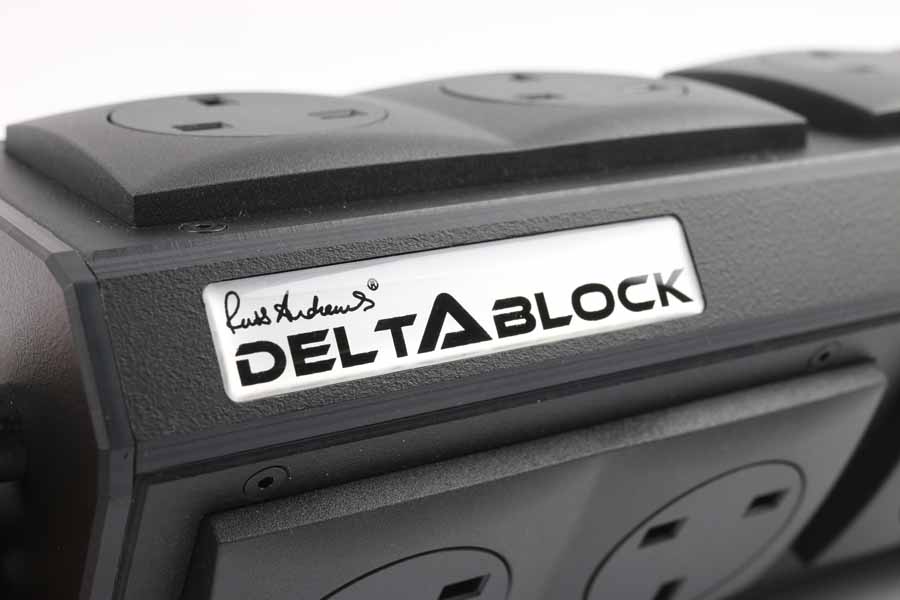
The physical design of the DeltaBlock departs significantly from traditional rectangular metallic power strips. Enclosed within a distinctive triangular, Toblerone-shaped housing measuring 110 x 111 x 307 mm and weighing 1.25 kg, the unit utilizes a VO UL-94 fire-retardant thermoplastic material. According to the manufacturer, this material choice is the result of extensive acoustic evaluations, favoring non-metallic enclosures to avoid the inductive and resonance issues sometimes associated with metal chassis designs—a philosophy mirrored by select 1970s amplifier manufacturers.
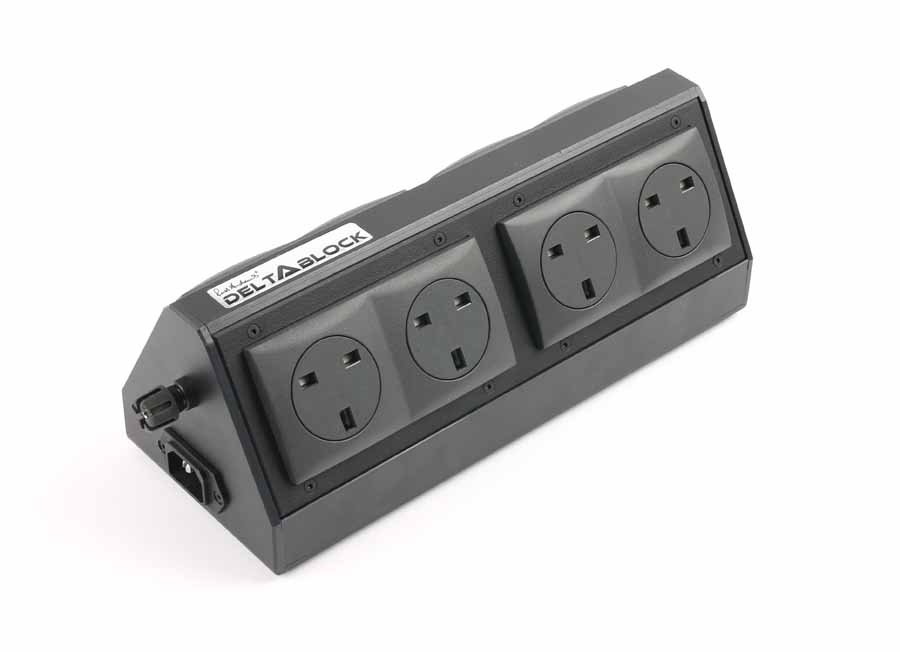
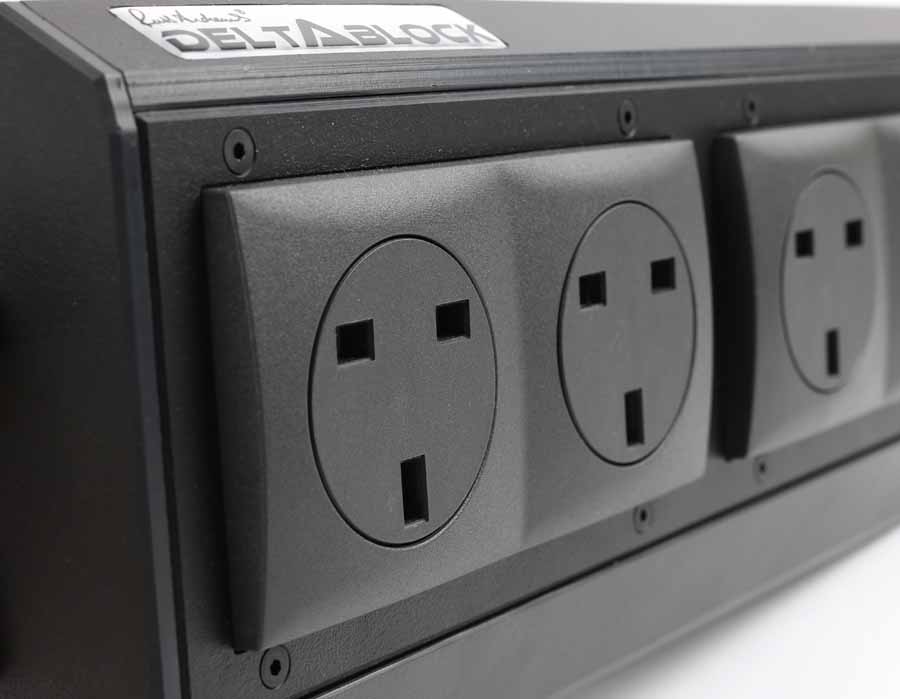
The enclosure features eight 13-ampere output sockets (configured for UK or European standards) arranged invertedly across its two angled sides. This triangular orientation, denoted by the delta symbol (Δ), prevents heavy power cords from looping and tangling across the floor before rising to components situated on equipment racks.
Internally, the electrical architecture minimizes conventional point-to-point wiring in favor of a custom-designed printed circuit board (PCB). This two-layer PCB features exceptionally wide, 8-ounce pure-copper tracks on both upper and lower surfaces, ensuring minimal enclosure impedance and high current-handling capabilities. Power distribution and internal signal paths utilize Kimber Kable’s pure-copper TCX wiring.
Integration of Protection and Filtering Technologies
Power conditioning within the DeltaBlock is achieved through a multi-tiered approach combining passive filtering and transient surge suppression. The unit integrates Russ Andrews’ proprietary Silencer noise-filtering technology, which functions as a passive mains conditioner designed to suppress high-frequency interference generated by household appliances and digital devices.
Protection against transient voltage spikes is handled by the built-in SuperClamp surge-protection circuit, supplemented in this review unit by the upgraded MegaClamp component. While standard surge-suppression components experience wear and degrade in efficiency over time—necessitating professional renewal or replacement approximately every five years—the more robust MegaClamp offers a significantly extended operational lifespan. In the event of component degradation, the internal assembly can be serviced or renewed directly by Russ Andrews.
Input and Output Connectivity
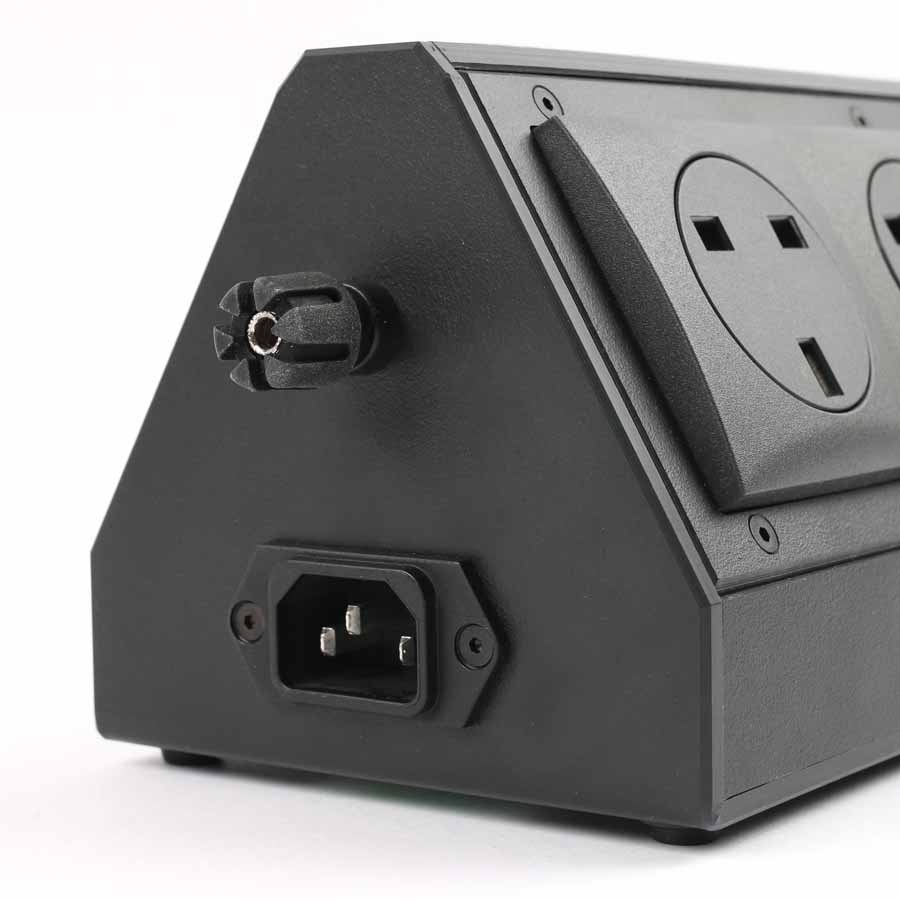
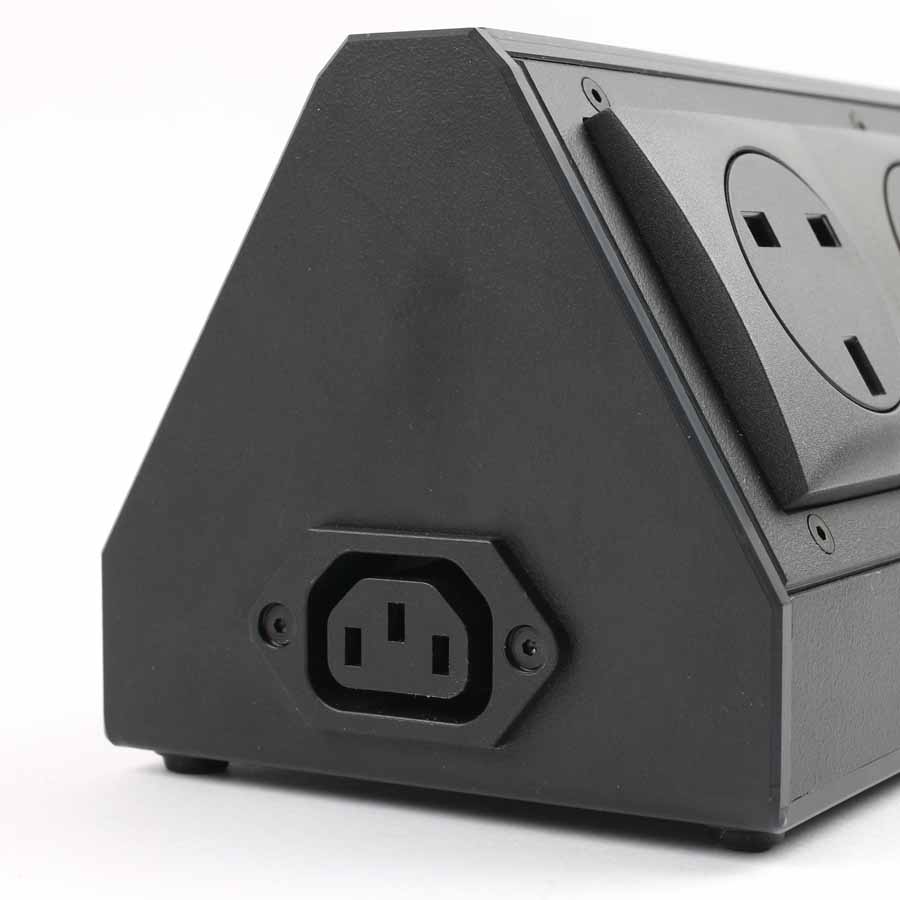
Power is supplied to the DeltaBlock via a male 10-ampere IEC inlet located at one end of the unit. The manufacturer recommends pairing the unit with its proprietary power cords, supplying a Kimber Kable Evolution cable for this evaluation. At the opposite end of the chassis, a secondary 10-ampere IEC output socket enables users to daisy-chain additional DeltaBlock units or connect supplementary conditioning equipment, such as a PowerPurifier or AbZorber, without sacrificing one of the primary eight 13-ampere outlets.
Additionally, the unit includes an integrated grounding terminal designed to interface with analog turntables or dedicated grounding accessories such as the Russ Andrews RF Router or SuperRouter. This provision ensures that system-wide grounding integrity is maintained, mitigating potential ground loops and residual hum.
Methodology and Controlled Listening Evaluations
Performance assessments of the DeltaBlock were conducted across multiple acoustic environments utilizing varied amplification topologies. Amplification hardware included the Krell KAV-250a, the Slee Proprius, and the vintage Lecson Quattra from the 1990s, paired with compact monitor loudspeakers such as the Chartwell LS3/5a.
To establish an objective baseline, listening sessions involved direct comparisons between standard, high-quality surge-protected mains blocks and the DeltaBlock. However, recognizing the limitations inherent in rapid A/B switching evaluations for power accessories, the majority of critical listening was performed over extended periods utilizing the DeltaBlock as the sole power distribution hub.
Acoustic Performance and Spatial Presentation
Playback of Stevie Wonder’s "We Can Work It Out" revealed notable shifts in soundstage presentation and vocal imaging. On standard distribution blocks, backing vocal interjections typically project wide beyond the physical boundaries of the loudspeaker baffles due to phase manipulation. When powered via the DeltaBlock, these backing vocals exhibited tighter central focus, drawing slightly inward while repositioning the primary vocal track further back within the soundstage. This spatial adjustment yielded a more coherent and natural musical presentation, though with a marginally narrower lateral dispersion.
Similarly, evaluation using Vusi Mahlasela and Louis Mhlanga’s "Silang Mabele" from Live at the Bassline demonstrated enhanced transient response and dynamic realism. The intricate acoustic guitar work was rendered with heightened presence and attack, underscoring the unit’s ability to preserve micro-dynamic information without inducing compression or softening transient edges.
On Goldfrapp’s Tales of Us, reproduced via Chartwell LS3/5a monitors driven by Slee amplification, the DeltaBlock facilitated superior low-frequency extension and control. Alison Goldfrapp’s vocals on tracks such as "Annabel" and "Drew" displayed increased breathiness, textural grit, and micro-detail, allowing the acoustic characteristics of the studio reverb and production effects to be parsed with greater clarity.
Implications for High-End Audio Systems
The implementation of comprehensive mains conditioning and surge protection presents a delicate engineering balance. Excessive or poorly implemented filtering can restrict current delivery, resulting in a compressed dynamic range and an unengaging musical presentation. The DeltaBlock avoids these pitfalls by prioritizing low-impedance pathways and conservative filtering parameters that protect sensitive electronics from urban grid fluctuations without inducing audible throttling.
Optimizing performance requires careful consideration of component placement within the eight-way array. Empirical observation during testing indicated that connecting high-current power amplifiers nearest to the incoming IEC input socket—while positioning lower-powered digital sources and compact separates toward the opposite end of the block—yields measurable improvements in transient delivery and background quietness.
Market Positioning and Value Proposition
Priced at £1,184 for the fully specified review configuration with the MegaClamp upgrade, the Russ Andrews DeltaBlock occupies a competitive segment of the power accessory market. While basic extension strips and unconditioned distribution blocks can be acquired for nominal sums, they lack the engineered impedance characteristics, cryogenic treatment processes (DCT UltraSockets treated with DeoxIT contact enhancer), and integrated RFI suppression essential for safeguarding high-end audio investments.
For audiophiles seeking to mitigate the detrimental effects of mains pollution without compromising the dynamic integrity of their systems, the DeltaBlock represents a scientifically grounded and acoustically effective solution. Backed by the manufacturer’s customary 60-day money-back guarantee, it offers a robust framework for achieving optimal power delivery in increasingly congested domestic electrical environments.
Related posts: