Bach’s Six Cello Suites: A Comprehensive Guide to the Best Recordings and Historical Context

Johann Sebastian Bach’s Six Suites for Unaccompanied Cello (BWV 1007–1012) represent a cornerstone of Western art music, serving as both a technical rite of passage for performers and a spiritual summit for listeners. Composed during Bach’s tenure as Kapellmeister in Köthen between 1717 and 1723, these works emerged from a unique period in the composer’s life where his creative energies were directed toward secular instrumental music rather than the sacred cantatas required in Leipzig. At the court of Prince Leopold of Anhalt-Köthen, a passionate amateur musician himself, Bach had access to a high-caliber ensemble of players, allowing him to explore the limits of solo string instrumentation. For nearly two centuries, however, these suites were relegated to the status of mere pedagogical exercises—etudes intended for the development of thumb position and bowing technique—until a chance discovery in the late 19th century fundamentally altered the course of music history.
The Historical Rediscovery and Evolutionary Context
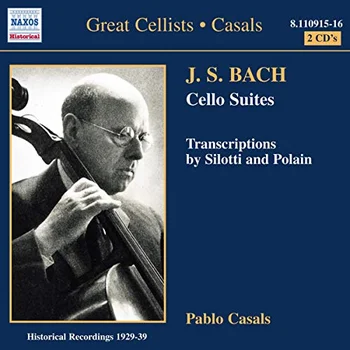
The trajectory of the Cello Suites from obscurity to the pinnacle of the repertoire is inextricably linked to the Spanish cellist Pablo Casals. In 1889, a thirteen-year-old Casals discovered a tattered, printed edition of the suites in a secondhand music shop in Barcelona. Until that moment, the suites were rarely, if ever, performed in their entirety in a public concert setting. Casals spent twelve years studying and practicing the works before he felt prepared to perform one in public, and it was not until the 1930s that he committed them to disc. His advocacy transformed the perception of the suites from "dry" exercises into profound, multi-dimensional narratives.
A significant challenge for musicologists and performers is the absence of an autograph manuscript in Bach’s own hand. The primary surviving source is a copy made by his second wife, Anna Magdalena Bach, between 1727 and 1731. Because her manuscript lacks detailed articulation marks, phrasing slurs, and tempo indications, every cellist must act as a co-creator, making subjective decisions about how to navigate the music’s architecture. This ambiguity has led to a vast spectrum of interpretative styles, ranging from the lush, vibrato-heavy approaches of the mid-20th century to the lean, historically informed performances of the modern era.
The Architectural Framework of the Suites
Each of the six suites follows a standardized Baroque dance suite structure, yet Bach expands this framework to create six distinct emotional and technical worlds. Every suite begins with a Prelude, followed by a consistent sequence of dances: Allemande, Courante, Sarabande, a pair of "Galanteries" (Minuets in Suites 1 and 2, Bourrées in 3 and 4, and Gavottes in 5 and 6), and a concluding Gigue.
Despite this uniform blueprint, the suites progress in complexity and range. The First Suite in G Major is characterized by a flowing, pastoral optimism, while the Second in D Minor introduces a sense of tragic introspection. The Third and Fourth Suites expand the instrument’s resonance through larger intervals and more athletic demands. The Fifth Suite in C Minor requires "scordatura"—tuning the top string down from A to G—to create a darker, more somber resonance. Finally, the Sixth Suite in D Major was originally written for a five-stringed instrument (likely the viola pomposa or violoncello piccolo), resulting in a brilliant, virtuosic range that pushes the boundaries of the traditional four-string cello.
Definitive Interpretations: The Legacy Recordings
The discography of the Bach Cello Suites is immense, but several recordings stand out for their historical importance, technical brilliance, or revolutionary interpretative insights.
Pablo Casals (Recorded 1936–1939)
The first complete recording of the suites remains a monumental achievement. Recorded for EMI at the Abbey Road Studios and in Paris, Casals’ interpretation is defined by a "speaking" quality—what critics often call musical rhetoric. His approach is deeply rhythmic and full-blooded, treating the dances not as relics but as living, breathing characters. While the monaural sound quality reflects the limitations of the 1930s, the raw emotional power and the fluid, improvisatory nature of his playing continue to influence every cellist who tackles these works.
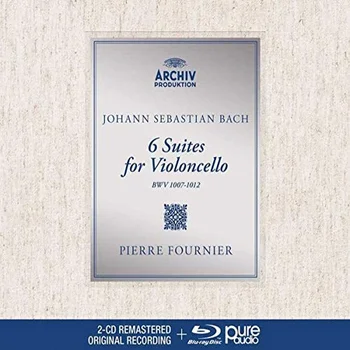
Pierre Fournier (Recorded 1960)
Often referred to as the "Aristocrat of the Cello," Pierre Fournier’s recording for Deutsche Grammophon is the antithesis of Casals’ ruggedness. His playing is marked by a seamless, elegant legato and a refined sense of proportion. For many listeners, Fournier represents the "Golden Age" of cello playing on a modern instrument. His tempos are balanced, and his tone is consistently luminous, making this the preferred "benchmark" version for those seeking a traditional, un-mannered performance.
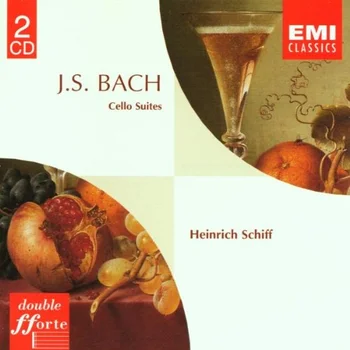
Heinrich Schiff (Recorded 1984)
Heinrich Schiff’s account provides a more muscular, modern alternative to Fournier. His tone is focused and direct, with a clear, percussive attack that highlights the rhythmic vitality of the faster movements. Schiff avoids the overly sentimental phrasing that characterized some mid-century recordings, opting instead for a structural clarity that emphasizes the music’s harmonic "backbone." This recording is particularly praised for its handling of the minor-key suites, which achieve gravity without becoming bogged down in heaviness.
The Rise of Historically Informed Performance
In the latter half of the 20th century, the "Period Performance" movement sought to strip away the Romantic-era accretions to hear Bach’s music as it might have sounded in the 18th century.
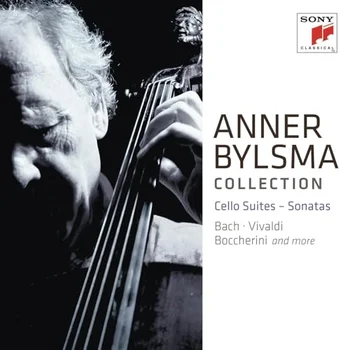
Anner Bylsma (Recorded 1979 and 1992)
Anner Bylsma was the first to record the suites on a Baroque cello using gut strings and a period bow. This setup produces a smaller, more transparent sound with a quicker decay. Bylsma’s reading is characterized by its nervous energy and lightness of touch. Rather than sustaining long, singing lines, he emphasizes the dance-like "lift" of the phrases. His 1992 recording on the legendary "Servais" Stradivarius is particularly notable for its rich, gut-string resonance and daring interpretative freedom.
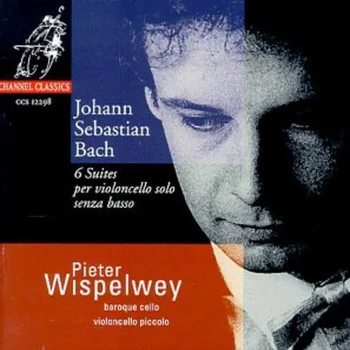
Pieter Wispelwey (Recorded 1998)
Wispelwey, another champion of the period instrument, offers an extroverted and highly personal account. His playing is characterized by a remarkable lightness and a springy, agile rhythm. Notably, for the Sixth Suite, he utilizes a five-string cello, allowing the high-register passages to ring out with a clarity and ease that is difficult to achieve on a standard four-string instrument. His approach is less about "monumental" Bach and more about the joy of the dance.
David Watkin (Recorded 2015)
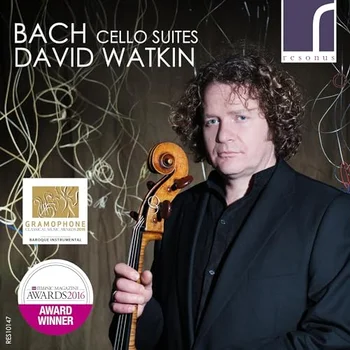
David Watkin’s recording is a culmination of decades of research into Baroque performance practice. Playing on gut strings with an articulate, relaxed touch, Watkin emphasizes the counterpoint within the solo line—the "illusion" of multiple voices playing at once. His use of a rare five-string cello for the final suite provides a resonant, full-bodied conclusion to the cycle. This recording received widespread acclaim for its ability to balance scholarly rigor with genuine musical spontaneity.
Modern Masteries and Personal Journeys
Recent decades have seen a move toward "hybrid" approaches, where performers use modern instruments but incorporate the insights of the period-performance movement.
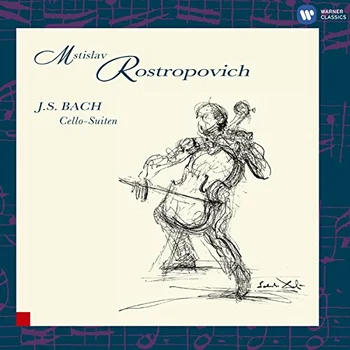
Mstislav Rostropovich (Recorded 1991)
Rostropovich, one of the 20th century’s greatest titans of the cello, famously waited until he was in his 60s to record the suites. Filmed and recorded in the Basilica of Sainte-Madeleine in Vézelay, France, his interpretation is grand, slow, and deeply personal. He views the suites as a vast spiritual drama. While some critics find his approach too heavy or "studied," others see it as the ultimate expression of the suites’ majestic scale.
Steven Isserlis (Recorded 2007)
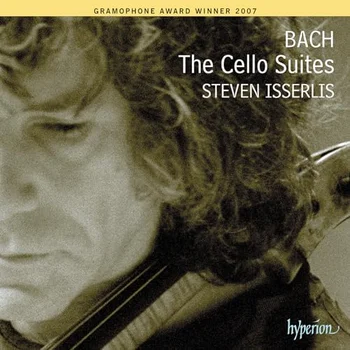
Steven Isserlis’s recording for Hyperion is noted for its searching, intellectual quality. Isserlis views the six suites as a spiritual journey, moving from the light of the First to the "resurrection" of the Sixth. His use of gut strings on a modern setup allows for a wide range of colors without sacrificing the power needed for modern recording standards. His Sarabandes are particularly acclaimed for their restrained, haunting beauty.
Jean-Guihen Queyras (Recorded 2007)
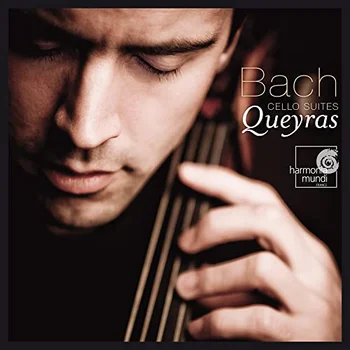
Queyras offers a fluid, natural account that feels like an intimate conversation. His playing is exceptionally clean, with a flexible sense of timing that never breaks the underlying pulse of the dance. It is an interpretation that avoids extremes, providing a sense of calm and lucidity that makes it highly repeatable for the listener.
Yo-Yo Ma (Recorded 2018)
In his third recording of the suites, titled "Six Evolutions," Yo-Yo Ma offers a deeply inward-looking performance. Having played these works for over sixty years, Ma’s latest version is less about technical perfection and more about storytelling. The recording is close-mic’d and dry, capturing the grain of the bow and the intimacy of the performance space. It is a document of a master musician reflecting on his life’s work.
Chronology of the Bach Cello Suites
- 1717–1723: Bach composes the suites in Köthen.
- 1727–1731: Anna Magdalena Bach creates the most famous surviving manuscript copy.
- 1824: The first printed edition is published by Probst in Leipzig, though mostly for study.
- 1889: Pablo Casals discovers the Grützmacher edition in Barcelona.
- 1936–1939: Casals records the first complete cycle for EMI.
- 1979: Anner Bylsma records the first complete cycle on a Baroque cello.
- 2018: Yo-Yo Ma releases his third and final recording, emphasizing the music’s role as a "cultural bridge."
Broader Impact and Implications
The influence of Bach’s Cello Suites extends far beyond the realm of classical music recordings. They established the cello as a viable solo instrument, capable of carrying complex polyphony and deep emotional weight without the need for keyboard accompaniment. This paved the way for subsequent solo string masterpieces, from the sonatas of Max Reger and Zoltán Kodály to the suites of Benjamin Britten.
Furthermore, the suites have become a symbol of universal humanism. They are frequently performed at memorials and moments of international significance—most notably when Rostropovich played the Second Suite at the falling of the Berlin Wall in 1989. Because the music offers no explicit program or text, it serves as a vessel for whatever the listener or performer brings to it. Whether viewed as a technical challenge, a historical puzzle, or a spiritual meditation, Bach’s Cello Suites remain an inexhaustible resource for the human spirit, continuing to evolve with every new generation of performers.