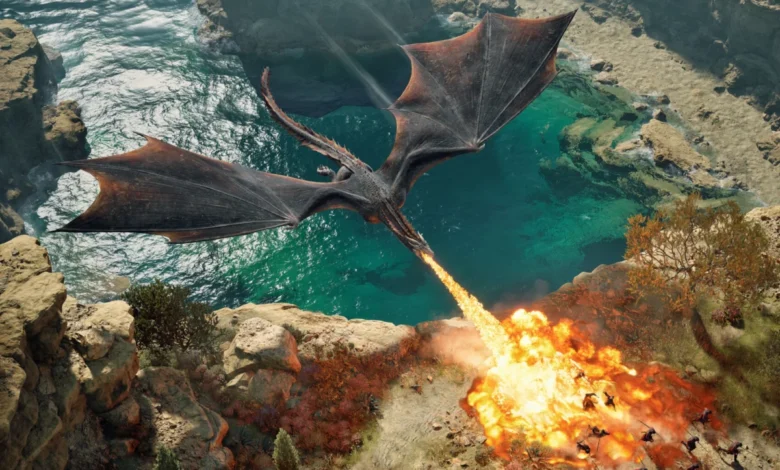
The highly anticipated real-time strategy game, Game Of Thrones: War For Westeros, has officially been delayed until early 2027. Developers PlaySide announced the significant postponement, citing the necessity "to ensure the game reaches [a] high level of quality" and meets the substantial expectations of both dedicated real-time strategy (RTS) players and the global fanbase of George R.R. Martin’s epic fantasy saga. This extended development window suggests an ambitious undertaking aimed at delivering a definitive interactive experience within the rich, treacherous world of Westeros.
An Ambitious Vision for Westeros
First announced last year, Game Of Thrones: War For Westeros immediately captured attention with its promise to allow players to fundamentally rewrite the intricate and often controversial plot of the hit HBO television series. Described as an "epic" real-time strategy title, the game invites players to "Conquer the Seven Kingdoms solo, or in treacherous free-for-all multiplayer. Command the Great Houses, rally iconic heroes, and rewrite the fate of the realm. Do you have the strength to seize the Iron Throne?" as detailed in its official Steam description. This core premise of player agency over the established narrative, particularly regarding the divisive ending of the TV show, positioned the game as a potentially groundbreaking entry in the ever-expanding universe of Game of Thrones adaptations.
Players are offered the unparalleled opportunity to align themselves with some of Westeros’ most formidable factions, including the noble House Stark, the cunning House Lannister, or the dragon-riding House Targaryen. Beyond the political machinations of the living, the game also presents a unique and chilling alternative: the chance to "raise an army of the dead" under the command of the enigmatic Night King, fundamentally altering the very nature of the conflict for dominion over Westeros. This breadth of choice, from leading beloved heroes to wielding the apocalyptic power of the undead, underscores the game’s ambitious scope and its commitment to providing a truly sandbox-like experience within the established lore.
Chronology of an Anticipated Release
The journey of Game Of Thrones: War For Westeros from its initial reveal to its current delayed status provides a microcosm of the complexities inherent in modern game development, especially for titles based on globally recognized intellectual properties.
- Initial Announcement (Last Year): The game was first unveiled with significant fanfare, promising an RTS experience that would allow players to dive deep into the political and military conflicts of Westeros. The announcement generated considerable excitement, largely due to the unique proposition of altering the show’s narrative outcome and the high production values suggested by its cinematic trailer.
- Original Release Window (This Year): Following its reveal, the game was initially slated for a launch sometime in the current year. This timeframe seemed aggressive given the scale of the project, but it set a benchmark for fan expectations.
- Period of Silence: After the initial announcement and the release of the cinematic trailer, information regarding the game’s development became sparse. This silence, while not uncommon in the industry, began to fuel speculation among the fanbase about the project’s progress and potential challenges. Game development often involves periods of quiet as teams focus on core production, but extended silence can sometimes precede significant announcements, good or bad.
- Confirmation of Delay (Recent Weekend): Over the past weekend, PlaySide broke its silence via a new blog post on the official War For Westeros website. This update confirmed the widespread anticipation of a delay, pushing the release significantly further into the future.
- New Release Window (Early 2027): The blog post specified "early 2027" as the new target launch period, marking a substantial deferment from the original 2024 window. While the announcement clarified that "development has been progressing well," it did not offer explicit, detailed reasons for the lengthy delay beyond the overarching commitment to quality.
This timeline highlights the volatile nature of game production, where initial projections often clash with the realities of bringing complex creative visions to life, especially when dealing with the intricate demands of a real-time strategy game tied to a beloved, expansive universe.
The Cinematic Reveal: A Glimpse into Divergent Fates
The cinematic reveal trailer for Game Of Thrones: War For Westeros, which premiered during a prominent industry event, offered a tantalizing glimpse into the game’s potential for narrative deviation. The trailer masterfully employed familiar faces from the TV series, leveraging the star power of actors like Kit Harington as Jon Snow, Emilia Clarke as Daenerys Targaryen, and Nikolaj Coster-Waldau as Jaime Lannister. However, its most striking feature was its immediate subversion of the show’s established narrative.
In a powerful demonstration of the game’s core mechanic, the trailer depicted Jon Snow meeting an untimely end at the hands of the Night King, a stark departure from his fate in the series. Similarly, Daenerys Targaryen, the Mother of Dragons, was shown being vanquished by an unnamed enemy soldier, rather than succumbing to the tragic path depicted on screen. These deliberate narrative twists served as a clear declaration from the developers: War For Westeros is not a re-enactment, but a re-imagining where players truly dictate the outcome. This approach is designed to resonate deeply with fans who desired alternative endings or wished to explore "what if" scenarios that the original series never explored. The trailer effectively communicated that the game offers full control over how the story ends, providing a cathartic opportunity for players to steer the destiny of Westeros away from its televised conclusion.
Developer’s Rationale: Prioritizing Quality and Fan Expectations
In their recent blog post announcing the delay, PlaySide offered insight into their decision-making process, emphasizing a steadfast commitment to delivering a high-caliber product. "Since the announcement of Game Of Thrones: War For Westeros, development has been progressing well," the developers stated, aiming to reassure the community that the project is not in jeopardy. The update further detailed ongoing work on fundamental game elements such as "maps, combat, and heroes," indicating a deep dive into core mechanics and content creation.
However, the primary justification for the extended delay rests squarely on the shoulders of quality assurance. "We remain unwavering in our mission to deliver a real-time strategy game set in the world of Westeros that meets the expectations of both RTS players and Game Of Thrones fans," PlaySide elaborated. "This decision gives us the time needed to continue building towards that goal and ensure that the game reaches the high level of quality we are aiming for. We know the wait has been long, and we do not take your support for granted."
This statement, while common in the industry, carries particular weight for a Game of Thrones title. The final season of the HBO series generated widespread controversy and disappointment among a significant portion of its global audience, leading to a strong desire among fans for narratives that honor the source material and character development more faithfully. For a game that explicitly promises to "rewrite the fate of the realm," the stakes are exceptionally high. Meeting "expectations of both RTS players and Game Of Thrones fans" implies a dual challenge: creating a robust, balanced, and engaging strategy game while simultaneously crafting a narrative experience that feels authentic to the world of Westeros yet offers satisfying alternative paths. A rushed release, especially for a licensed property of this magnitude, risks alienating both segments of its target audience. The three-year extension underscores the complexity of this balancing act and PlaySide’s dedication to avoiding a release that might fall short of its ambitious vision.
Broader Industry Context: The Prevalence and Necessity of Game Delays
The delay of Game Of Thrones: War For Westeros is not an isolated incident but rather reflects a prevalent trend within the modern video game industry. High-profile game delays have become increasingly common, particularly for large-scale, ambitious titles, and are often perceived as a necessary evil to ensure product quality and developer well-being.
- Quality Over Expediency: In an era where launch-day bugs and unfinished content can severely tarnish a game’s reputation (e.g., Cyberpunk 2077‘s initial release), developers are increasingly prioritizing polish and stability. A game released prematurely can suffer irreparable damage to its critical reception and sales, leading to long-term negative consequences for the developer and publisher. Delays provide crucial time for bug fixing, optimization, balancing, and content refinement, ultimately resulting in a more satisfying player experience.
- Complexity of Modern Game Development: Contemporary video games are incredibly complex, involving hundreds of developers across various disciplines (programming, art, design, audio, QA). Integrating these elements, ensuring seamless functionality across multiple platforms, and pushing graphical fidelity to new heights requires immense coordination and time. Real-time strategy games, with their intricate AI, pathfinding, unit balancing, and complex economic systems, are particularly demanding.
- Mitigating "Crunch": While not always explicitly stated, delays can also be a measure to alleviate "crunch" culture – the industry practice of extended periods of mandatory overtime, often detrimental to developer health and morale. Pushing back a release date can allow development teams to maintain a more sustainable work-life balance, leading to better quality work and a healthier creative environment.
- High Stakes for Licensed IPs: Games based on popular intellectual properties like Game of Thrones carry an additional layer of pressure. Fans of the source material often have deeply ingrained expectations regarding lore, character portrayal, and thematic consistency. Failing to meet these expectations can lead to significant backlash, as seen with various Star Wars or Lord of the Rings game adaptations that struggled to capture the essence of their respective universes. For War For Westeros, the challenge is even greater given the polarizing reception of the show’s conclusion. Delivering a game that authentically feels like Game of Thrones while offering narrative freedom requires meticulous attention to detail and extensive testing.
The decision to delay for three years suggests that PlaySide is taking these challenges very seriously, indicating a potentially significant overhaul, expansion, or refinement of core game systems that could not be achieved within the original timeframe.
The Game of Thrones IP in Gaming: A Mixed Legacy
The Game of Thrones franchise has a varied history in the video game space, with adaptations ranging from critically acclaimed to largely forgettable. This mixed legacy underscores the difficulty of translating such a rich, character-driven narrative into an interactive medium.
- Notable Attempts: Telltale Games’ episodic Game of Thrones adventure series (2014-2015) was perhaps the most prominent, lauded for its narrative choices and character development, albeit criticized for some technical issues. Other titles include Game of Thrones: Genesis (2011), a less successful RTS; Game of Thrones: Ascent (2013), a popular social role-playing game; and various mobile strategy titles that have seen differing levels of success.
- Challenges of Adaptation: Many adaptations have struggled with the sheer scope of Westeros, the complexity of its political landscape, and the expectation of meaningful player choice within a predetermined narrative. Developers often face a dilemma: adhere strictly to the lore, potentially limiting player agency, or diverge from it, risking fan alienation.
- War For Westeros‘s Unique Position: Game Of Thrones: War For Westeros positions itself uniquely by explicitly embracing narrative divergence. By allowing players to rewrite the ending, it bypasses the constraints of strict adherence to the show’s canon and instead offers a new, interactive canon shaped by player decisions. This approach, while promising, demands an exceptionally robust and flexible game engine capable of accommodating a multitude of branching paths and emergent gameplay scenarios. The "epic" RTS genre lends itself well to grand strategic choices and large-scale conflicts, making it a fitting format for the power struggles of Westeros.
The extended development time provides PlaySide with an opportunity to learn from past Game of Thrones game successes and failures, crafting an experience that truly leverages the IP’s strengths while addressing the unique demands of an RTS game.
Implications of a 2027 Release: A Long Road Ahead
The three-year delay of Game Of Thrones: War For Westeros carries significant implications for various stakeholders, from the development studio to the eager fanbase.
- Fan Anticipation and Patience: For fans who have been eagerly awaiting the opportunity to command armies and reshape Westeros, a 2027 release date represents a considerable wait. Sustaining hype and engagement over such a long period will be a key challenge for PlaySide. Regular, transparent updates and compelling glimpses into development will be crucial to keep the community invested.
- Technological Advancement: The gaming landscape evolves rapidly. A game launching in 2027 will need to meet the technological and graphical standards of that future era. The extended development time allows PlaySide to integrate newer technologies, leverage more powerful hardware (potentially next-generation consoles beyond the current PS5/Xbox Series X/S), and refine visuals and performance to a degree that might not have been possible with a 2024 launch.
- Competitive Landscape: By 2027, the RTS genre and the broader gaming market will undoubtedly see new contenders. War For Westeros will need to differentiate itself not only through its Game of Thrones IP but also through innovative gameplay mechanics, a deep strategic layer, and compelling content to stand out against future releases.
- Financial and Operational Impact on PlaySide: A three-year delay implies significantly increased development costs, including salaries, overheads, and marketing expenses over an extended period. This requires robust financial planning and potentially impacts PlaySide’s other projects or resource allocation. For an independent studio, managing such a long development cycle for a high-profile licensed game is a substantial undertaking.
- Refinement of Core Gameplay: The extra time allows for extensive playtesting, iteration on core mechanics, and the creation of more content. This could mean more diverse maps, additional playable factions or unique units, a deeper diplomacy system, or a more robust multiplayer experience. Given the game’s promise of narrative flexibility, the complexity of implementing meaningful choices and their ripple effects across the entire campaign likely requires significant development bandwidth.
Ultimately, the delay of Game Of Thrones: War For Westeros to early 2027 signals a clear commitment from PlaySide to quality and ambition. While the wait will be long for fans, the additional development time provides the studio with a vital opportunity to meticulously craft an RTS experience worthy of the Game of Thrones legacy, ensuring that when players finally take command, they truly have the strength to seize the Iron Throne and forge a new destiny for Westeros.
Related posts: