Matari Audio Launches BUFFR: A Free Public Beta for Retrospective Audio and MIDI Capture

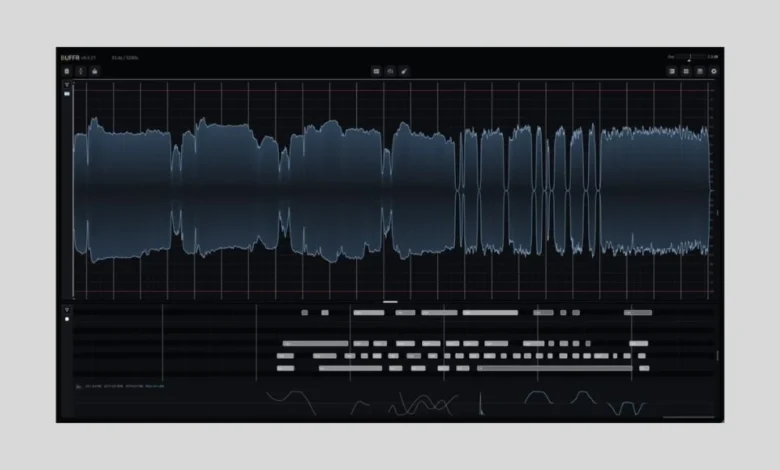
Matari Audio has officially released BUFFR, a groundbreaking free public beta of its innovative retrospective audio, system audio, and MIDI capture plugin. Available for macOS, Windows, and Linux, BUFFR promises to revolutionize how musicians and audio professionals interact with their creative process by offering the ability to capture performances after the fact. This initial release, while in its beta phase, has already garnered significant attention for its ambitious feature set and a surprisingly accessible pricing structure revealed in an update.
Unveiling BUFFR: The Core Functionality and Its Significance
At its heart, BUFFR addresses a common frustration experienced by creators: the elusive perfect take. Similar in concept to existing tools like Rolling Sampler or Rewind, BUFFR distinguishes itself by offering an extended capture buffer, capable of retaining up to 120 minutes of multichannel audio and MIDI history. This extended duration allows users to retroactively capture musical ideas, improvisations, or even critical system audio moments that might have otherwise been lost.
The implications of such a tool are far-reaching, particularly for live performance and spontaneous composition. Many artists, even those with decades of experience, report a phenomenon where the act of "recording" introduces pressure, leading to mistakes that derail an otherwise inspired performance. BUFFR circumvents this by continuously capturing audio and MIDI data in the background, effectively creating a safety net for creativity. Users can then review the captured history and extract the desired sections without the anxiety of needing to hit a record button at the precise moment of inspiration.
Technical Capabilities: A Deep Dive into BUFFR’s Features
BUFFR’s technical specifications highlight its comprehensive approach to capture. The plugin can record up to 16 audio channels simultaneously, treating system audio as a distinct stereo source. Crucially, it also captures MIDI data across all 16 channels, preserving a rich spectrum of performance information. This includes notes, velocity, control change (CC) messages, pitch bend, channel pressure, polyphonic pressure, System Exclusive (SysEx) data, and full support for the expressive capabilities of MPE (MIDI Polyphonic Expression).
A particularly noteworthy feature is BUFFR’s global MIDI mode. This advanced functionality allows the plugin to directly access the OS MIDI input from a hardware controller. This means BUFFR can be placed on a master channel within a Digital Audio Workstation (DAW) and still diligently record MIDI performances from a keyboard or other controller, eliminating the need to arm a separate MIDI track solely for the purpose of feeding the capture plugin. This streamlined workflow can significantly reduce setup complexity and allow for more fluid creative exploration.
Beyond basic audio and MIDI capture, BUFFR incorporates advanced spectral editing capabilities through its "Spectral Grab" feature. This allows users to visually select specific sound events within a spectrogram, both in terms of time and frequency. Once a selection is made, users can then extract or remove desired frequencies. The extracted or modified audio can be reconstructed using various processing methods, including Fast Fourier Transform (FFT), minimum-phase, or linear-phase algorithms, before being seamlessly dragged out.
For audio output, BUFFR supports direct drag-and-drop functionality into DAWs or file managers. The default export format is 24-bit FLAC, offering high-fidelity lossless compression. Additionally, users can choose from a range of other formats including WAV, MP3, AAC, Ogg/Opus, and AIFF. MIDI selections are exported as standard MIDI files (.mid), ensuring broad compatibility with most music production software.
The plugin also integrates essential workflow enhancements such as markers for easy navigation, snapping capabilities for precise editing, offline processing for efficient rendering, and playback functionality. A significant advantage is its ability to recover captured data across DAW restarts, ensuring that no creative output is lost due to unexpected system interruptions. Matari Audio has also developed an open drag-and-drop protocol to facilitate seamless integration with other applications.
Development Timeline and Beta Program Evolution
The initial announcement of BUFFR’s public beta generated considerable excitement, tempered by a provisional understanding of its licensing. Early reports indicated that each beta license would last for 21 days from its first use, with no definitive end date for the beta program announced at that time. This created a degree of uncertainty regarding the long-term availability of the free beta and the eventual pricing of the final product.
However, an important update has since clarified these points. Matari Audio has confirmed that the free beta licenses will remain active until the official release of BUFFR. Furthermore, they have announced a competitive retail price of $49 for the final version. This transparency addresses the earlier ambiguities and solidifies BUFFR’s position as a highly accessible tool for a wide range of users. The plugin is currently available in CLAP and VST3 formats, supporting cross-platform compatibility. The macOS beta, notably, is unsigned and includes a local installer, a common characteristic of beta software distributed outside of official app stores.
User Interface and First Impressions
While the core functionality of BUFFR is robust, initial impressions suggest that the user interface, while functional, may still be undergoing refinement. Some users have noted that the interface could benefit from further development to enhance intuitiveness and streamline the user experience. However, these minor observations do not detract from the overall positive assessment of BUFFR as a powerful and promising tool, especially considering its current free beta status. The developer’s commitment to local processing for all capture, playback, editing, and export operations also addresses privacy concerns, with only licensing, download, and support data being sent to Matari Audio upon user consent.
Broader Impact and Implications for Music Production
The introduction of a tool like BUFFR has the potential to significantly impact the workflows of musicians, producers, and sound designers. By removing the pressure associated with real-time recording, it encourages more experimental and improvisational approaches to music creation. This can lead to the discovery of unexpected musical passages and foster a more organic creative process.
For live performers, BUFFR offers a safety net, allowing them to focus on their performance without the constant worry of missing a crucial moment. The ability to capture system audio also opens up possibilities for capturing online performances, tutorials, or even accidental sound discoveries from other applications.
The competitive pricing of $49 for the full release further democratizes access to this advanced technology. In an industry where powerful plugins can often come with a significant price tag, BUFFR offers a compelling value proposition. Its focus on retrospective capture distinguishes it from traditional recording software, carving out a unique niche in the audio plugin market.
The existence of a "Deal of the Day" offering SSL Native X-Comp for $10 alongside the BUFFR announcement on platforms like Bedroom Producers Blog highlights the dynamic nature of the audio plugin marketplace, where both innovative new tools and established industry standards are frequently made available at attractive price points. This underscores the opportunity for users to expand their sonic palettes and production capabilities.
Conclusion: A Promising Tool Worth Exploring
Matari Audio’s BUFFR stands out as a significant development in the realm of audio and MIDI capture. Its ability to retroactively save performances, coupled with its comprehensive feature set and accessible pricing, makes it a compelling proposition for anyone involved in music creation or audio production. While the interface may still be evolving, the core functionality and the potential for enhanced creativity are undeniable. The free public beta offers an excellent opportunity for users to explore BUFFR’s capabilities and contribute to its ongoing development, making it a tool that is not only innovative but also demonstrably worth downloading and experimenting with. The ongoing development and eventual full release of BUFFR are eagerly anticipated by the creative community.