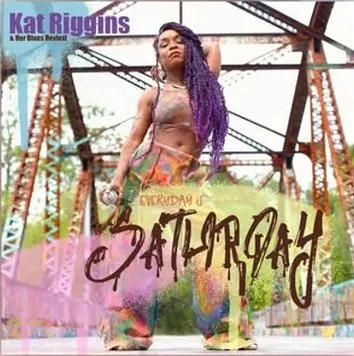
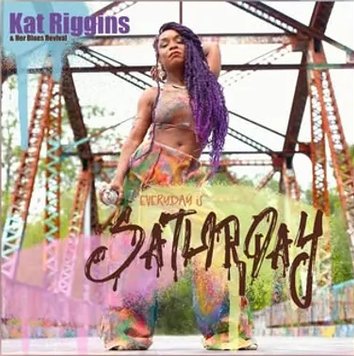
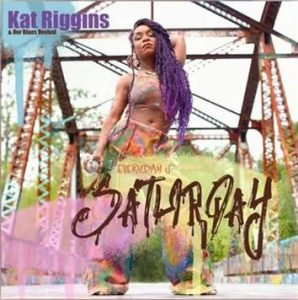
The contemporary roots-music landscape has long relied on artists who bridge the gap between historical tradition and modern commercial energy. Enter Miami-born powerhouse vocalist Kat Riggins, whose latest self-released studio album, Every Day Is Saturday, presents a ten-track masterclass in genre-bending musicianship. Spanning a compact yet fiercely intense 38 minutes, the record encapsulates Riggins’ ongoing mission to revitalize interest in the blues by infusing it with elements of rhythm and blues, soul, traditional gospel, and classic rock and roll. Often drawing critical comparisons to legendary vocal powerhouses such as Koko Taylor and Tina Turner, Riggins delivers a performance on this release that reinforces her reputation as one of the most commanding and energetic frontwomen currently working in the contemporary roots scene.
Background Context and Album Conceptualization
To understand the core message of Every Day Is Saturday, one must examine the socio-cultural context of its creation. In an era dominated by the compounding stressors of modern daily existence—ranging from economic instability and sociopolitical division to the relentless pace of digital connectivity—the concept of the weekend serves as a universal psychological relief valve. For millions of working individuals, Saturday represents a sanctuary: a designated time to step back from professional anxieties, reconnect with community, and celebrate life through socialization and leisure.
Riggins captures this psychological yearning and weaponizes it as a call to action. Rather than treating joy and relaxation as rare, weekend-only luxuries, the album’s title track and broader conceptual framework challenge listeners to radically shift their perspectives. Riggins posits that every single day should be approached with the freedom, anticipation, and celebratory spirit traditionally reserved for the weekend. This philosophy forms the thematic anchor of the entire record, weaving a thread of resilience, self-empowerment, and unapologetic joy through all ten original compositions.
Compositional Structure and Production Dynamics
Every Day Is Saturday was born out of a close creative partnership between Kat Riggins and multi-instrumentalist, songwriter, and producer Tim Mulberry. The creative division of labor on the project highlights a tight-knit, highly collaborative studio environment. Riggins commands the spotlight with her unmistakable, gravel-toned lead vocals, which shift effortlessly from sultry growls to soaring, gospel-infused proclamations.
Tim Mulberry served as the project’s primary instrumental architect, handling the production duties while laying down the foundational tracks across multiple instruments, alongside contributing vital backing vocals. Guitarist Erik Guess injects the project with dynamic, razor-sharp six-string work that anchors the album’s rock-and-roll sensibilities, while Shaelyn Mulberry rounds out the soundscape by providing additional backing vocal harmonies. Together, the core creative unit constructs an organic, muscular sonic backdrop that supports Riggins’ dynamic vocal delivery without ever overshadowing her narrative arcs.
Track-by-Track Chronology and Musical Analysis
The ten-track sequence of Every Day Is Saturday is meticulously arranged to take the listener on an emotional journey, transitioning deliberately from high-octane celebratory anthems to introspective examinations of modern societal friction.
The record opens with "Heads Are Gonna Roll," a hard-driving rock track underpinned by Erik Guess’s commanding guitar rolls. The song sets an assertive tone, establishing boundaries and loyalty through a lens of unyielding protection. This high-energy momentum spills seamlessly into "Do My Thang," a liberating groove-heavy anthem. Here, Riggins delivers infectious, physical lyrics ("I can’t stop my feet and my hips ain’t too far behind… excuse me while I do my thang") that practically demand physical movement from the listener. The optimism continues on "I Say So," where Riggins asserts her individuality over a rollicking rhythm section, declaring herself a "God-made bonafide one of a kind."
As the album progresses past its initial explosive run, the tone shifts toward emotional fortification and resilience. "Ain’t Going Down" slows the tempo slightly while ratcheting up the psychological tension. Confronting existential and personal threats head-on, Riggins sings of refusing to be shaken by adversity, declaring that she will not go down easy—in fact, she refuses to go down at all. This theme of overcoming systemic and personal trauma is further explored in "Tears Like Gasoline," a starkly evocative track that questions the perpetrators of senseless violence. Over smoldering instrumentation, Riggins captures the haunting aftermath of conflict, observing a shooter standing amidst the smoke, bewildered and unaccountable.
One of the album’s emotional centerpieces is "Holy Water," a song that dips heavily into traditional gospel aesthetics. Backed by weeping slide guitar work from Erik Guess, Riggins offers a visceral plea for spiritual cleansing: "God knows what my eyes have seen, cleanse my spirit, wash my soul. Make me fearless, make me bold." This invocation of spiritual fortitude flows directly into "Fear Slayer," a declaration of ambitious self-actualization where Riggins asserts that her "dreams are bigger than my fears."
The celebration resumes with "Til the Lights Come On," an invitation to pure, unadulterated dance-floor escapism. Riggins urges the audience to "put the boogie in the woogie, now put the hip in the shake, put the rock in the roll," encouraging collective endurance through joy.
However, the album refuses to remain purely in the realm of escapism. "Hunger Games" brings a sobering socio-economic reality check to the tracklist. Observing the modern landscape as a cutthroat environment, Riggins dissects competing human desires: "One man hungers for love. The other man craves some peace. Another man just wants cash to satisfy his greed."
The album concludes with "Live in Peace," a passionate, meditative croon that acts as both a prayer and a philosophical summation. Posing fundamental questions about the mechanics of human communication ("How powerful is a word? Can it lift you up? How powerful is a prayer when it’s prayed with love?"), Riggins leaves the listener with a final, lingering benediction of spoken, prayed, and sung harmony aimed at fostering global harmony.
Supporting Data and Industry Context
Self-released projects in the modern independent blues and roots circuit face distinct economic and promotional hurdles, yet they also offer artists total creative autonomy. By partnering with Tim Mulberry for production and distribution via her independent channels, Riggins has maintained absolute control over her artistic output. At 38 minutes long across 10 tracks, Every Day Is Saturday is strategically engineered for modern consumption habits, favoring high-impact, repeatable listening experiences over bloated, filler-heavy tracklists.
The strategic positioning of the album aligns with a broader industry trend wherein independent roots artists bypass traditional major-label gatekeepers to connect directly with niche, highly dedicated consumer bases via streaming platforms, direct-to-fan sales, and rigorous touring schedules. Riggins’ relentless touring ethos, combined with her unmistakable vocal branding, positions this release as a critical stepping stone in her broader career trajectory.
Broader Impact and Implications
Every Day Is Saturday transcends the boundaries of a standard genre-release by functioning simultaneously as a party record and a sociological snapshot of the contemporary human condition. Kat Riggins successfully navigates the delicate tightrope between hedonistic escapism and profound social commentary.
By demanding that everyday life be approached with the freedom of a Saturday, Riggins offers listeners an actionable psychological tool to combat modern burnout. At the same time, her poignant inquiries into violence, greed, and the healing power of words ensure that the album resonates on a deeper, more intellectual level. Through unrelenting vocal power, tight musicianship, and an uncompromising commitment to joy, Kat Riggins and Her Blues Revival have delivered a vital, timely contribution to the modern American roots canon—proving that the blues remains one of the most effective mediums for processing pain, celebrating life, and demanding a better tomorrow.