Stephen A. Smith Escalates Criticism of California Tax Policy and Digital Surveillance Practices

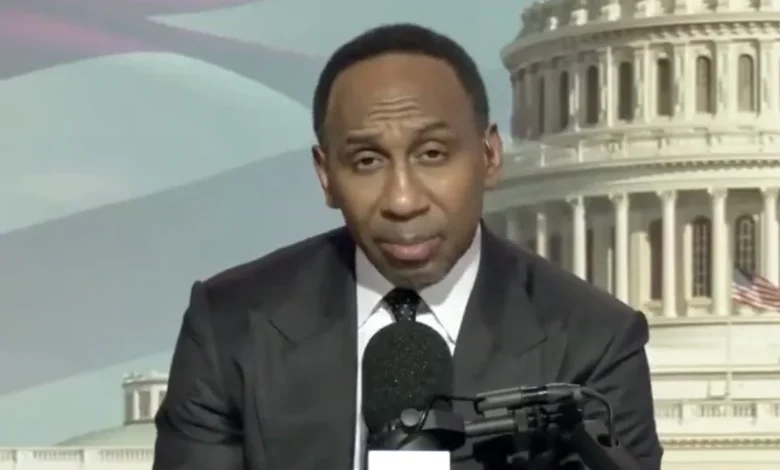
The ongoing discourse surrounding California’s tax structure and digital privacy has received a notable boost in public profile following comments made by prominent sports media personality Stephen A. Smith. During a recent appearance on the PBD Podcast, Smith, who has long been a subject of speculative interest regarding a potential transition from sports broadcasting to the political arena, levied sharp criticism against the state’s fiscal management and its methods of tracking residency for tax purposes. His remarks have reignited a broader conversation regarding high-tax states, the movement of high-net-worth individuals, and the extent to which state governments utilize mobile technology to enforce tax compliance.
The Intersection of Media Influence and Political Ambition
Stephen A. Smith has cultivated a reputation as one of the most recognizable voices in American media, largely through his tenure at ESPN. However, in recent years, he has increasingly utilized platforms such as The Stephen A. Smith Show and his program, Straight Shooter, to delve into sociopolitical issues. While Smith has frequently addressed rumors of a potential presidential run—often noting that polling data suggests he could be a viable candidate—he has consistently maintained that his primary focus remains on his broadcasting career.
Despite these disclaimers, Smith’s willingness to engage in high-level policy critiques suggests a strategic expansion of his public persona. His recent commentary on the PBD Podcast serves as a significant case study in how media personalities can leverage their platforms to influence the public narrative on economic policy, particularly when the critique involves direct, personal anecdotes regarding state governance.
The Mechanics of California Residency Taxation
At the core of Smith’s criticism is the complexity of California’s tax code, specifically as it applies to itinerant professionals who may split their time between multiple states. California maintains one of the most aggressive personal income tax structures in the United States, with a top marginal rate currently exceeding 13 percent. For taxpayers earning significant income, these rates are among the highest in the nation.
Smith’s narrative centers on his experience as a resident and taxpayer in the state while fulfilling his duties as an analyst for ESPN’s NBA Countdown. According to Smith, he was advised by his estate planners that his presence in California was being meticulously tracked by authorities. The specific mechanism described by Smith—the monitoring of mobile phone data to establish physical presence—highlights a growing concern regarding the intersection of data privacy and state tax enforcement.
In his account, Smith detailed that his advisors recommended he spend his weekends outside of California, specifically suggesting locations such as Las Vegas or Utah, to avoid triggering additional tax liabilities. He alleged that authorities utilized mobile phone signals to determine whether an individual was physically present in the state, a practice that, if verified, would represent a highly sophisticated approach to tax auditing. When Smith reviewed his tax filings, he claimed the data aligned with the logistical warnings provided by his financial team, reinforcing his perception that the state’s tax apparatus was designed to capture revenue with intrusive efficiency.
Contextualizing State Tax Enforcement and Digital Surveillance
The assertion that state agencies utilize location data to enforce tax obligations is not entirely without precedent in the broader discussion of tax administration. States like California, New York, and New Jersey, which feature high income tax burdens, have historically utilized "nexus" audits to determine if a taxpayer has spent enough time in the state to be classified as a resident.
While the California Franchise Tax Board (FTB) does not explicitly detail the use of real-time mobile tracking as a primary audit tool in its public literature, tax experts note that agencies often utilize "lifestyle audits." These investigations may include the review of credit card statements, utility bills, social media posts, and cellular tower logs to establish a physical footprint. In the era of widespread smartphone usage, the digital breadcrumbs left by high-net-worth individuals have become a significant component of state-level tax enforcement.
A Public Confrontation with Governor Gavin Newsom
Smith’s critique extended beyond the structural mechanics of the tax code to a direct appraisal of California Governor Gavin Newsom. Recounting a personal interaction, Smith noted that he had spoken with the Governor on several occasions. During one such exchange, Smith claims he was candid about his opposition to the state’s fiscal policy.
"I remember years later, I look at Gavin Newsom, who I’ve spoken to a couple of times, and say, ‘You look beautiful in those blue suits. You look very presidential. But you ain’t getting my vote.’ Because of these damn taxes," Smith stated during the podcast. This confrontation encapsulates a growing sentiment among a segment of the professional class who feel that the tax burden in California—which includes both high income tax rates and a rising cost of living—is unsustainable, regardless of the political rhetoric surrounding the state’s social policies.
Broader Implications for State Revenue Models
The implications of Smith’s story are twofold. First, it underscores the ongoing trend of "tax migration," where individuals and corporations move their primary residences to states with lower or no income tax, such as Texas, Florida, or Nevada. California has seen a documented shift in its demographic and tax base, a phenomenon often attributed to the high cost of compliance and taxation for top-tier earners.
Second, the discourse highlights the tension between digital privacy and state oversight. As technology allows for more granular tracking of individuals, the potential for states to leverage this data for fiscal purposes is likely to face increasing scrutiny from civil liberties groups and tax advocates. The question of whether a mobile device’s "ping" can be used as definitive evidence of residency in a tax audit is a legal gray area that may eventually reach the courts, as the balance between state revenue collection and individual privacy continues to shift.
Economic Analysis of the California Tax Environment
Economists often point to California’s reliance on high-earners as a potential vulnerability in the state’s budget. Because a significant portion of the state’s income tax revenue is generated by a relatively small percentage of the population, the departure of these individuals can have a disproportionate impact on the state’s fiscal health.
Furthermore, proposals to increase taxes—such as the hypothetical 17 percent rate mentioned by Smith—often trigger intense debates regarding economic competitiveness. Supporters of higher taxes argue that they are necessary to fund social services, education, and infrastructure, which are vital for long-term economic stability. Critics, however, argue that these policies create a "brain drain," driving away the very talent and capital needed to sustain the state’s economy.
Looking Toward the Future
Whether Stephen A. Smith’s recent commentary is a precursor to a formal entry into the political sphere remains a subject of speculation. However, his ability to translate complex financial and personal grievances into a narrative that resonates with a broad audience is a hallmark of political communication. By highlighting the intersection of his own professional life with the complexities of California’s tax and surveillance environment, Smith has managed to place a spotlight on issues that are currently at the center of the national economic debate.
As the political landscape continues to evolve, the influence of media personalities who operate outside of traditional party structures is likely to grow. Should Smith continue to utilize his platforms to challenge the status quo, his commentary will remain a significant data point in understanding how public perception of fiscal policy is shaped in the 21st century. For now, his public departure from California serves as a practical, albeit high-profile, example of the choices many citizens are making in response to the modern tax environment.