The Mary Wallopers Bring Radical Irish Folk and Working-Class Urgency to the Global Stage Ahead of New Album Paddywhackery

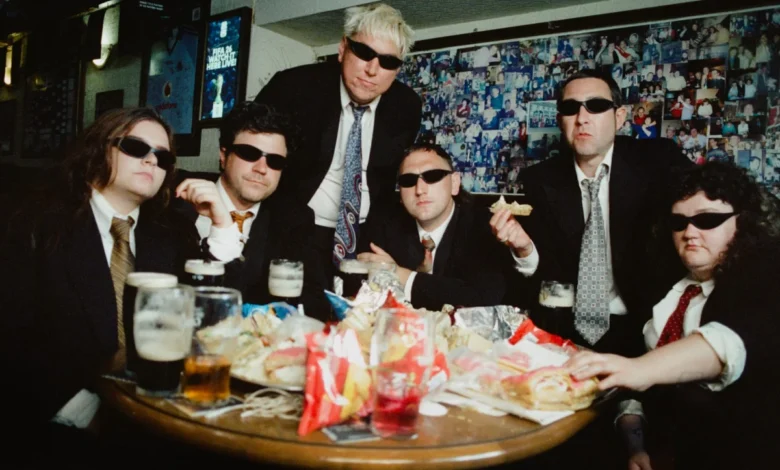
While millions of workers across the United States and Canada observed Labor Day by taking a well-deserved respite, the landscape in the far northeast of the Republic of Ireland looked entirely different. In Dundalk, September’s first Monday carried no official holiday status, serving merely as the beginning of another standard work week. The historical holiday, rooted deeply in the late-19th-century trade union protests for equitable working conditions and fair labor practices, holds no statutory place on the Irish calendar. Yet, this unceremonious backdrop proved fitting for a reflective and forward-looking conversation with Charles Hendy, co-frontman of the rapidly ascending Irish folk collective The Mary Wallopers.
As the band prepares for the September 18 release of their highly anticipated third studio album, Paddywhackery, via BC Records, they find themselves situated comfortably at the intersection of historical preservation and contemporary political agitation. Comprising brothers Charles and Andrew Hendy on guitar and vocals, alongside Ken Mooney on drums, Róisín Barrett on bass, Finnian O’Connor on tin whistle and uilleann pipes, and Catriona Gribben on accordion, the Dundalk-based sextet has cultivated a distinctive sonic identity. Their music borrows heavily from traditional historical balladry while simultaneously channeling an urgent, contemporary progressivism that resonates powerfully with modern audiences navigating economic precarity and sociopolitical unrest.
The Genesis of The Mary Wallopers: From Dundalk DIY to International Stages
The origins of The Mary Wallopers trace back to the familial roots and gritty DIY music culture of Dundalk, a town with a rich industrial and cultural history situated near the border of Northern Ireland. Reflecting on his musical beginnings, Charles Hendy paints a vivid picture of an upbringing steeped in resourcefulness and unconventional access to the arts.
"A long, long time ago, me and Andrew started playing music," Charles recounts. "Our father was a bulldozer driver in a dump—and he found an accordion, put it in the cab of his bulldozer, brought it home, and started playing the accordion. So the first instrument that we attempted to learn was the accordion."
This humble introduction served as a microcosm for the band’s eventual trajectory. Growing up amidst Dundalk’s vibrant, albeit informal, teenage DIY music scene, the Hendy brothers honed their craft in unconventional venues.
"When we were teenagers, we’d go play gigs in this bowling alley that had a venue at the back of it," Charles explains. "It was all teenagers. The only adults there were the adults that were selling drink behind the bar to all the children, which we did not complain about."
As young adults facing severe economic hardship, the brothers turned to traditional folk ballads as both a cultural anchor and a means of survival. Living in the center of Dundalk during a period of intense financial scarcity, the musicians lacked basic utilities like electricity, prompting a pragmatic approach to gigging.
"We started playing ballads, like folk music, when we were really poor, living in the center of Dundalk," says Charles. "We couldn’t afford electricity or anything, so we used to go into pubs and ask them to give us pints and crisps sometimes if we play music. Eventually, they must have figured out it was cheaper to just pay us, so we started getting paid for gigs."
This unwavering commitment to artistic independence laid the foundation for the band’s ethos. "Honestly, I suppose our attitude has always been to not compromise at all," Charles notes. "We were happy to resign ourselves to being poor as long as we could play music all the time and do whatever we wanted. So we accepted that as a freedom before we ever thought about, ‘Oh, we should make this a job.’ So no compromise is what got us to where we are now."
Musical Evolution and the Thematic Scope of Paddywhackery
Since the release of their self-titled debut album in 2022, The Mary Wallopers have experienced a meteoric rise, transforming from a localized folk act into one of the most energetic and commercially successful live groups across Ireland and Scotland. Their electrifying performances have translated into massive festival slots, widespread critical acclaim, and increasingly large venue bookings, culminating in upcoming arena dates that signal a significant milestone for contemporary traditional folk music.
This momentum is poised to accelerate with the arrival of Paddywhackery. The forthcoming twelve-track LP adopts a clear, mission-driven approach to storytelling, confronting systemic injustices head-on. The album’s tracklist reads like a manifesto of working-class solidarity and resistance, featuring pointed critiques of imperialism, economic inequality, and rising authoritarianism.
Tracks such as "Crowns of England" direct their ire squarely at historical and ongoing legacies of colonialism, a theme deeply embedded in the historical consciousness of the Irish working class. Meanwhile, economic inequality and housing exploitation are meticulously dismantled in songs like "Worker’s Song" and "Landlord’s Demise," tracks that feel increasingly relevant amid Europe’s contemporary cost-of-living crises and housing shortages. Furthermore, the band expands its geopolitical lens on tracks like "Kit Kat Club," drawing stark historical parallels to caution against the insidious creep of fascism in modern political discourse.
Yet, despite the gravity of these themes, The Mary Wallopers have carefully avoided transforming their discography into a dreary academic exercise. The album expertly balances its political polemics with celebratory, high-energy anthems designed to rouse audiences into a communal, cathartic fervor. It is this exact duality—combining the righteous fury of historical labor struggles with the unbridled joy of a crowded pub session—that has come to define the band’s signature appeal.
The Broader Renaissance of Irish Folk and Protest Music
The emergence and rapid ascent of The Mary Wallopers do not occur in a vacuum. Over the past half-decade, the broader global and domestic landscape has witnessed a remarkable resurgence in the popularity of traditional Irish folk music, Celtic punk, and politically charged acoustic storytelling. Acts like Lankum, Kneecap, and The Mary Wallopers are spearheading a cultural renaissance that reclaims traditional idioms from the sanitized, tourist-friendly interpretations of the past, returning the genre to its radical, working-class roots.
Musicologists and cultural critics attribute this renaissance to a convergence of socioeconomic factors. For a generation of younger listeners grappling with global pandemics, stagnant wages, soaring housing costs, and deepening political polarization, traditional folk music offers a profound sense of historical continuity and collective catharsis. Songs written a century or more ago about labor exploitation, forced emigration, and anti-authoritarian resistance frequently mirror the anxieties of the 21st-century precariat.
By framing these historical struggles within a modern, unapologetically anti-establishment context, groups like The Mary Wallopers bridge the generational divide. Their live shows regularly attract a diverse audience of seasoned traditional music enthusiasts alongside urban youth drawn to the group’s punk-rock intensity, raw authenticity, and sharp wit.
Industry Implications and the Path Forward
The commercial viability of politically outspoken folk music in mainstream venues—exemplified by The Mary Wallopers’ transition into arena-level touring—signals a notable shift within the contemporary music industry. For decades, major record labels and commercial radio programmers steered clear of overtly political or anti-capitalist sentiment, favoring depoliticized pop and predictable crossover formats. However, the streaming era has decentralized music consumption, allowing independent and culturally specific acts to build fiercely loyal, self-sustaining global fanbases without relying on traditional gatekeepers.
BC Records, the independent label championing the release of Paddywhackery, stands to benefit significantly from this shifting paradigm. As fans increasingly gravitate toward authentic storytelling and artists who wear their politics on their sleeves, the market appetite for uncompromised, grit-infused folk music has never been stronger.
As Charles Hendy and his bandmates prepare to take these new anthems on the road, the underlying message remains one of persistent hope amid structural adversity. Whether they are addressing the ghosts of colonial history, the modern exploitation of tenants and workers, or simply inviting a room full of strangers to raise a glass against the dark, The Mary Wallopers prove that traditional music can serve as a vital weapon for social consciousness.
With Paddywhackery set to drop on September 18, the band stands at the vanguard of a new era for Irish music—one that honors the struggles of the past while aggressively demanding a more equitable future.