J Balvin Celebrates Brazilian Music at Rock in Rio With Cameos From Pedro Sampaio and Melody: Watch

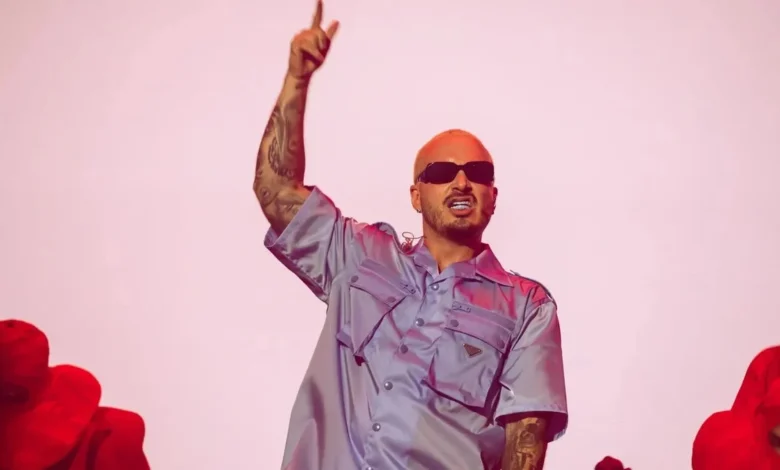
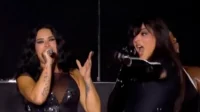
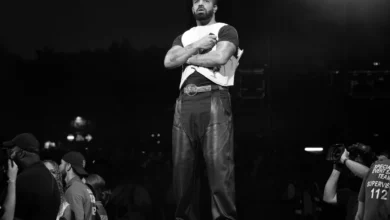
The Palco Mundo, the beating heart of the Rock in Rio festival, transformed into a cross-continental nexus of rhythm and collaboration this past Saturday. Colombian reggaeton luminary J Balvin delivered an hour-long set that served as a masterclass in global musical synthesis, bridging the gap between Latin American urban sounds and the vibrant, high-energy landscape of Brazilian funk and pop. While Balvin has long been a titan of the international charts, his appearance at the 2026 iteration of the festival was marked by a deliberate effort to honor the local musical ecosystem, culminating in high-profile appearances by domestic stars Pedro Sampaio and Melody.
A Strategic Fusion of Styles
J Balvin’s setlist was meticulously curated to reflect his career trajectory, moving seamlessly from his foundational reggaeton anthems to the tracks that cemented his status as a global crossover artist. However, the true narrative arc of the performance was the homage paid to his Brazilian collaborators. The energy peaked when Balvin revisited the discography of Anitta, a peer with whom he shares a profound artistic synergy.
The crowd erupted as the opening chords of "Bola Rebola"—the 2019 smash collaboration featuring Anitta, Tropkillaz, and MC Zaac—resonated through the City of Rock. This was followed by the 2017 chart-topper "Downtown," a track that arguably served as one of the definitive moments in the internationalization of Brazilian-Latin urban fusion. Balvin’s performance was not merely a mechanical playback of hits; it was an acknowledgment of the debt owed to the Brazilian market, which has been instrumental in the global explosion of Spanish-language music.
The Guest Appearances: A Bridge Between Cultures
The integration of local talent moved beyond nostalgic tributes when Balvin invited DJ and producer Pedro Sampaio to the stage. Sampaio, known for his ability to blend traditional Brazilian funk with electronic sensibilities, brought an unmistakable surge of energy to the Palco Mundo. Together, they performed "Perversa," a track that showcased the fluid linguistic and rhythmic barriers currently being dismantled by the new generation of Latin artists.
The collaborative spirit deepened further when Melody, one of Brazil’s most prominent pop voices, joined the duo for a rendition of "JETSKI." The inclusion of Melody underscored a crucial trend in the contemporary industry: the movement away from rigid genre categorization. By placing a Colombian reggaeton superstar alongside Brazilian funk-pop icons, the performance functioned as a showcase for the "LatAm" sound—a cohesive, albeit diverse, sonic identity that is increasingly dominating global streaming platforms.
The Evolution of the Latin Music Movement
Balvin’s performance at Rock in Rio 2026 takes place against the backdrop of a significant cultural shift. In a recent interview with GQ, the Medellín-born artist articulated a sentiment that has been gaining traction among the industry’s elite: the era of the "English-language prerequisite" is effectively over.
"It’s our moment," Balvin remarked during the interview, reflecting on the sustained success of peers like Karol G and Bad Bunny. "It’s not a trend. Now it’s really a movement." This perspective is backed by data from the International Federation of the Phonographic Industry (IFPI), which has consistently tracked the double-digit percentage growth of Spanish-language music consumption in non-Spanish speaking territories, including the United States, Europe, and parts of Asia.
The implication of this shift is profound. For years, the traditional path for a Latin artist to achieve "global" status involved recording an album in English to capture the North American market. Balvin’s recent stance suggests that the internal market of Latin America, combined with the vast, borderless reach of digital streaming, has created an ecosystem where an artist can achieve peak global commercial success while remaining entirely rooted in their native language.
Historical Context: Rock in Rio as a Catalyst
Rock in Rio remains one of the world’s most significant music festivals, not only for its scale but for its historical role as a platform for cross-cultural exchange. Since its inception in 1985, the festival has acted as a bridge between the Brazilian public and international acts.
In recent years, the festival has shifted its booking strategy to prioritize the "globalization" of its main stage. By headlining the Palco Mundo, Balvin joins an elite class of performers who have leveraged the festival to solidify their dominance in the Southern Hemisphere. The logistical challenge of hosting such a high-profile set—complete with special guests and complex audio-visual choreography—speaks to the professional maturity of the Latin urban touring circuit.
Analysis of the Industry Implications
From an industry standpoint, the collaboration between Balvin, Sampaio, and Melody serves as a blueprint for future tours. The "surprise guest" model is a well-worn trope in live entertainment, but when executed in a festival setting, it serves as a powerful validation of local talent. For an artist like Melody, performing alongside a global powerhouse like Balvin provides an immediate, massive audience expansion that would take months of traditional marketing to achieve.
Furthermore, the data suggests that these collaborations are not merely vanity projects. Songs that feature cross-regional collaborations often see a "halo effect" on streaming platforms, where listeners from Colombia discover Brazilian funk, and listeners from Brazil delve deeper into the reggaeton catalog. This symbiotic relationship is the engine driving the current surge in Latin music’s market share.
A Timeline of the Performance
The chronology of the evening was marked by a steady escalation in tempo and guest intensity:
- 10:00 PM: J Balvin takes the stage, opening with a string of his solo reggaeton hits to establish the foundational sound.
- 10:20 PM: A transition into the "Brazilian segment," starting with the heavy, percussive sounds of "Bola Rebola."
- 10:35 PM: Pedro Sampaio enters the stage to a massive crowd response, marking the first major surprise of the night.
- 10:45 PM: The performance of "Perversa" sets the tone for the final act of the show.
- 10:50 PM: Melody joins the ensemble for "JETSKI," representing the high point of the collaborative effort.
- 11:00 PM: The set concludes with a high-energy encore, leaving the crowd with a clear message of unity between the Latin American music markets.
The Future of the "Movement"
As the dust settles on Rock in Rio 2026, the industry is left to analyze the long-term impact of such performances. If, as Balvin suggests, the current state of music is a "movement" rather than a "trend," then the integration of markets like Brazil and Colombia will only become more common.
The success of the Saturday night show serves as a case study for festival organizers worldwide: international audiences are increasingly interested in authentic, local expressions of global genres. By refusing to water down his set with English-language concessions, Balvin has demonstrated that cultural specificity is, in fact, a universal language.
As we look toward the remainder of the 2026 festival season, it is highly probable that we will see an increase in similar "super-group" style performances. The barrier to entry for international collaboration has been lowered by digital connectivity, but the barrier for cultural resonance remains high—a hurdle that Balvin and his guests cleared with ease in Rio de Janeiro.
Ultimately, the night was a testament to the fact that the Latin music industry has reached a state of maturity where it no longer needs to ask for a seat at the table; it has built its own, and the world is currently paying admission to watch. Whether through the pulse of a funk beat or the grit of a reggaeton lyric, the message remains consistent: the future of global pop is inextricably linked to the sounds of the Americas.
Related posts: