Lady Gaga seeks recovery of 250000 dollars in legal fees following dismissal of Mayhem trademark lawsuit

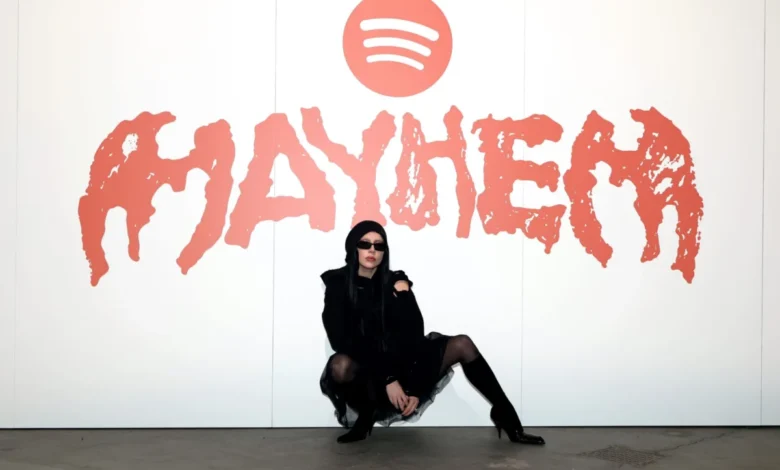
In a significant legal filing submitted late last week, global pop superstar Lady Gaga, legally known as Stefani Germanotta, has petitioned the federal court to compel the surfwear company Lost Surfboards to reimburse her for the substantial legal expenditures incurred while successfully defending herself against a trademark infringement lawsuit. The motion, which seeks a total of 232,484 dollars in legal fees and costs, characterizes the litigation as an aggressive, meritless "publicity stunt" that was weaponized to extract an out-of-court settlement from the artist.
The dispute centered on the branding of Lady Gaga’s album titled "Mayhem." Lost Surfboards, a California-based company that has utilized the "Mayhem" name for its surfboards and related merchandise since the 1980s, alleged that the singer’s use of the term created consumer confusion. They argued that fans would mistakenly believe the artist’s musical work and associated merchandise were endorsed or produced by the surf brand. However, a federal judge dismissed the case in August, ruling that no reasonable consumer would confuse a high-profile pop star’s album branding with a niche surf apparel line.
Chronology of the Legal Dispute
The conflict began in March 2025, when Lost Surfboards filed its complaint in federal court. The company alleged that the album title, combined with a stylized red logo appearing on merchandise, constituted a direct infringement on their established intellectual property.

- March 2025: Lost Surfboards initiates the lawsuit, seeking an immediate injunction to halt the use of the "Mayhem" name on the album and associated tour materials.
- December 2025: Judge Fernando M. Olguin delivers a significant blow to the plaintiff’s case, denying the motion for a preliminary injunction. The court signaled at this stage that the likelihood of success for the plaintiff was slim, given the strong First Amendment protections afforded to expressive works.
- August 2026: Following nine months of intensive discovery and pre-trial maneuvering, the court formally grants summary judgment in favor of Lady Gaga, effectively ending the lawsuit. The judge ruled that the claims were legally insufficient and barred by established precedents regarding the use of trademarks in artistic and expressive media.
- September 2026: Lady Gaga’s legal team files a motion for attorney fees, arguing that the case was "exceptional" and should have never proceeded beyond the initial complaint.
The Argument for Fee Shifting
In the motion filed by her lead attorney, Orin Snyder, the defense argues that the lawsuit was an "improper effort" to capitalize on the singer’s immense global platform. The filing asserts that the use of the word "Mayhem"—a common dictionary term—does not grant a company a monopoly over its usage, especially when applied to an entirely different market sector like music.
Snyder’s filing emphasizes that the litigation was not a genuine attempt to protect a brand, but rather a "pressure campaign." The defense specifically points to the plaintiff’s insistence on a full-day, in-person deposition of Lady Gaga while she was in the midst of a rigorous international tour. The motion suggests this was a calculated move to increase the cost of defense to the point where a settlement might seem more economical than continuing the legal battle. "A litigant should not be permitted to use the federal courts to launch a publicity stunt masquerading as a lawsuit," the filing states, noting that the "burden was the point."
Legal Context and First Amendment Protections
The resolution of this case underscores a long-standing trend in U.S. jurisprudence regarding the intersection of trademark law and the First Amendment. Courts have historically been protective of "expressive works," including songs, films, and literature. The legal standard typically requires plaintiffs to prove more than just a shared word or minor stylistic overlap; they must demonstrate that the use of a mark is explicitly misleading or creates a high degree of confusion that would lead a consumer to believe the artist’s work is officially affiliated with the brand.
Judge Olguin’s ruling reflected this standard, noting that the allegations provided by Lost Surfboards were "conclusory and insufficient." The court found that the mere existence of a shared word, even when used in a similar font or color scheme on merchandise, did not meet the high threshold required to override the constitutional protections granted to artistic output.

Financial Implications and Industry Reaction
The demand for 232,484 dollars in legal fees is not merely a request for reimbursement; it serves as a deterrent against future litigation. In federal trademark law, the "exceptional case" standard allows courts to award fees to the prevailing party if the litigation was deemed baseless or brought in bad faith. By labeling the case "exceptional" from its inception, Gaga’s legal team is signaling to the industry that high-profile artists will no longer absorb the costs of "frivolous" lawsuits without seeking full restitution.
For legal experts, this case serves as a cautionary tale for smaller brands considering litigation against major public figures. While brand protection is a vital component of intellectual property management, the costs associated with litigating against a global entity are astronomical. When the merits of the case are weak, as determined by the federal court, the resulting legal fees can become a significant liability for the plaintiff.
Current Status and Future Outlook
As of mid-September 2026, Lost Surfboards has not yet filed a formal notice of appeal regarding the summary judgment decision. While attorney Keith G. Bremer, representing the surf brand, previously stated that his client disagreed with the court’s ruling, the silence from his camp following the filing of the fee motion suggests a reassessment of the company’s legal strategy.
The court has yet to rule on whether the request for legal fees will be granted in full. Should the motion be successful, it would represent a significant victory for the defense and a clear judicial message regarding the misuse of the court system to target celebrities.

For Lady Gaga, the request for fees represents the final step in closing a chapter that has occupied a significant portion of her recent career. Having already successfully protected her artistic vision against the claim of infringement, the focus now shifts to the financial accountability of the company that initiated the dispute. The outcome of this fee motion will be closely watched by entertainment lawyers and brand managers alike, as it will likely influence how similar trademark disputes are handled in the future.
Ultimately, the case serves as a reminder of the distinction between protecting a brand and stifling expression. By relying on the "common dictionary word" argument, the court has reinforced the principle that language remains largely in the public domain, even when brands attempt to claim ownership over everyday terms. As the industry continues to evolve, the balance between intellectual property rights and creative freedom remains a delicate, and often expensive, endeavor.
Related posts: