Moses Crouch and the Trance State of North Mississippi Hill Country Blues: A Legacy Reimagined

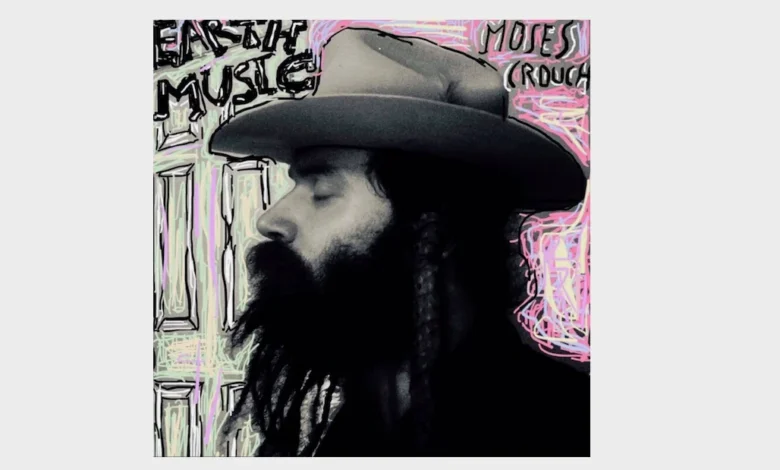
For Memphis-born musician Moses Crouch, the act of performing North Mississippi Hill Country blues is not merely an exercise in musical proficiency; it is a transformative, meditative experience that strips away the anxieties of the modern world. By stripping his sound down to droning, repetitive rhythms and one-chord structures, Crouch taps into a primordial sonic tradition that traces its lineage back to West African musical practices. As he navigates the intersection of Black folk traditions, Georgia blues, and Memphis jug music, Crouch has emerged as a vital steward of a genre that, despite its immense influence on the global musical landscape, has often remained relegated to the fringes of mainstream recognition.
A Genre Defined by Trance and Tradition
North Mississippi Hill Country blues is distinct from the more widely recognized Delta or Chicago styles. While the latter often rely on standard 12-bar structures and complex melodic shifts, Hill Country blues is defined by its hypnotic, rhythmic persistence. It is music built for the juke joint—a communal, sweaty, and unpretentious environment where the groove is the primary currency.
Crouch characterizes this music as "trance-inducing," noting that it operates on a different frequency than traditional Western pop. "It’s a holdover from the West African days," Crouch explains. The focus is not on technical melodic virtuosity, but on the ability to lock into a drone or a singular chord, allowing the audience and the performer to enter a state of collective consciousness. For the listener, this can manifest as a visceral physical response; for the player, it is a form of meditation that offers a profound sense of bliss, unburdened by the pressures of commercial polish.
The Chronology of an Influential Legacy
The roots of the genre are deeply planted in the soil of North Mississippi, yet its branches have stretched across decades of popular music history. The evolution of this sound can be traced through several key figures who established the foundations upon which artists like Crouch now build:
- Early 20th Century: Figures like Sid Hemphill, a multi-instrumentalist who predated the formalized "Hill Country" label, laid the groundwork for the genre’s rhythmic emphasis. His influence remains a cornerstone for modern practitioners.
- 1938: Bo Carter, a seminal member of the Mississippi Sheiks, recorded "Old Devil," a track that epitomizes the non-linear, drone-heavy approach that would define the regional sound.
- Mid-20th Century: Fred McDowell emerged as the patriarch of the genre, influencing countless rockers, including The Rolling Stones. Simultaneously, R.L. Burnside and Junior Kimbrough codified the "Hill Country" sound, characterized by their steady, relentless rhythms and "crooked" song structures.
- The 21st Century Transition: The influence of the genre became explicit through artists like The Black Keys, who championed the work of Burnside, bringing the sound to a global indie-rock audience.
- 2024–2025: Moses Crouch releases Earth Music, winning the Memphis Blues Society’s Best Self-Produced Album award, signaling a new generation’s commitment to preserving the authenticity of the style.
The Memphis-Mississippi Continuum
Crouch’s career has been defined by his fluidity between the Memphis music scene and the rural outposts of North Mississippi. While he grew up in the urban environment of Memphis—which he describes as having a "sheen" or a "city-fied" polish—his musical heart lies in the raw, unadorned aesthetics of the hills.
"In Memphis, you kind of put on a sparkling jacket, and when you’re in Mississippi, you take it off," Crouch observes. This dichotomy is not one of conflict, but of texture. The Memphis scene, with its rich history of R&B and soul, provides the structure, while the Hill Country tradition provides the soul and the grit. Crouch’s early immersion into this world was facilitated by mentors like Chris Chew of the North Mississippi All Stars, who introduced him to the Burnside and Dickinson families. This mentorship provided him with more than just musical technique; it imparted an "attitude and mojo" that cannot be taught through study alone.
Fact-Based Analysis: The "Multiplative" Nature of Rhythm
Contrary to the assumption that music with fewer chords is inherently "simple," Hill Country blues presents a complex rhythmic challenge. Crouch describes the style as "multiplative," where a player is often executing multiple, overlapping rhythms simultaneously.
From a musicological perspective, this layering is what differentiates authentic Hill Country blues from amateur interpretations. Many players attempt to replicate the genre by focusing on the chords or the lyrics, but they often miss the "quintessential groove." Without that specific rhythmic lock, the music loses its potency. This demand for authenticity is why Crouch emphasizes that the genre is not a product of commercial songwriting factories, but a living, breathing tradition passed down through families and communities.
Cultural Preservation and Modern Recognition
The survival of Hill Country blues is inextricably linked to the work of organizations like the Mount Zion Memorial Fund, which seeks to preserve the history of blues musicians by placing headstones on unmarked or neglected graves. Crouch’s involvement in projects like the commemoration of Belton Sutherland—a master of the genre whose lyrics were as raw and defiant as his guitar work—underscores the importance of historical stewardship.
Furthermore, the recent surge in interest surrounding the 2025 film Sinners, directed by Ryan Coogler, has served as a cultural catalyst for the blues. By exposing a mainstream, global audience to the haunting textures of this music, the film has bridged a gap between rural, localized traditions and contemporary media. Crouch views this positively, noting that while the music is evolving—incorporating elements of hip-hop and R&B—its core remains untouched.
Looking Toward the Future
As Crouch looks ahead, his process remains largely spiritual rather than forced. He rejects the traditional model of sitting down to "write" a song, preferring to let the music evolve from the grooves he discovers in his meditation-like states.
The implications of this approach are significant for the broader music industry. At a time when digital production and algorithmic music creation are dominant, the continued relevance of a genre rooted in physical, repetitive, and deeply human rhythm suggests a counter-movement. Audiences are increasingly seeking music that feels "real"—music that, in the words of Crouch, has a "feel" that is detected before a single note is even played.
For Moses Crouch, being a part of this lineage is his greatest professional achievement. He does not view himself as an innovator trying to reinvent the wheel, but as a vessel through which a long-standing, powerful tradition can continue to speak to new generations. Whether through the haunting falsettos of his latest LP or the raw energy of his live performances in Memphis and the Mississippi hills, Crouch remains dedicated to the "crooked" structures and the "droning" grooves that define a sound that, despite its age, remains as vital as ever. The music, he believes, is self-sustaining; it is an identity that exists regardless of its surroundings, as authentic in a modern cinema as it was in a 20th-century juke joint.
Related posts: