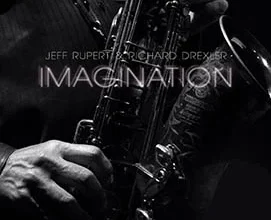
A Masterclass in Modern Jazz Duet Dynamics: Jeff Rupert and Richard Drexler Captivate Audiences with the Release of Imagination

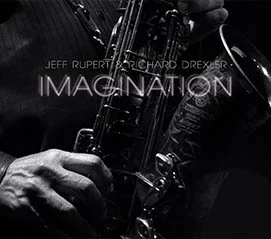
The contemporary jazz landscape has long celebrated the expansive energy of large ensembles and the high-octane drive of standard quartets, yet few formats test the limits of musicianship quite like the stripped-down tenor saxophone and piano duo. In their latest critically acclaimed release, Imagination, saxophonist Jeff Rupert and pianist Richard Drexler strip away the traditional rhythm section to expose the raw, unadorned architecture of American jazz. Recorded live to capture the immediacy and electrifying spontaneity of a singular performance, the album showcases a masterclass in telepathic interplay, deep harmonic understanding, and profound mutual respect. Through a carefully curated selection of standards, bossa nova classics, and original compositions, Rupert and Drexler construct a rich, full-bodied sonic world that defies the minimalist constraints of its instrumentation.
The Genesis and Chronology of a Musical Partnership
The artistic synergy captured on Imagination is not a sudden occurrence, but rather the culmination of years of collaborative performance and shared musical exploration between two seasoned veterans of the American jazz scene. Jeff Rupert, a renowned saxophonist, educator, and recording artist based in Florida, has built a formidable reputation over decades of performing alongside jazz legends such as Mel Tormé, Sam Rivers, and Diane Schuur, as well as holding a long-standing tenure with the Count Basie Orchestra. Richard Drexler, a versatile and accomplished pianist and bassist, brings an encyclopedic knowledge of jazz harmony and a sophisticated touch that complements Rupert’s melodic fluidity.
The timeline leading up to the release of Imagination spans numerous live engagements in intimate venues, festival stages, and academic workshops, where the duo honed their unique approach to chordless and minimal-accompaniment frameworks. Recognizing the rare chemistry they achieved on stage, the duo entered the recording studio—or rather, a live performance environment tailored for acoustic purity—to document their ongoing musical dialogue. The objective was clear: capture an unedited, authentic snapshot of two minds thinking and breathing as one. The resulting album bypasses the heavy post-production editing common in modern commercial recording, presenting listeners with a transparent and unfiltered acoustic document that mirrors the golden era of small-group jazz recordings.
Anatomy of a Sound: Instrumentation and Interplay
From the opening notes of the album, the listener is struck by the absence of a safety net. Without a drummer to dictate the groove or a bassist to anchor the foundational root notes, Rupert and Drexler must constantly negotiate the harmonic and rhythmic space between them. This challenge is met with an astonishing nimbleness of sound.
Jeff Rupert’s saxophone tone on Imagination frequently draws comparisons to the lineage of cool jazz masters such as Lester Young and Stan Getz. His approach is characterized by rounded edges, hushed tones, and a lyrical phrasing style that mimics the human voice. Rather than relying on aggressive sonic force, Rupert utilizes ebullient arpeggios and brilliantly gilded glissandi to sketch out melodic contours. His breath control and intonation allow him to float effortlessly over the piano, creating an illusion of orchestral breadth from a single horn.
Simultaneously, Richard Drexler’s pianism acts as both a foundational anchor and an imaginative counterpoint. Drexler avoids heavy-handed comping, opting instead for an impulse to adorn simple melodies with sophisticated harmonic extensions, subtle voicings, and luminous counter-melodies. His role on Imagination is that of an equal partner in a high-stakes musical exposition. The dynamic balance achieved between the two instruments is a masterclass in spatial awareness; neither musician treads on the other’s turf. Instead, the performance unfolds through a continuous, invisible passing of the torch. Soloing duties are executed in a series of dynamic highlights where the saxophone steps into the foreground while the piano recedes into a supportive, atmospheric shadow, only to invert the roles with seamless, magical precision.
Repertoire Selection: Balancing Tradition and Innovation
A significant portion of the album’s success lies in the thoughtfully curated repertoire, which bridges multiple eras and genres of jazz history. The tracklist features standards and compositions that demand both technical precision and deep emotional investment. Among the standout performances is a luminous interpretation of Claude Thornhill’s classic ballad "Snowfall." Here, Rupert negotiates the flowing tempo with delicate, cascading phrases that gently coax Drexler into a rarefied, impressionistic harmonic space.
The duo also tackles international jazz idioms with equal dexterity. On Tom Jobim’s beloved bossa nova masterpiece "A Felicidade," Rupert and Drexler infuse the rhythm with an understated swing and rhythmic bounce that honors the Brazilian tradition while retaining an unmistakable modern American jazz sensibility.
Furthermore, the album highlights original writing and conceptual risk-taking. A prime example is Jeff Rupert’s composition "My Mistress’ Eyes," a piece directly inspired by Shakespearean sonnet structure. The composition translates the rhythmic meter and emotional cadence of Elizabethan poetry into a contemporary jazz language, demonstrating that the duo’s creative ambitions extend far beyond standard cover interpretations. The inclusion of Mal Waldron’s haunting classic "Soul Eyes" further anchors the album in the deep historical soil of post-bop modal jazz, allowing both artists to explore darker, more introspective emotional territories.
The Complete Tracklist and Personnel
To fully understand the scope of Imagination, one must examine the comprehensive program curated for the release:
Tracks:
- Without a Song
- I Can’t Help It
- Snowfall
- Strange Meadowlark
- Imagination
- A Felicidade
- My Mistress’ Eyes
- Soul Eyes
Personnel:
- Jeff Rupert: Tenor Saxophone
- Richard Drexler: Piano
The tracklist moves fluidly from buoyant, swinging show tunes to contemplative ballads and rhythmically intricate contemporary pieces, ensuring that the listener remains engaged across the entirety of the listening experience.
Rhythmic Vitality and the Art of Silence
One of the defining characteristics of Imagination is its treatment of rhythm and space. In the absence of a traditional drum kit, rhythmic drive must be generated internally and cooperatively. Rupert and Drexler achieve this through an acute shared sense of pulse, where accents, anticipations, and syncopation are mutually reinforced. Rhythm is strongly marked throughout the performances, emphasizing the singular, unmistakable voices of both artists while simultaneously forging a unified group identity.
Crucially, the album’s aesthetic triumph relies just as heavily on the spaces between the notes as it does on the notes themselves. This mastery of silence and pacing creates an atmosphere of pure subtlety. By allowing phrases to breathe and leaving room for acoustic resonance, the duo heightens the dramatic tension of every musical exchange. This breath-dependent phrasing rewards close, attentive listening, offering an immersive experience that feels both intimate and grand in scale.
Critical Reception and Industry Implications
In the weeks following its release, Imagination has drawn praise from jazz critics, radio programmers, and fellow musicians alike. Industry analysts point to the album as a refreshing counter-narrative to the heavily compressed, over-produced trends prevalent in contemporary commercial music. By proving that two acoustic instruments can hold a listener’s rapt attention for an entire album cycle without the aid of electronic manipulation or rhythm section padding, Rupert and Drexler have provided a masterclass in organic musicianship.
For jazz educators and historians, the recording serves as an invaluable pedagogical tool, illustrating the principles of active listening, dynamic restraint, and conversational improvisation. In live performance workshops, instructors frequently point to the Rupert-Drexler dynamic as the gold standard for duo communication—demonstrating how two veteran artists can anticipate one another’s harmonic substitutions and rhythmic shifts in real-time.
Broader Impact on the Contemporary Jazz Ecosystem
The launch of Imagination arrives at a time when intimate, stripped-down jazz recordings are experiencing a modest renaissance among audiophiles and vinyl collectors. As listening habits shift toward high-fidelity streaming and tactile physical media, albums recorded live with pristine acoustic separation hold a unique market value.
Furthermore, the project underscores the enduring viability of regional American jazz scenes. While major media hubs like New York and Los Angeles traditionally dominate jazz discourse, artists rooted in vibrant regional scenes—such as Rupert and Drexler’s base in Florida—continue to produce world-class art that commands international attention. Through touring schedules supporting the album release, the duo has introduced audiences across the country to the subtle, high-wire act of the sax-and-piano duet, proving that musical sophistication requires neither volume nor size, but rather deep listening, historical awareness, and unbridled imagination.