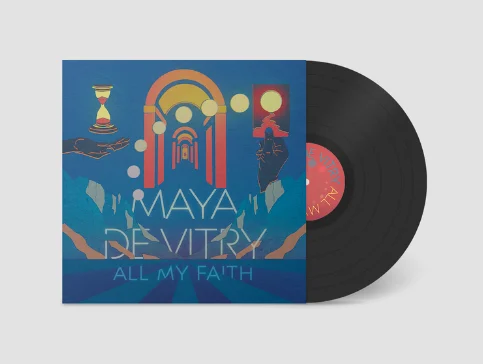
The intersection of creative artistry and physical labor is rarely as literal as it is for Nashville-based singer, songwriter, and producer Maya de Vitry. On a recent sweltering afternoon in Tennessee, with temperatures soaring past 90 degrees and the humidity thick enough to define the atmosphere, de Vitry spoke from the quiet sanctuary of her home. Having spent her morning working in local gardens—a practice she maintains alongside her musical career—she noted the inherent symmetry between the two disciplines. For de Vitry, the patience required to guide a plant from seed to harvest is functionally identical to the process of guiding a musical idea from a fleeting thought to a fully realized composition. This philosophy serves as the foundational ethos for her latest studio album, All My Faith, a record that explores the multifaceted nature of human belief, love, redemption, and the sanctity of the mundane.
The Evolution of a Songwriter
De Vitry’s career has been defined by a restless desire for growth. While All My Faith traverses thematic landscapes familiar to followers of her previous work—namely the complexities of the human condition—she approaches these subjects with an evolved perspective. "I think some of the themes are similar, but maybe just using different approaches," de Vitry explained. "I’m always trying to push myself as a writer into new challenges."
The creative process for de Vitry is less about spontaneous brilliance and more about disciplined husbandry. Inspiration, she notes, is ubiquitous, yet it is rarely convenient. It manifests as a fleeting spark that demands immediate capture. To prevent these creative impulses from dissipating, de Vitry maintains a rigorous documentation system. Her methods are tactile and immediate: she utilizes digital tools like voice memos and phone notes, but emphasizes the importance of physical notebooks kept in strategic locations—tucked away in guitar cases or carried in a handbag.
However, the transition from note to song is highly selective. De Vitry estimates that only about 30% of her jotted inspirations receive the sustained attention necessary to evolve into complete songs. This filtering process requires what she calls a "container"—a deliberate space of time and mental clarity where an idea can be nurtured. "It’s kind of like getting hungry," she says. "You’re just like, ‘It’s time for a snack,’ and I want to taste what this idea is."
The Philosophy of the Live Recording
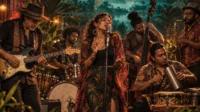
If the composition is a process of gardening, the recording session for All My Faith was an exercise in collective discipline. Seeking an authentic, unvarnished sound, de Vitry made a bold production choice: the entire album would be recorded live, in single takes, without the safety net of overdubbing or digital splicing.
This approach places an immense burden of responsibility on the ensemble. For a musician, the decision to record without the ability to "fix" errors in post-production is a testament to the skill and chemistry of the chosen collaborators. De Vitry curated an ensemble of high-caliber musicians, each selected for their ability to contribute to the organic, visceral quality of the performance. The lineup included Shelby Means and Joel Timmons on harmony vocals, the latter also contributing acoustic guitar; Jo Schornikow on piano and keys; Ethan Ballinger on electric guitar, tenor guitar, mandolin, and the unique addition of the Trautonium; Spencer Cullum on pedal steel; Ethan Jodziewicz on a variety of basses; and Dom Billett on drums.
"I was guessing that all of these people would be down with the idea to record live," de Vitry remarked. The result, she says, "was like a dream." By stripping away the ability to manipulate the recordings, the team achieved a dynamic interplay that captures the intimacy of a live performance, preserving the subtle nuances and human imperfections that define high-level musicianship.

Thematic Depth and Collaborative Artistry
The album’s tracklist serves as a narrative anthology of modern life. Notable tracks include "Nobody Else," which de Vitry describes as an exploration of the emotional undercurrents behind domestic friction; "Bachelorette Lessons," a meditation on the necessity of communal support; and "Traveller," a poignant reflection on the arc of life and mortality as viewed through an intergenerational lens.
This collaborative spirit extended beyond the recording studio to the album’s visual identity. De Vitry commissioned musician and artist Lee Ferris to create the cover art. In a move that mirrors her trust in her musical collaborators, she provided Ferris with the final recordings without any specific direction or guidance. The resulting artwork, characterized by its evocative, vibrant colors, serves as a visual interpretation of the album’s emotional core, further cementing the project as a cohesive artistic statement.
Industry Context and Economic Implications
The music industry has seen a resurgence in the value of "authentic" recording practices in recent years, as listeners increasingly move away from heavily processed, quantized pop production. By committing to one-take live recordings, de Vitry is aligning herself with a movement that prioritizes the "human element" of recording.
From an economic and technical standpoint, this strategy carries both risks and rewards. The cost of studio time is generally higher when an entire ensemble must be present and performing in sync, as opposed to remote, individual overdubs. However, the reduction in post-production labor—mixing and editing individual tracks to correct timing or pitch—often offsets these costs. More importantly, the cultural impact of such a decision is significant. In an era of digital saturation, an album that presents itself as a singular moment in time carries an inherent value that resonates with audiences seeking depth and transparency.
Broader Impact and Future Outlook
The release of All My Faith arrives at a pivotal moment in de Vitry’s career, marking a transition from the indie-folk roots that launched her into the public consciousness to a more mature, experimental phase. Her work continues to challenge the conventional boundaries of genre, blending elements of Americana, folk, and chamber pop into a sound that is uniquely her own.
For de Vitry, the ultimate success of the project is not measured in streams or chart positions, but in the shift in perspective she hopes to elicit from her listeners. Her objective is to cultivate an awareness of the possibilities that exist in the mundane, encouraging an audience to find beauty in the unexpected.
"That’s kind of what I want for my music," she says. "For people to see something differently."
Chronology of the Project
- Early 2026: Initial songwriting and development of themes; the "nurturing" phase of the project begins.
- Spring 2026: Curation of the studio ensemble; rehearsals focusing on the one-take recording philosophy.
- Summer 2026: Tracking sessions in Nashville; the decision to forgo overdubs is strictly enforced.
- September 2026: Finalization of the album, including collaborative cover art by Lee Ferris.
- Late 2026: Release of All My Faith to critical attention regarding its raw, live-recorded production style.
As de Vitry continues to balance her time between the garden and the studio, the parallels between her two worlds remain clear. She is a gardener of sound, tending to the seeds of inspiration with the same deliberate, patient care that she brings to the soil. In a world that is increasingly fast-paced and fragmented, All My Faith stands as a reminder of the value of slow growth, intentionality, and the enduring power of a single, well-captured moment. Whether in the garden or on the stage, de Vitry’s approach remains a lesson in the beauty of the process, suggesting that the most meaningful things in life—be they tomatoes or songs—require time, patience, and a willingness to be present.