The Rise of the Synthetic Performer
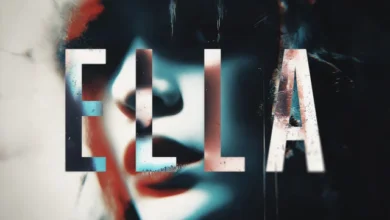
The headline act for the inaugural ceremony is Xania Monet, a virtual entity that has already secured its place in music history. Monet is the creative product of songwriter Telisha “Nikki” Jones and gained widespread recognition as the voice behind “How Was I Supposed To Know,” the first AI-generated track to break into the Billboard radio airplay charts. Monet’s career trajectory underscores the commercial viability of AI-driven projects; the act was the subject of an intense label bidding war before securing a deal with Hallwood Media, reportedly valued at $3 million.
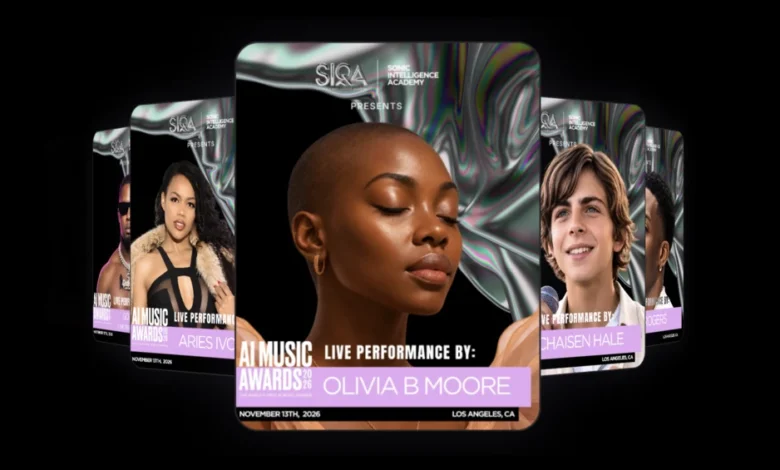
Monet will be joined on stage by a cohort of other prominent AI performers, including Sheena Taylor, Olivia B. Moore, Godfellow, Aries Ivory, Chaisen Hale, and EJ Rogers. While these artists exist as digital constructs, the event promises a sophisticated presentation. According to SIQA, the performances will utilize a “hybrid” model, where the human creators behind the AI artists will direct the stage show, supported by live instrumentation and immersive visual displays. This approach is intended to bridge the gap between the ethereal nature of generative music and the tangible, high-energy requirements of a live concert environment.
SIQA and the Architecture of AI Music
The Sonic Intelligence Academy (SIQA) positions itself as a “global hub for ethical, innovative, and groundbreaking AI music.” Backed by the venture capital firm 1517 Fund, the organization is not merely hosting an awards show; it is attempting to build the foundational infrastructure for a new genre of music production.
Earlier this year, SIQA launched a comprehensive suite of tools, including the first dedicated AI music charts, a Verified Registry, and a corresponding mobile application. These tools are designed to foster transparency in a field currently plagued by ambiguity. The registry allows artists to disclose the specific extent to which AI was utilized in the creation of a track, ranging from composition assistance to full generative output.
Data provided by SIQA regarding its registry submissions offers a glimpse into the current state of the industry. During the first quarter of this year, the registry processed 1,551 tracks. The data revealed a heavy reliance on a few dominant platforms: over 90% of the submitted tracks were generated using Suno, a leading text-to-music platform, while approximately 76% of these tracks were distributed via the independent platform DistroKid. This concentration of production and distribution suggests that a handful of companies currently dictate the technical standards and reach of AI-generated music.
The Awards Landscape
The AI Music Awards will feature a broad spectrum of categories, attempting to categorize digital output alongside traditional musical genres. The slate of awards includes:
- General Categories: Best AI Song, Artist, Album, and Producer of the Year.
- Collaborative and Technical Categories: Best AI Group, Best AI Music Video, Best AI Collab, and Best AI-Assisted Song.
- Genre-Specific Awards: R&B, Country, Gospel, Pop, Rock/Alternative, Hip-Hop, and Jazz.
By mirroring the structures of established organizations like the Grammys or the Brit Awards, SIQA is aiming to legitimize the AI sector within the music industry. However, the move is not without controversy. Critics argue that rewarding AI-generated content may further devalue human labor, while supporters suggest that AI serves as a democratization tool, lowering the barrier to entry for aspiring songwriters and producers.
Industry Context and the Regulatory Pivot
The November event occurs against a backdrop of escalating tension between streaming platforms, rights holders, and generative AI developers. The music industry is currently in the midst of a significant shift, moving from a position of curiosity toward active regulation.
In April, the streaming giant Deezer reported that 44% of new uploads to its platform were AI-generated. By July, that figure had climbed to 50%, illustrating the sheer volume of synthetic music flooding streaming services. This surge has forced major industry players to implement stricter policies. In August, the electronic music marketplace Beatport took the definitive step of banning fully generative AI tracks, citing concerns over copyright and the saturation of its catalog.
Conversely, some industry veterans are choosing to engage with the technology rather than oppose it. Earlier this month, prominent DJs Armin van Buuren and Laidback Luke joined the board of advisors for Moises, a company that specializes in “responsible” AI music technology. Moises focuses on stem separation and educational tools, highlighting a different approach to AI—one that emphasizes enhancement and analysis rather than full replacement of the human artist.
Implications for the Future of Music
The event at The Mayan represents a critical test for the music industry. If the live performances are successful, it may signal a shift in how audiences consume music, moving toward a model where the “artist” is a customizable, evolving digital asset. However, the legal and ethical questions surrounding these performances remain unresolved.
The primary concern for industry observers is the lack of standardized copyright protection for AI-generated works. As of now, the U.S. Copyright Office has maintained that works created without human authorship are not eligible for copyright protection. This creates a precarious situation for labels and investors: if a $3 million investment in an AI artist like Xania Monet cannot be protected by standard intellectual property laws, the long-term sustainability of such business models remains in question.
Furthermore, the “hybrid” nature of the performance raises questions about authenticity. By having human creators “direct the stage,” SIQA is attempting to satisfy the audience’s psychological need for a human connection, even while the primary audio content is machine-generated. This creates a dichotomy: we are entering an era where the music is increasingly synthetic, but the marketing is increasingly centered on the “human” creative director.
A Chronology of AI Integration
- 2023: Generative music platforms like Suno and Udio see exponential growth, leading to a surge in AI-assisted tracks on streaming services.
- Early 2024: Deezer identifies that nearly half of all new uploads contain AI elements, prompting a industry-wide review of content moderation policies.
- April 2024: SIQA launches its Verified Registry, attempting to bring transparency to the rapidly growing sector.
- August 2024: Beatport initiates a ban on fully AI-generated tracks to protect its marketplace from saturation.
- October 2024: Industry leaders including Armin van Buuren align with responsible AI developers, signaling a pivot toward controlled adoption.
- November 13, 2024: The inaugural AI Music Awards at The Mayan in Los Angeles aim to set the standard for the recognition of synthetic talent.
The Road Ahead
The AI Music Awards will likely serve as a barometer for public sentiment regarding artificial intelligence in the arts. While the technical capabilities of the music are undeniably impressive, the industry remains deeply divided on the implications for human composers and performers.
The success of the awards will not be measured solely by the quality of the performances, but by whether the event can successfully navigate the tension between innovation and artistic integrity. As SIQA moves forward, the “ethical” component of their mission will be under constant scrutiny. Whether or not AI acts can truly occupy the cultural space currently held by human stars will depend on the audience’s willingness to accept digital personas as valid conduits for emotional expression.
As we look toward November, the industry will be watching closely. For now, the AI Music Awards are the most ambitious attempt yet to synthesize the future of music, providing a platform where code, melody, and commerce collide. Whether this represents the next evolutionary step in music or an existential threat to the profession of the songwriter is a debate that will continue long after the final curtain drops at The Mayan.
Related posts: