The Rolling Stones producer Andrew Watt reveals the secrets behind the modern sound of Foreign Tongues and the single In The Stars

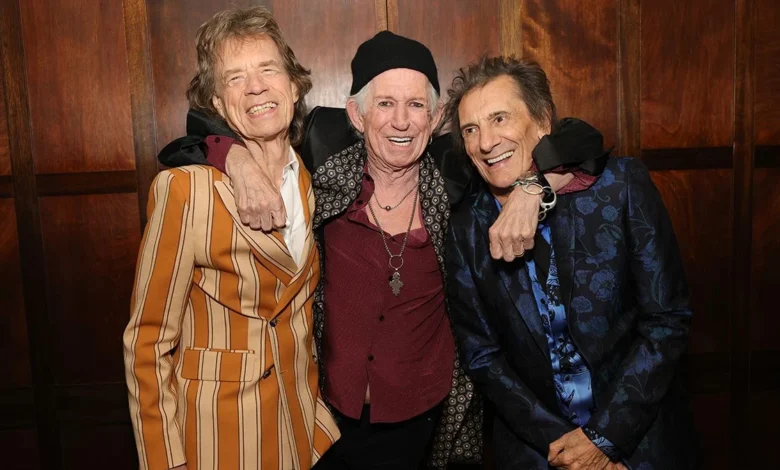
The release of the latest Rolling Stones album, Foreign Tongues, has marked a significant milestone in the storied history of the British rock legends. Debuting during an exclusive launch event in Brooklyn, New York, on May 5, 2026, the project has drawn critical attention not only for its songwriting but for its unique production approach. Spearheaded by producer Andrew Watt, the album seeks to bridge the gap between the band’s raw, organic heritage and the sonic requirements of the modern music landscape. Through a series of insights shared on the platform Mix with the Masters, Watt has provided a technical window into how he managed to modernize the group’s output while maintaining the quintessential "Stones" identity.
The Philosophy of Organic Recording
At the core of the production for Foreign Tongues was a deliberate rejection of digital perfectionism. In an era where modern pop and rock production often rely heavily on "grid-locking"—a process where audio is aligned to a strict tempo map—Watt chose to move in the opposite direction. He emphasized that for a band as rhythmically fluid as the Rolling Stones, utilizing click tracks would have been antithetical to their sound.
The recording sessions were characterized by proximity. By placing Mick Jagger, Keith Richards, and Ronnie Wood in the same live room, Watt ensured that the musicians could maintain visual and tactile contact. This setup allowed for the natural ebb and flow of performance-based music, where tempo shifts are not errors to be corrected, but inherent elements of the emotional arc of a song. Watt noted that the "bleed"—the sound of one instrument leaking into the microphone of another—was not treated as a technical failure to be scrubbed in post-production, but as a vital component of the track’s atmosphere.
A Chronology of the Stones’ Modern Evolution
The journey to Foreign Tongues began long before the 2026 launch. Following the 2021 passing of legendary drummer Charlie Watts, the band faced a pivotal moment in their trajectory. The inclusion of Steve Jordan as the group’s drummer necessitated a shift in the internal chemistry of the band’s rhythm section.
Throughout the recording process, Mick Jagger reportedly played an active role in shaping these new dynamics. According to Watt, Jagger’s process involves working intimately with the drummer to ensure that every groove possesses a specific, danceable quality. This focus on "the feel" has been a hallmark of the band since their formation in the early 1960s, but it took on renewed importance as the group navigated the transition into their current iteration. The release of In The Stars serves as the culmination of these sessions, demonstrating a synthesis of decades of experience with a fresh, contemporary polish.
Technical Innovations and the Serum Integration
Perhaps the most surprising revelation regarding the production of the album is the integration of modern synthesis. While the Rolling Stones are known for their reliance on vintage gear, tube amplifiers, and classic instruments, Watt introduced the Xfer Records Serum plugin to the recording environment. Serum, a wavetable synthesizer widely used in electronic dance music and modern pop production, was utilized to add sub-bass frequencies to the tracks.
For many longtime listeners, the idea of the Rolling Stones utilizing a high-end digital synth plugin might seem incongruous. However, in the context of modern audio engineering, this serves as a strategic choice to ensure that the band’s records remain competitive in terms of low-end impact on modern playback systems, such as club sound systems or high-fidelity streaming services. This decision highlights the "toe-the-line" strategy Watt employed: respecting the legacy of the band’s guitar-driven roots while ensuring the final product sounds as though it belongs in the present day.

The Weaving Guitars: A Signature Sound
The sonic foundation of the Rolling Stones has always been defined by the interplay between Keith Richards and Ronnie Wood. Watt’s production highlights this "weaving" technique, where the two guitarists occupy distinct positions in the stereo field—Richards on the left and Wood on the right. Rather than playing the same riff in unison, the two musicians engage in a complex, interlocking dialogue.
Watt explained that while both guitarists approach the riffs with their own unique sensibilities, the result is a unified, cohesive sound that is instantly recognizable. By capturing this live interaction rather than layering individual guitar takes, the producer was able to preserve the spontaneity that has defined the band’s discography for over half a century. Furthermore, the vocal production, anchored by Jagger’s performance into a classic Sony C800G microphone, provides the necessary clarity and presence to cut through the dense instrumentation.
Industry Implications and Legacy
The release of Foreign Tongues and the reception of In The Stars raise important questions regarding the longevity of legacy acts. The Rolling Stones have consistently navigated the changing tides of the music industry, from the analog era of the 1960s to the digital age of the 2020s. By partnering with a producer like Andrew Watt—who is known for his work with younger, high-profile artists—the band has demonstrated a willingness to adapt without sacrificing their artistic integrity.
The commercial and critical implications are significant. By avoiding the common trap of "over-producing" a classic band, Watt has managed to showcase the raw talent of the group while utilizing modern tools to enhance the sonic experience. This approach provides a blueprint for how heritage artists can continue to release new material that feels both nostalgic and contemporary.
Data from the launch event indicates that the band’s appeal remains global, with the Brooklyn showcase acting as a focal point for international press and industry insiders. The decision to prioritize performance-based music in an era dominated by artificial intelligence and automated production tools serves as a testament to the band’s enduring commitment to the human element of music.
Conclusion: Looking Forward
As the Rolling Stones continue to promote Foreign Tongues, the discussion surrounding their production techniques underscores a broader trend in rock music: the return to the room. While technology continues to advance, the success of In The Stars suggests that there is no substitute for the chemistry of a band playing together in real time.
The integration of modern tools like Serum alongside traditional recording techniques represents a sophisticated middle ground. It acknowledges that while the essence of rock and roll is timeless, the medium through which it is delivered must continue to evolve. For fans and critics alike, the album stands as a definitive statement that the Rolling Stones remain not just a relic of the past, but an active, evolving force in the modern music industry. Whether this signifies a permanent shift in their sound remains to be seen, but for now, the band has successfully navigated the challenge of staying relevant while remaining undeniably, and authentically, themselves.