The long-standing intersection of pop culture and intellectual property law has reached a new, contentious milestone as Pro Silver Star Ltd., the corporate entity governing the Dallas Cowboys Cheerleaders (DCC) brand, filed a formal lawsuit against the rock band My Chemical Romance (MCR). The legal action, initiated in late October 2026, stems from a high-profile theatrical performance at the Hollywood Bowl, where the band utilized costumes that the plaintiffs allege are a direct, unauthorized, and damaging appropriation of the iconic DCC aesthetic.
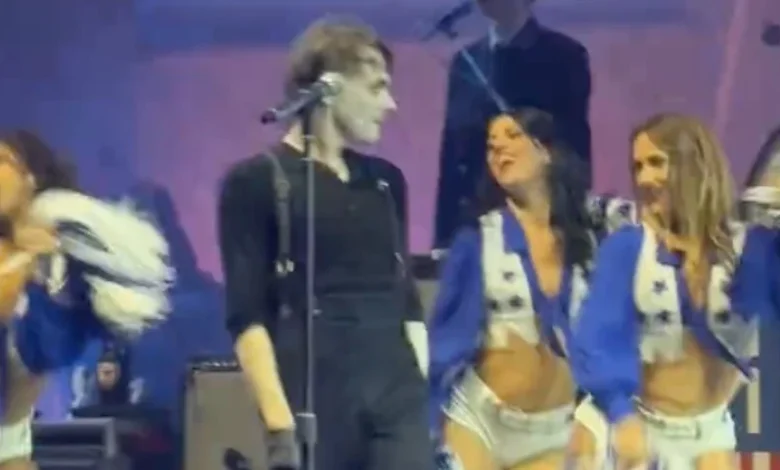
The litigation, which seeks a temporary restraining order, a preliminary injunction, and unspecified monetary damages, centers on a specific segment of the band’s ongoing residency. During their performance of the track "Teenagers," MCR featured dancers adorned in uniforms that closely mirror the distinctive white-and-blue western-style ensemble synonymous with the NFL cheerleading squad. The core of the complaint, however, lies not in the mere imitation of the attire, but in the context of its deployment: a choreographed, simulated firefight involving firearms, which the plaintiffs argue causes irreparable harm to the DCC brand’s reputation.
Chronology of the Hollywood Bowl Incident
The controversy began on the evening of October 21, 2026, during the first of five sold-out performances of The Black Parade residency at the iconic Hollywood Bowl. MCR, known for their elaborate, narrative-driven stage productions, designed this specific show to take place within a fictional, dystopian dictatorship. The production incorporates heavy pyrotechnics, militaristic themes, and a visual narrative of armed rebellion.
As the band transitioned into "Teenagers," a group of performers dressed in the recognizable DCC uniforms emerged. Initially, the dancers engaged in traditional cheerleading choreography. However, the performance quickly pivoted into a dramatic, high-intensity scene where the dancers brandished rifles to protect the band members from an encroaching militarized force. The sequence culminated in a staged combat scenario where the performers—still in the disputed uniforms—were "killed" during the simulated firefight.
Following the performance, social media platforms saw an immediate influx of reactions. Numerous concert attendees and online observers misidentified the dancers as actual members of the Dallas Cowboys Cheerleaders, leading to widespread confusion and speculation regarding the involvement of the professional squad in a provocative, anti-establishment stage show.
Legal Arguments and the Plaintiffs’ Position
In the formal court filing, Pro Silver Star Ltd. meticulously outlined their grievances, emphasizing that their primary concern is the protection of a globally recognized trademark. The company stated, "Silver Star is not litigious, and it takes no issue with MCR’s music, its artistic ambitions, or any message Defendants seek to convey."
The plaintiff’s legal team stressed that the issue is not the content of the performance, but the visual association created by the uniforms. By dressing performers in outfits that are functionally identical to the DCC uniform, the band allegedly created a false association that suggests the Dallas Cowboys organization endorses or participated in a performance featuring themes of armed conflict and violent death.
The filing notes, "Silver Star does not ask Defendants to change their setlist, narrative, politics, choreography, or even their decision to put gun-toting performers on stage. Silver Star asks only that those performers not wear the DCC Uniform while doing it. The universe of alternative costume designs is effectively unlimited." The plaintiffs argue that the confusion among the public constitutes trademark dilution and infringement, damaging the family-friendly, professional image that the DCC brand has cultivated since its inception in the 1970s.
Intellectual Property and the Scope of Parody
Legal analysts suggest that this case will likely hinge on the boundaries of artistic expression versus commercial trademark protection. Under United States copyright and trademark law, parodies are often protected under the First Amendment. However, "parody" requires a clear communicative intent to mock or comment upon the original work or brand.
In the case of Pro Silver Star Ltd. v. My Chemical Romance, the defense may attempt to argue that the use of the uniforms was a satirical commentary on American icons, including the hyper-patriotic imagery often associated with professional cheerleading. If the defense can successfully argue that the uniforms were used as a vehicle for social commentary, they may find shelter under fair use doctrines.
Conversely, the plaintiffs are banking on the "likelihood of confusion" standard. If the court determines that a significant portion of the audience reasonably believed the DCC was officially involved, the argument for infringement becomes substantially stronger. The fact that the uniforms were so accurate that they were mistaken for the real thing by fans serves as evidence that the band failed to distinguish their costumes sufficiently from the copyrighted material.
Broader Implications for Live Performance
This lawsuit highlights a growing trend in the entertainment industry where high-concept, theatrical concerts are increasingly vulnerable to intellectual property challenges. As artists strive to create immersive, cinematic experiences on stage, the reliance on pop-cultural signifiers—logos, uniforms, and recognizable aesthetic tropes—has become common.
If the court rules in favor of Pro Silver Star Ltd., it could set a restrictive precedent for stage designers and creative directors. Future concert productions might be forced to conduct rigorous "clearance" processes for every costume and prop used in a performance to avoid similar litigation. This could stifle creative spontaneity, forcing artists to rely on generic designs rather than the culturally resonant symbols they often use to convey their narratives.
Furthermore, the case underscores the immense value of "brand personality." The Dallas Cowboys Cheerleaders are not merely a group of dancers; they are a multi-million-dollar brand with specific licensing agreements and corporate sponsorships. The protection of that brand identity is a priority for Pro Silver Star Ltd., which has invested decades into ensuring the uniform remains a symbol of professional excellence rather than a tool for political or social theater.
Reaction and Industry Outlook
While My Chemical Romance has not yet released an official statement regarding the litigation, the music industry is watching the proceedings with keen interest. The band’s management team will likely face the difficult task of balancing the artistic integrity of The Black Parade production with the pragmatic need to mitigate legal risk.
Should the court grant the temporary restraining order, the band would be forced to alter the costumes for the remainder of their residency at the Hollywood Bowl. This would require a rapid redesign and sourcing of new attire, which could prove challenging mid-tour. If the injunction is denied, the trial could proceed through the discovery phase, potentially leading to a protracted legal battle that could reach well into 2027.
The incident also serves as a case study for the influence of digital media on legal outcomes. Because the "confusion" originated and propagated on social media, the lawyers for the plaintiffs are using these online interactions as objective data points to prove that the public was misled. This reliance on social media sentiment as evidence in trademark law is an evolving field, and the outcome here may influence how future companies monitor their brand presence in the digital age.
Conclusion
As the legal proceedings against My Chemical Romance unfold, the case remains a testament to the high stakes of modern brand management. The clash between the creative vision of a rock band and the protective legal stance of a professional sports organization highlights the increasing complexity of copyright in the era of viral content and global touring.
Whether this dispute is resolved through an out-of-court settlement—perhaps involving a costume change and a public disclaimer—or through a landmark court decision, the impact on live performance and intellectual property law will be significant. For now, the audience at the Hollywood Bowl has witnessed a moment of performance art that transcended the stage and entered the courtroom, ensuring that the legacy of The Black Parade will be remembered as much for its legal controversy as for its musical impact.