A Legacy Defined by Musical Integrity
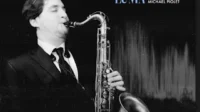
At the core of Collier’s narrative is the fundamental honesty that defined John Dankworth’s approach to jazz. Unlike many of his contemporaries who sought to emulate the American bebop aesthetic by adopting foreign mannerisms or accents, Dankworth remained committed to an authentic expression rooted in his own British upbringing. This stylistic choice, which prioritized genuine musicality over performative imitation, established him as a pioneer in the development of a distinctively British jazz identity.
The biography highlights that Dankworth’s influence extends far beyond his work as a bandleader. His early career, characterized by his tenure with the Dankworth Seven and his subsequent big bands, laid the foundation for his transition into the film and television scoring industry. The book offers a candid look at these formative years, utilizing Dankworth’s own reflections to highlight his rigorous self-criticism and his pragmatic approach to the challenges of the music industry.
The Transformation of Cleo Laine
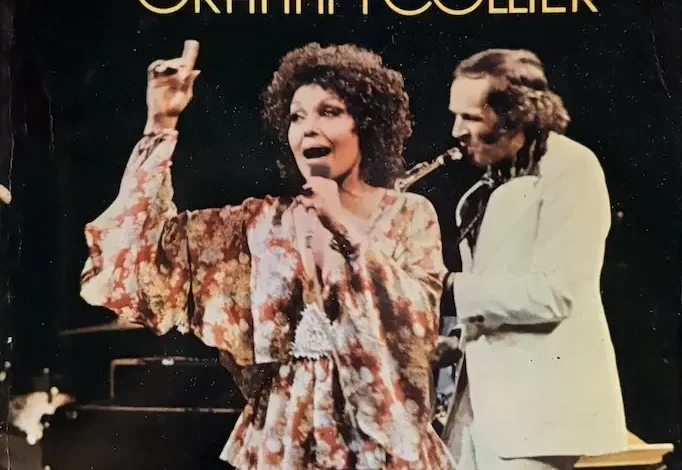
A significant portion of the biography is dedicated to the career of Cleo Laine, whom Collier identifies as a musical phenomenon whose growth was inextricably linked to her partnership with Dankworth. Collier posits that it was Dankworth’s influence and mentorship that elevated Laine from a talented band singer with a restricted range into a versatile vocalist of global renown.
The text meticulously documents their upward trajectory in the social and cultural spheres, noting the formal recognitions that accompanied their success, such as Dankworth’s CBE in 1974. By tracing their evolution from club performers to figures of national prominence, Collier provides a sociological view of how jazz musicians navigated the changing landscape of British high society in the mid-20th century.
Historical Context and Chronological Development
The development of the Dankworths’ careers can be viewed through a timeline that spans several decades of British cultural history:
- Late 1940s: The emergence of the British bebop scene, with Dankworth beginning to establish his reputation as a formidable instrumentalist and arranger.
- 1950s: The peak of the Dankworth Seven, a seminal group that played a crucial role in popularizing modern jazz in the United Kingdom.
- 1960s: Expansion into film scoring and the diversification of their repertoire, as the pair began to experiment with cross-genre collaborations.
- 1970s: The solidification of their status as cultural icons, marked by royal recognition and sustained critical acclaim.
Collier’s work serves as a vital resource for understanding the nuances of these periods. For instance, the book sheds light on the reality behind legendary recordings such as Dankworth At Newport. While historically marketed as a live transcription of the band’s 1959 performance at the Newport Jazz Festival, the biography clarifies that the actual recordings were produced during a concert at Hammersmith, after the original festival tapes were deemed unsatisfactory. Such corrections are essential for jazz historians and collectors who rely on accurate discographical data.
Analytical Critique and Fact-Checking
While the biography is celebrated for its extensive research, it is not without its minor technical flaws. Collier’s prose occasionally suffers from a casual, colloquial style that contrasts with the gravitas of his subject matter. Furthermore, historians have pointed out specific factual inaccuracies, such as the misattribution of Ronnie Chamberlain’s affiliation in 1949. While Chamberlain is described as a member of Vic Lewis’s ensemble during that period, the book incorrectly identifies him as an alto star for Ted Heath.
Despite these minor discrepancies, the volume’s inclusion of insights from peers such as Don Rendell and Dudley Moore provides a multi-faceted perspective on the Dankworths. These personal accounts, combined with Collier’s analytical approach, allow the reader to move past the "cult of personality" often associated with celebrity biographies. Instead, the focus remains on the music—the rehearsals, the management difficulties, and the relentless pursuit of artistic perfection.
The Broader Impact on Jazz Literature
The publication of Cleo And John marks a shift in how jazz biographies are structured. By favoring a collage of press archives and direct quotes over a traditional, narrative-heavy approach, Collier creates an objective framework that allows the subjects to speak for themselves. This methodology is particularly effective in addressing the "Dankworths-as-cult-figures" narrative. By presenting critical reviews alongside promotional materials, the author forces the reader to confront the difference between public perception and the realities of a demanding musical career.
Furthermore, the book serves as a prompt for the re-evaluation of British jazz history. With the re-issue of the original Dankworth Seven recordings, there is a renewed interest in the technical proficiency and innovative arrangements that characterized the early work of the ensemble. The biography acts as a contextual companion to these recordings, providing the background necessary to appreciate the stylistic shifts that occurred within the band.
Implications for Future Research
For scholars of musicology and 20th-century British cultural history, this biography highlights the necessity of rigorous primary source verification. The omission of key figures like Mike Butcher, the former manager of the Dankworth Seven, represents a missed opportunity for a more complete institutional history, yet it also invites future researchers to fill these gaps. The reliance on period-accurate press clippings serves as a reminder of how the media shaped the reception of jazz in the post-war era, and how contemporary critics often grappled with the tension between domestic talent and the dominance of the American jazz paradigm.
In conclusion, Cleo And John: A Biography Of The Dankworths is a comprehensive and essential study for those interested in the trajectory of British jazz. Through its detailed exploration of professional milestones, personal growth, and the complexities of the music industry, it provides a grounded account of two artists who refused to compromise their integrity for the sake of marketability. Despite minor stylistic and factual lapses, the book stands as a testament to the hard work and dedication that characterized the Dankworths’ legacy, ensuring that their contributions to music remain part of the historical record for years to come.