Reviewed: Knut Reiersrud and Geir Sundstøl | Volkan Kaplan & Rembrandt Trio | Emil Ingmar

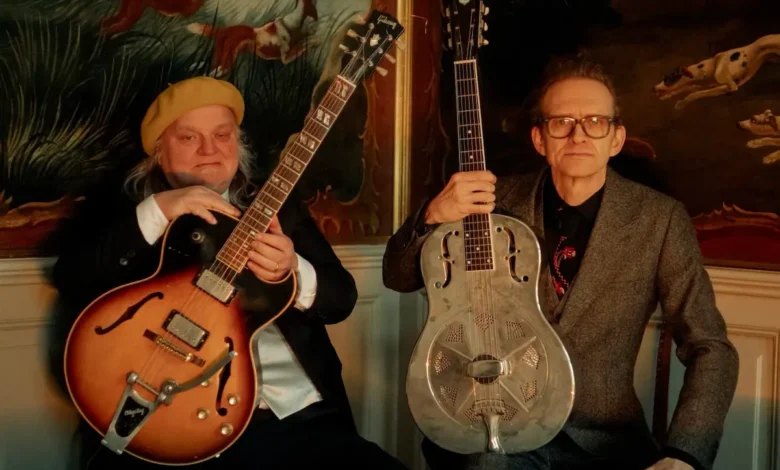
A Reimagining of Baroque Foundations: Knut Reiersrud and Geir Sundstøl
In the intimate confines of Studio Intim in Oslo, Norwegian multi-instrumentalists Knut Reiersrud and Geir Sundstøl have completed a project that challenges the rigid preservationist approach to classical music. Their album, Purcell, Sannhet, Løgn Og Dårlig Hukommelse (Truth, Lies and Bad Memory), serves as a deliberate departure from traditional interpretations of 17th-century English composer Henry Purcell.
The production, recorded in March 2025, relies on an eclectic array of plucked string instruments. While many of the guitars utilized—such as the Euphone Olympic Archtop, the Gibson ES 175 Hollow Body, and the National Duolian—are typically associated with American bluegrass or country traditions, Reiersrud and Sundstøl apply these textures to the baroque canon. The juxtaposition of a steel guitar’s characteristic "twang" against the structured melodies of Purcell offers a modern acoustic reimagining.
From a musicological perspective, this project aligns with a broader movement of "baroque jazz" hybrids, previously explored by ensembles like L’Arpeggiata. However, the Norwegian duo shifts the focus from purely virtuosic improvisation to the rhythmic and dance-oriented elements inherent in Purcell’s work. The album is characterized by a "graceful simplicity," prioritizing texture and melodic sensitivity over technical ostentation. Even in their treatment of Purcell’s widely recognized Dido’s Lament, the duo avoids standard classical conventions, favoring the expressive, bending notes of the steel guitar to convey emotional weight.
Bridging East and West: Volkan Kaplan and the Rembrandt Trio
The collaboration between Turkish-born musician Volkan Kaplan and the Dutch Rembrandt Trio, resulting in The Anatolian and Caspian Suites, offers a distinct case study in cultural synthesis. Released in December 2025, this project integrates the microtonal, modal traditions of Anatolian and Azerbaijani folk music with the improvisational framework of contemporary European jazz.
Kaplan, a virtuoso of the baglama (an Anatolian long-necked lute) and the tar (an Azerbaijani courtly instrument), provides a tonal vocabulary rarely heard within the jazz idiom. The project’s architecture mirrors the baroque dance suite, utilizing traditional folk suites as the foundation for modern arrangement. The inclusion of Rembrandt Frerichs, a pianist with extensive experience in Middle Eastern musical traditions—most notably his tenure in Cairo—proved pivotal to the recording’s cohesion.
The technical requirements for this collaboration were significant. The music demands high-speed tremolo and complex rhythmic cycles, placing substantial pressure on percussionist Vinsent Planjer. Analysis of the track Cargah Part 1 reveals a sophisticated interplay where traditional rhythmic pyrotechnics are mapped onto a jazz trio’s improvisational structure. This recording represents an evolution from "world music" into a legitimate contemporary jazz synthesis, as the musicians successfully translate regional folk modalities into a format that allows for spontaneous collective creation.
The Minimalist Aesthetic: Emil Ingmar’s Polaroids
Contrasting with the structural complexity of the aforementioned projects, Emil Ingmar’s Polaroids, released in April 2025, champions the ethos of minimalism. Recorded at Kingside Studio in Onesta, the album strips away the artifice of elaborate time signatures and dense over-arrangement. Ingmar’s approach is one of "relaxed grooves" and accessible melodic structures, drawing influences from pop, R&B, and folk traditions.
The album functions as a trio recording, featuring bassist Fredrik Jonsson and drummer Calle Rasmussen, with occasional guest appearances by saxophonist Jonas Knutsson and trombonist Markus Ahlberg. Ingmar’s compositions rely on a sympathetic, responsive understanding between the core trio members. While the album maintains a consistent, understated tone, it periodically deviates into broader stylistic territories, such as the R&B-influenced Stone Skippers and the Scottish-air-inspired Bjurtjärn.
Industry observers have noted that Polaroids reflects a growing appetite for "low-stakes" listening experiences in the current climate. By avoiding the intense, high-energy developments often associated with jazz, Ingmar provides a meditative, accessible experience that prioritizes the "catchy melody" over the "virtuosic display." This approach signals a potential shift in the market toward acoustic music that serves as a counterbalance to the over-stimulated digital environment.
Comparative Chronology and Production Context
The 2025 release cycle for these three projects provides a clear timeline for the current state of independent European production:
- March 2025: Reiersrud and Sundstøl complete Purcell, Sannhet, Løgn Og Dårlig Hukommelse in Oslo. This project emphasizes the "home studio" aesthetic, with the intimacy of the recording process directly influencing the album’s sonic signature.
- April 2025: Emil Ingmar releases Polaroids, emphasizing a minimalist, collaborative trio dynamic that prioritizes accessibility and mood-setting.
- December 2025: Volkan Kaplan and the Rembrandt Trio conclude the year with The Anatolian and Caspian Suites, marking the most ambitious cross-cultural project of the set.
Broader Implications for Instrumental Music
The success of these disparate projects suggests several shifts in the contemporary music industry:
- Decline of Genre Silos: Musicians are increasingly comfortable navigating between classical, folk, and jazz, treating these categories as tools rather than boundaries. The use of the baglama and tar in a jazz trio is no longer treated as a novelty, but as a deliberate harmonic expansion.
- The "Home Studio" Renaissance: Both the Reiersrud/Sundstøl and the Kaplan/Frerichs projects rely on highly curated, intimate studio environments. This reflects a post-pandemic shift toward controlled, high-fidelity environments where artists can experiment with overdubs and textures without the pressure of large commercial studio costs.
- The Return to Melody: Across all three releases, there is a common thread of prioritizing melody over technical complexity. Whether it is the baroque-infused melodies of Purcell, the folk-based modalities of the Caspian region, or the R&B-inflected pop structures of Ingmar, the industry is seeing a renewed interest in the "well-crafted" tune.
Technical Analysis of Soundscapes
The instrumentation choices across these albums indicate a trend toward specialized sound design. Reiersrud and Sundstøl’s use of the Minimoog and tubular bells alongside traditional guitars suggests a hybrid approach to instrumentation that mirrors the eclectic spirit of their Purcell project. Similarly, the use of the vocal synth in Ingmar’s Polar adds a layer of modern, synthetic texture to an otherwise organic, acoustic-leaning album.
In the case of the Rembrandt Trio, the use of the harmonium—a staple in various Eastern traditions—alongside the piano allows Frerichs to modulate between Western jazz chords and Eastern modal drone-work. This technical flexibility is essential for maintaining the "plangent" quality of Kaplan’s melodies while providing the necessary rhythmic pulse for a contemporary jazz audience.
Conclusion
These three albums collectively define a pivotal moment for European instrumental music. By engaging with historical, cultural, and minimalist frameworks, Reiersrud and Sundstøl, Kaplan and the Rembrandt Trio, and Emil Ingmar have demonstrated that innovation in 2025 is not necessarily about complexity or volume. Instead, it is about the thoughtful reconfiguration of existing musical languages to create new, intimate, and emotionally resonant experiences for the listener. As the industry continues to move away from the traditional, record-label-driven model, these artists represent the vanguard of a self-directed, highly personal approach to musical production.