Softube Expands Flow Studio Desktop Controller Capabilities with Major Third-Party Plugin Integration Update

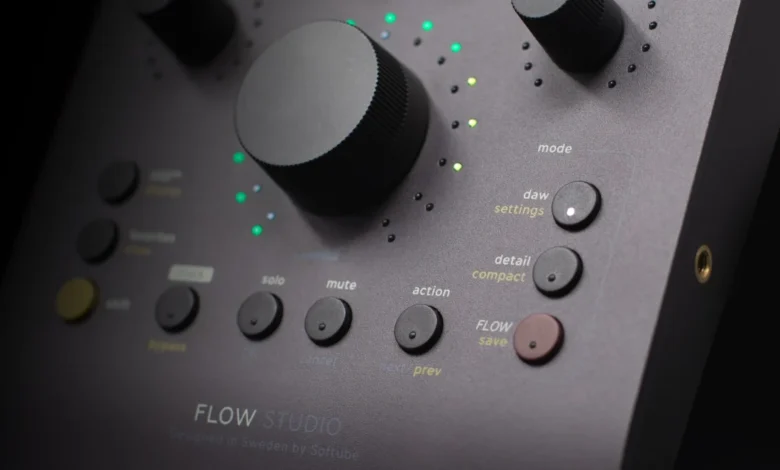
Softube has officially released a significant update for its Flow Studio desktop hardware and software ecosystem, introducing native compatibility with a wide array of popular third-party audio plugins. This expansion transforms the compact hardware controller from a closed, proprietary mixing environment into a versatile, universal surface capable of bridging the gap between hardware ergonomics and modern digital audio workstations. By bridging the software interface with industry-standard third-party developers, Softube aims to mitigate the heavy reliance on mouse-and-keyboard interactions during critical mixing and production phases.
The rollout marks a major strategic shift for the hardware-software hybrid ecosystem. Initially engineered primarily to interface directly with Softube’s proprietary suite of analog-modeled effects and preset signal chains, the controller can now scan, integrate, and manipulate external plugins with the same tactile responsiveness previously reserved for house-brand software.
Comprehensive Third-Party Integration and Supported Ecosystems
The newly introduced compatibility update is distributed freely to existing users via the Flow Mixing Suite software update. According to development disclosures from Softube, the initial wave of third-party integration is the result of rigorous systems testing across several of the industry’s most prominent audio software brands.
The initial batch of supported developers includes FabFilter, Neural DSP, oeksound, Plugin Alliance, Safari Audio, Soundtoys, Universal Audio, Valhalla DSP, and XLN Audio. Users operating within major digital audio workstations (DAWs) can now incorporate these external processors directly into their customizable signal chains, known within the ecosystem as "Flows."
Rather than requiring custom mapping for every individual parameter, the Flow Mixing Suite intelligently scans the user’s local system directory for compatible VST3 plugins. Once identified, these plugins load directly into the environment, mapping their internal architecture automatically to the five touch-sensitive, analog-feel rotary encoders located on the Flow Studio hardware chassis. This automated mapping protocol seeks to drastically reduce configuration friction, allowing producers and mix engineers to immediately swap between an analog-style compressor by Universal Audio, a precision EQ by FabFilter, or a saturation processor by Soundtoys without interrupting their creative workflow.
Chronology and Evolution of the Flow Studio Ecosystem
To fully understand the weight of this third-party integration, it is necessary to examine the evolutionary timeline of Softube’s hardware and software hybrid strategy. Softube, long respected as a premier developer of high-end analog emulation plugins—ranging from tape machines to vintage mixing consoles—entered the hardware control surface market to offer a more tactile, distraction-free mixing experience.
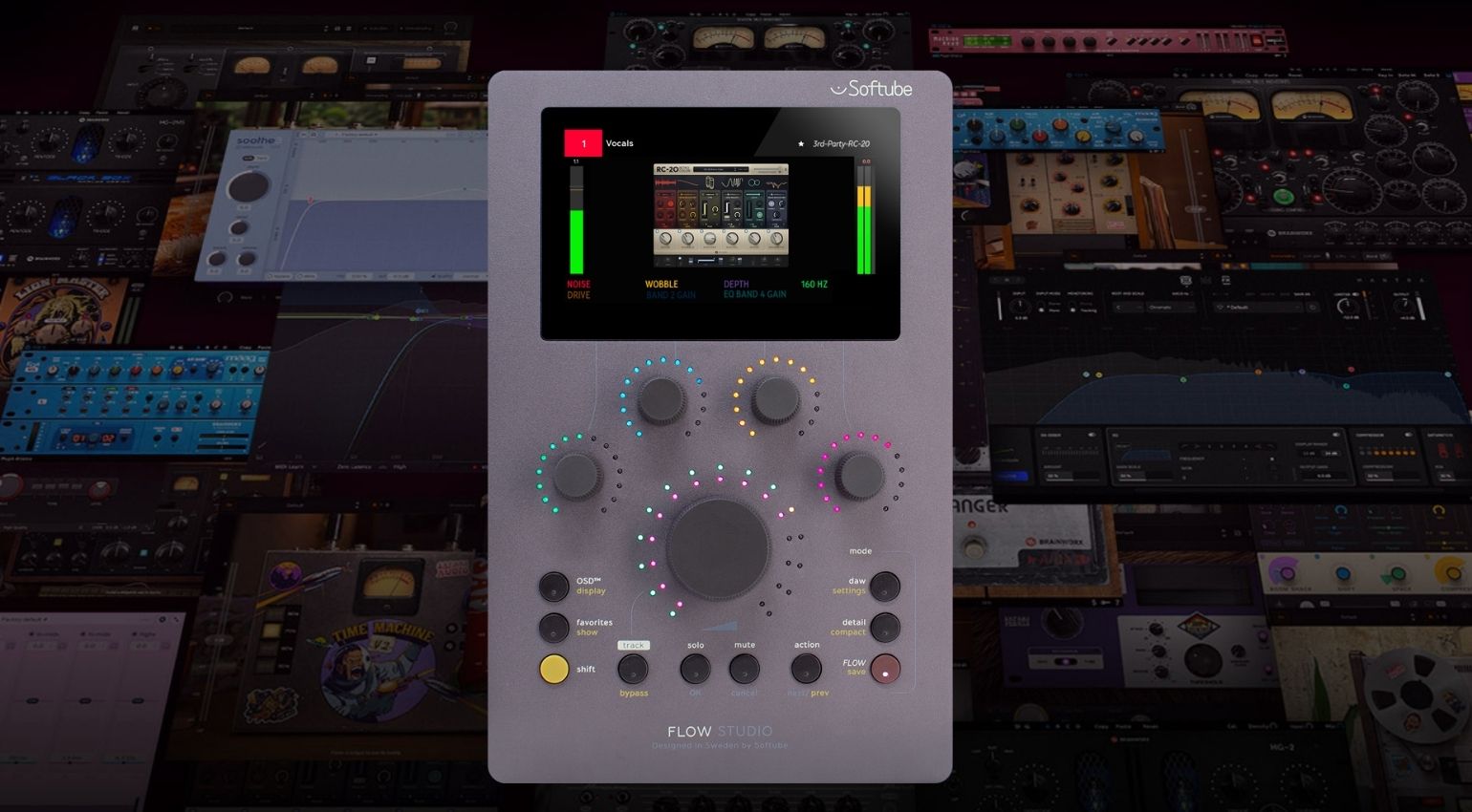
The genesis of the system relied on a tightly integrated closed loop: hardware linked directly to Softube’s native DSP and software architecture. The platform was structured around three primary operating modes designed to cover every tier of the production process:
- DAW Mode: Focused on fundamental mixing tasks such as channel volume balancing, panning, muting, soloing, and auxiliary sends.
- Flow Mode: Utilizing a library of over 100 preset macro-driven signal chains tailored for specific instruments like drums, vocals, guitars, and synthesizers.
- Detail Mode: Allowing users to break away from macro controls and dive deep into individual parameter adjustments utilizing the hardware’s five touch-sensitive rotary encoders and high-resolution 4.3-inch display.
Despite the acclaim received for its analog-style workflow and low-latency onboard DSP capabilities, early adopters noted a significant limitation: the inability to integrate non-Softube plugins into the hardware’s macro and detail workflows. For professional engineers who rely on a diverse toolset spanning multiple software developers, this meant switching back and forth between the Flow Studio hardware and traditional mouse-controlled GUI adjustments. With the implementation of third-party VST3 support, Softube has directly addressed this workflow bottleneck, positioning the controller as a comprehensive hub for mixed-brand sessions.
Technical Implementation and Operational Workflow
Integrating third-party plugins into the Flow Studio environment requires a specific software chain, utilizing the VST3 plugin standard to ensure stability and reliable parameter telemetry.
To initiate the process, users must access the Softube Central application to download and install the latest iteration of the Flow Mixing Suite. Once the software is updated and loaded inside a host DAW session, engineers navigate to the plugin interface and select the "SCAN THIRD-PARTY PLUG-INS" command located within the primary "+" drop-down menu.
The system executes a deep system scan, indexing all compatible VST3 plugins currently installed on the host machine. Following the indexing process, these external plugins become searchable within the Flow ecosystem. Engineers can then construct hybrid processing chains consisting of both Softube processors and compatible third-party tools, saving these custom signal chains for instant recall across multiple DAW sessions.
The hardware’s integrated 4.3-inch high-resolution display dynamically updates to reflect the parameters of whichever plugin—native or third-party—is currently in focus. This provides immediate visual feedback regarding metering, gain reduction, frequency shaping, and effect depth, closely mirroring the visual cues found on physical studio hardware.
Industry Implications and Market Positioning
The introduction of third-party support into a proprietary hardware controller ecosystem represents a calculated business and design strategy within the modern music technology sector. In recent years, hardware-software integration has become a primary battleground for companies seeking to capture market share among project studio owners and professional mixing engineers alike.
Manufacturers of hardware controllers frequently face a delicate balancing act: while proprietary ecosystems ensure deep, seamless integration and reliable performance, they often alienate users who are heavily invested in software tools from competing developers. By opening its architecture to industry heavyweights like FabFilter, Neural DSP, and Soundtoys, Softube has effectively removed one of the primary consumer barriers to entry for the Flow Studio platform.
Industry analysts note that this shift could significantly increase the hardware’s market appeal. Producers are rarely loyal to a single software developer; instead, modern mixing workflows routinely combine tools from dozens of distinct companies to achieve a desired sonic signature. By allowing the Flow Studio hardware to act as a universal translation layer for these diverse software portfolios, Softube increases the utility and daily screen-free time of its hardware investment.
Furthermore, the integration aligns with broader industry trends favoring modular, customizable workflows. As digital signal processing power continues to expand, the bottleneck in modern music production is rarely hardware capacity or audio fidelity; rather, it is cognitive overload caused by endless menu-diving and visual interfaces. By routing complex third-party processing chains through physical knobs and a centralized display, Softube taps into the well-documented psychological and ergonomic benefits of tactile mixing.
Future Outlook and Ecosystem Expansion
Softube has indicated that the current release represents only the initial phase of its third-party support roadmap. While the launch list features prominent brands covering equalization, dynamics, spatial effects, and guitar amplification, the company has confirmed that additional developers and plugins will be integrated through subsequent software updates.
The Flow Studio platform continues to be available through multiple acquisition paths, including perpetual software licenses, bundled hardware-software packages, and Softube’s optional subscription tier, which delivers monthly credits that users can apply toward permanent ownership of additional plugins and predefined Flows.
As audio software developers increasingly blur the lines between hardware control and in-the-box mixing, updates of this nature underscore the growing importance of cross-platform interoperability. For existing Flow Studio owners, the update breathes new life into the hardware, transforming a specialized controller into a comprehensive, multi-brand mixing surface capable of anchoring professional recording and post-production facilities worldwide.