The New Jazz Frontier: How Genre-Blurring Artists Are Capturing Global YouTube Audiences

The contemporary jazz landscape is undergoing a significant transformation, one defined not by the rigid preservation of historical standards, but by the fluid integration of jazz-influenced arrangements into diverse musical ecosystems. As of the week ending September 18, a cohort of internationally acclaimed artists—ranging from Peruvian cumbia icons Los Mirlos to modern vocalists like Mon Laferte and Matt Dusk—have demonstrated that jazz, when utilized as a structural language rather than a limiting label, possesses a unique capacity to bridge disparate cultural audiences. By embedding jazz-centric performance ethics, complex harmonic structures, and improvisational spontaneity into the fabric of Latin alternative, internet pop, and global dance music, these artists are successfully expanding the reach of the genre far beyond its traditional boundaries.
This phenomenon is corroborated by shifting metrics on YouTube, where engagement patterns indicate that viewers are increasingly drawn to performances that challenge established sonic expectations. The data suggests a departure from pure celebrity-driven traffic; instead, there is a burgeoning appetite for high-fidelity, live-instrumentation performances that prioritize musical agility and cross-genre synthesis.
A Chronology of Cross-Genre Breakthroughs
The week in question served as a microcosm for this broader shift in digital consumption. On September 15, Chilean-Mexican artist Mon Laferte delivered a Tiny Desk performance that effectively dismantled the notion of jazz as a niche endeavor. By framing her set through the dual lenses of cabaret theater and Latin alternative music, Laferte utilized the NPR office space as a stage for a narrative-driven musical experience. The performance quickly surpassed two million views, signaling that audiences are receptive to complex, theatrical jazz-adjacent compositions when they are presented with authenticity.
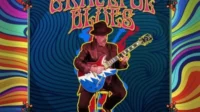
Following this, September 17 marked a milestone for the Peruvian ensemble Los Mirlos. Their debut on the Tiny Desk series served as a masterclass in global fusion, blending the psychedelic electric guitar traditions of the Amazon with the rhythmic complexity of cumbia. Accumulating over 735,000 views within the first 24 hours, the performance demonstrated that regional sounds—when infused with the improvisational spirit of jazz—resonate with a global, digital-native audience that values cultural distinctiveness over homogenization.
Simultaneously, Canadian vocalist Matt Dusk and London-based group Ezra Collective showcased the versatility of jazz arranging. Dusk’s decision to reinterpret electronic music from the gaming subculture through a 1960s big-band aesthetic proved that jazz can function as a powerful vehicle for genre-fluidity. Ezra Collective’s engagement with the music of Bad Bunny further highlighted how jazz musicians are now approaching global pop hits not as novelty covers, but as rhythmic canvases for their own improvisational voice.
Statistical Analysis and Audience Engagement
The engagement metrics from this period provide empirical evidence of the "jazz-language" effect. Los Mirlos achieved an 8.1% like-to-view ratio, a figure significantly higher than the platform average for legacy acts. This indicates that the viewers were not merely passive consumers of nostalgic content, but were actively connecting with the instrumental prowess and rhythmic innovation on display.
Similarly, the trajectory of Tori Kelly’s Tiny Desk session, which surged from its initial release to over 2.2 million views within one week, underscores the long-term viability of high-quality live music content. The growth rate of 328% over seven days indicates that the performance functioned as a "discovery piece," where the musicianship and the all-woman ensemble backing Kelly acted as catalysts for repeated viewing and algorithmic promotion.
In the emerging artist sector, Toronto-based musician Kubla has utilized the "park performance" model to reach listeners who are otherwise skeptical of formal jazz settings. By recording live, high-quality arrangements of songs by the Bee Gees and Daniel Caesar in Toronto’s Music Garden, Kubla’s videos have achieved engagement rates as high as 4.2%. These figures suggest that the setting—moving the performance out of the sterile studio and into the public sphere—lowers the barrier to entry for younger audiences who view jazz as an exclusionary or overly formal art form.
The Curatorial Role of Digital Platforms
Beyond individual artists, the curation of long-form musical content has become a decisive factor in genre discovery. Platforms such as Jazz Is Dead and the collective Soulection are acting as modern-day digital record shops. By organizing diverse playlists and programs that transition seamlessly between Afrobeat, jazz-funk, spiritual jazz, and hip-hop, these entities are shaping the listening habits of a global audience.
The Soulection 15th Anniversary Set, for instance, drew consistent viewership despite its complex blend of amapiano, gqom, and house, proving that the modern listener’s loyalty lies with the curator’s sensibility rather than a single genre classification. The success of these curatorial models confirms that the "jazz audience" is not a static group, but a fluid demographic that moves between genres based on the quality of the arrangement and the coherence of the musical narrative.
Broader Implications for the Music Industry
The success of these performances carries significant implications for the future of jazz in the digital age. Firstly, it challenges the industry’s reliance on historical categorization. As demonstrated by the Ezra Collective’s approach to Bad Bunny or Matt Dusk’s gaming-inspired jazz, the most effective way to introduce jazz to new listeners is by embedding it within music they already occupy. This creates a bridge rather than a wall, allowing the listener to appreciate jazz techniques—such as harmonic tension, ensemble responsiveness, and phrasing—without the burden of a formal jazz education.
Secondly, the "Tiny Desk" and "Live Lounge" formats have effectively institutionalized a new performance ethic. These spaces prioritize intimacy and acoustic clarity, forcing artists to strip away the over-produced artifice of modern pop and rely on the interplay of the ensemble. This format is inherently suited to the jazz tradition, where the "conversation" between musicians is paramount. When artists like Mon Laferte or Cory Wong perform in these environments, they are not simply playing songs; they are documenting the mechanics of collaboration.
Finally, the geographical diversity of these performers—from the Amazonian roots of Los Mirlos to the London-based pulse of Ezra Collective and the urban landscapes of Toronto—reflects a truly globalized jazz scene. The common thread is the utilization of jazz as a "language of arrival." Whether it is used to elevate a pop song, recontextualize an electronic track, or celebrate regional cumbia, jazz is functioning as the connective tissue of contemporary music.
Future Outlook
As of late September 2026, the data suggests that the potential audience for jazz-inflected music is exponentially larger than the audience currently searching for the word "jazz" on YouTube. The artists who are experiencing the most rapid growth are those who do not wait for the audience to come to them; they meet the listener in the space of their current preferences—whether that be a meme-culture track, a global pop hit, or a traditional dance rhythm—and introduce jazz as the primary driver of the musical evolution.
This shift suggests that the next decade of jazz will be defined by its invisibility as much as its presence. It will likely continue to retreat as a noun (a genre) and advance as a verb (a method of arranging and performing). For stakeholders in the music industry, from labels to festival promoters, the message is clear: the path to growth lies in identifying and supporting the artists who can speak this language across cultural and digital divides. The rise of these artists confirms that the public is not allergic to complex music; they are simply allergic to music that feels disconnected from their own lived experience. By integrating the technical rigor of jazz with the cultural currency of the present, these performers are ensuring the genre remains not just relevant, but essential to the future of global music.