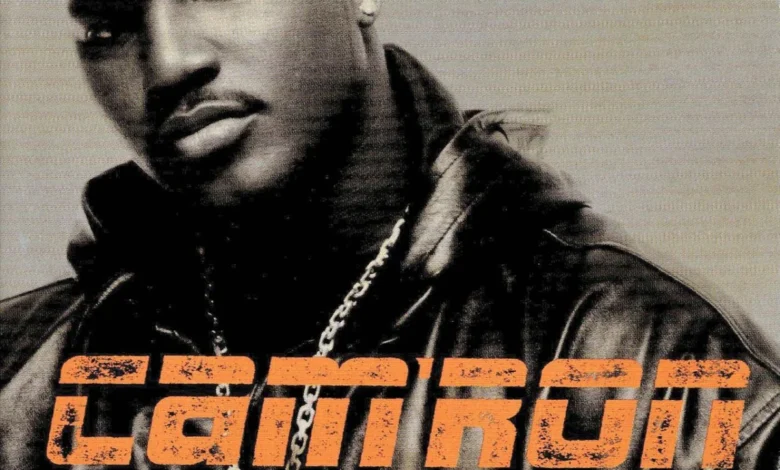
On September 19, 2000, Harlem-born recording artist Cameron Giles—better known to the global hip-hop community as Cam’ron—released his sophomore studio album, S.D.E. (Sports, Drugs & Entertainment), via Epic Records and Untertainment. Distributed through the label headed by his then-manager Lance “Un” Rivera, the project arrived at a crucial crossroads in modern hip-hop history. Coming precisely two years after his 1998 commercial debut, Confessions of Fire, the 2000 release captured a hungry, ambitious artist navigating the shifting tectonic plates of New York City’s rap landscape at the turn of the millennium.
While S.D.E. did not achieve the immediate multi-platinum global saturation that would later define Cam’ron’s tenure with Roc-A-Fella Records, music historians and dedicated fans view the record today as an indispensable piece of the puzzle. It serves as the vital link connecting the gritty, late-1990s boom-bap era of Harlem World to the cultural explosion of The Diplomats (Dipset), a movement that permanently altered the sound, slang, fashion, and attitude of early-2000s urban America.
Main Facts and Production Background
Initially developed under the working title The Rough, Rough, Rough Album, S.D.E. was conceptualized to showcase Cam’ron’s evolving lyrical prowess and his keen ear for crossover appeal. The recording sessions brought together an eclectic mix of mainstream hitmakers and gritty underground fixtures, bridging the gap between East Coast street rap and chart-topping R&B sensibilities.
The production roster featured legendary beatsmiths, most notably Harlem’s own DJ Ron G, whose work on the title track provided a quintessential uptown backdrop. The guest feature list reads like a time capsule of turn-of-the-millennium hip-hop and R&B royalty, including Destiny’s Child, N.O.R.E., Ol’ Dirty Bastard, Prodigy of Mobb Deep, and Dutch & Spade.
However, the most historically significant contributions to the album came from a tightly knit circle of rising talent from Harlem who would soon take over the industry: Freekey Zekey, Jim Jones, and a teenage Juelz Santana. At the time of S.D.E.’s release, Dipset as a formal, flag-waving collective had not yet been baptized into the public consciousness. Yet, the foundations of the crew were visibly being poured in the recording booth, establishing a creative synergy that would eventually dominate the mixtape circuit and Billboard charts alike.
Chronology and Evolution: From Harlem World to Epic Records
To understand the weight of S.D.E., one must trace Cam’ron’s trajectory through the competitive crucible of 1990s New York hip-hop. Emerging under the mentorship of legendary Harlem figures and initially gaining traction through his association with Children of the Corn—a group featuring the late Big L, Murda Mase, and Bloodshed—Cam’ron secured his first major solo deal with Epic Records.
Timeline of Key Milestones:
- Mid-1990s: Cam’ron hones his craft alongside Children of the Corn, establishing a formidable reputation across upper Manhattan.
- July 1998: Releases his debut solo album, Confessions of Fire, which eventually achieves RIAA gold certification, propelled by the hit single "Horse & Carriage" featuring Mase.
- September 19, 2000: Delivers his sophomore effort, S.D.E., through Epic Records and Untertainment, attempting to solidify his solo footing in a shifting industry.
- 2001–2002: Following creative and business realignments, Cam’ron transitions to Roc-A-Fella Records under the partnership of Jay-Z and Damon Dash.
- May 2002: Releases Come Home with Me, a massive commercial breakthrough driven by chart-topping singles "Oh Boy" and "Hey Ma," cementing the mainstream dominance of The Diplomats.
Supporting Data and Commercial Performance
Upon its release in the autumn of 2000, S.D.E. entered a fiercely competitive commercial marketplace defined by heavy-hitting releases from mainstream rap heavyweights and pop icons. The album debuted at number 14 on the US Billboard 200 chart and secured the number two spot on the Top R&B/Hip-Hop Albums chart, moving approximately 70,000 units in its first week.

While these numbers demonstrated a solid baseline of commercial viability, the album’s singles played a critical role in sustaining its footprint:
- "What Means the World to You": Built around an unmistakable, haunting interpolation of The Police’s 1978 rock classic "Roxanne," this track stands out as S.D.E.’s defining composition. It captured Cam’ron’s unique ability to blend street-level narrative depth with pop-accessible instrumentation. The song’s later remixed iteration featuring Ludacris, Trina, and UGK further expanded its regional and demographic reach, securing its place as an enduring anthem of the era.
- Additional Notable Tracks: Cuts such as "Let Me Know," "Losin’ Weight," "Where I’m From," and "Double Up" showcased the rapper’s dexterity, moving effortlessly between introspective street commentary and brash, high-energy bravado.
Despite these strong moments, industry analysts noted that the promotional push behind S.D.E. suffered from corporate shifts at Epic Records and Untertainment during a turbulent period for major-label hip-hop divisions.
Industry Reactions and Retrospective Analysis
In the years following S.D.E., industry insiders, critics, and peers have reassessed the album’s place in Cam’ron’s catalog. While initial contemporary reviews were mixed—often comparing it against the high-water mark of his debut—retrospective analysis highlights the project as a critical stepping stone in his artistic maturation.
Musicologists point out that S.D.E. served as the laboratory where Cam’ron refined his signature delivery: a laid-back, effortlessly charismatic flow punctuated by sharp punchlines and distinct ad-libs. Furthermore, the inclusion of Juelz Santana and Jim Jones signaled a deliberate shift toward building an autonomous ecosystem. Rather than relying solely on established industry heavyweights, Cam’ron was actively investing in his immediate community, a strategy that would pay massive dividends once the Dipset movement officially took flight.
Lance “Un” Rivera, reflecting years later on the Untertainment era, frequently cites the intense creative output of the Harlem sessions during the making of S.D.E., emphasizing that Cam’ron possessed a singular vision for his aesthetic and sound that often ran ahead of contemporary industry trends.
Broader Impact and Long-Term Implications
The legacy of S.D.E. extends far beyond its first-week sales figures or chart positions. The album acted as a crucial bridge during a transformative era when New York hip-hop was transitioning from the rigid, gritty street realism of the mid-90s to the more flashy, corporate-backed, and lifestyle-driven rap of the 2000s.
By maintaining his distinct Harlem vernacular while experimenting with diverse production styles and vocal arrangements, Cam’ron laid the groundwork for the cultural takeover that occurred when he partnered with Roc-A-Fella Records. The blueprint established on S.D.E.—featuring collaborative group synergy, avant-garde fashion integration, and unapologetic regional pride—directly enabled the rise of The Diplomats as global trendsetters.
Twenty-six years after its initial distribution, S.D.E. stands as a testament to artistic resilience and evolution. It captures a major voice in hip-hop at the exact moment he began to architect his own destiny, proving that an album’s true cultural weight cannot be measured by chart metrics alone, but by the enduring influence it exerts on the generations that follow.