Few manufacturers have disrupted the modern musical instrument market quite like Behringer. Over the past decade, the company has transformed the landscape of electronic music production by making vintage analog synthesizer topologies accessible to a wider demographic of musicians, producers, and hobbyists. While the brand has often polarized traditionalists, its undeniable impact on democratizing hardware synthesis is reflected in surging customer satisfaction metrics across major global music retailers. With an expansive catalog featuring everything from faithful hardware clones of legendary 1970s and 1980s flagships to innovative semi-modular hybrids, prospective buyers often face a paradox of choice.
To help navigate this vast hardware ecosystem, customer feedback and ratings aggregated from major European music distributor Thomann provide a clear picture of user sentiment. Based on consumer evaluations, build-quality assessments, and sonic performance reviews, the following hardware units represent the top five best-rated Behringer synthesizers currently available on the market.
1. Behringer JT-2: The Ultimate Desktop Paraphonic Powerhouse
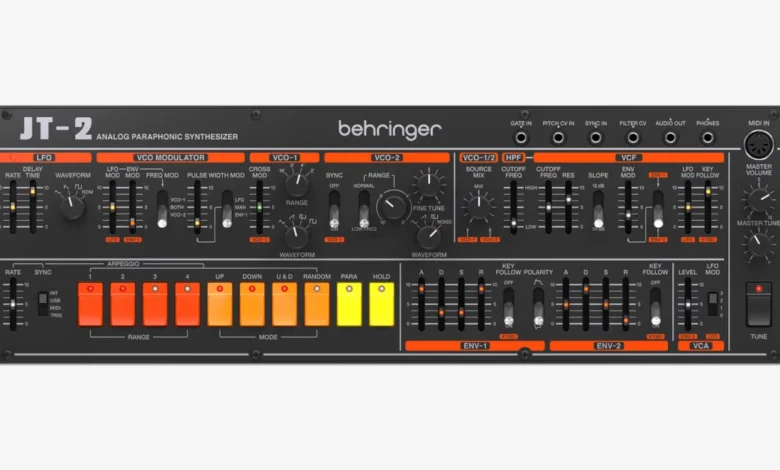
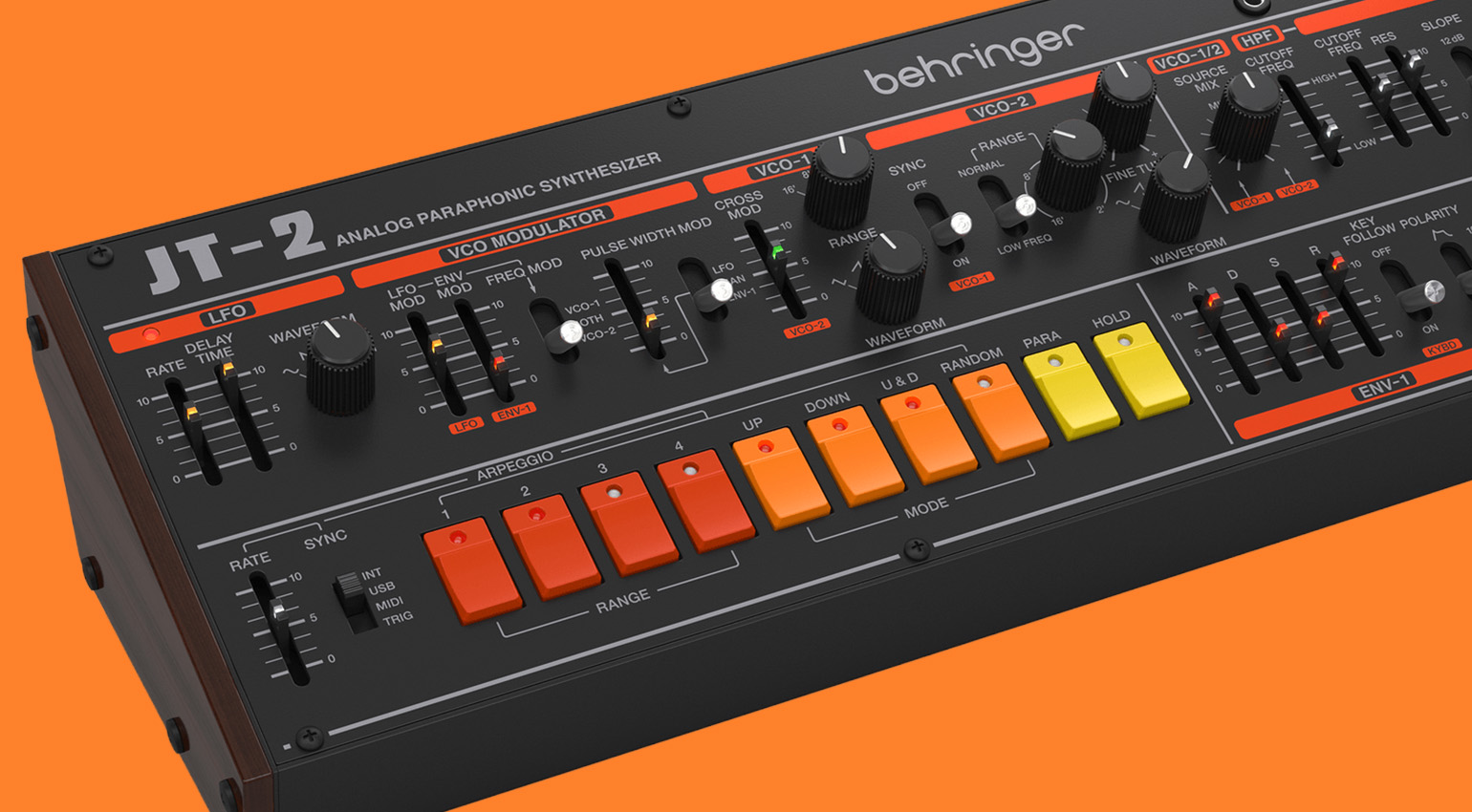
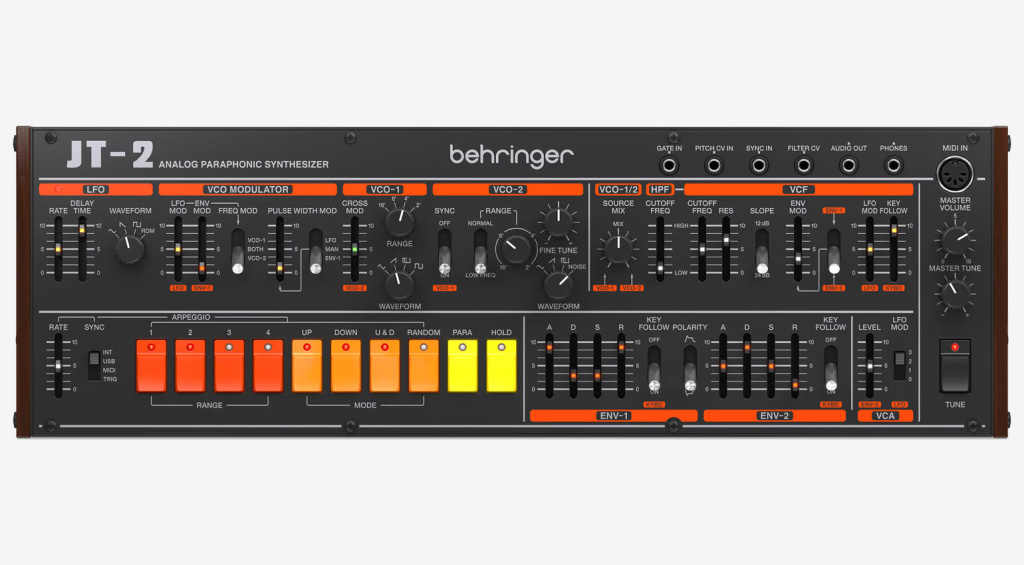
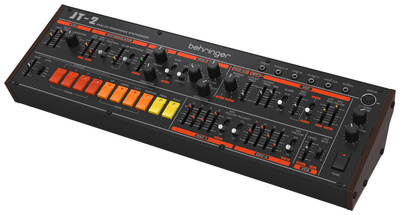
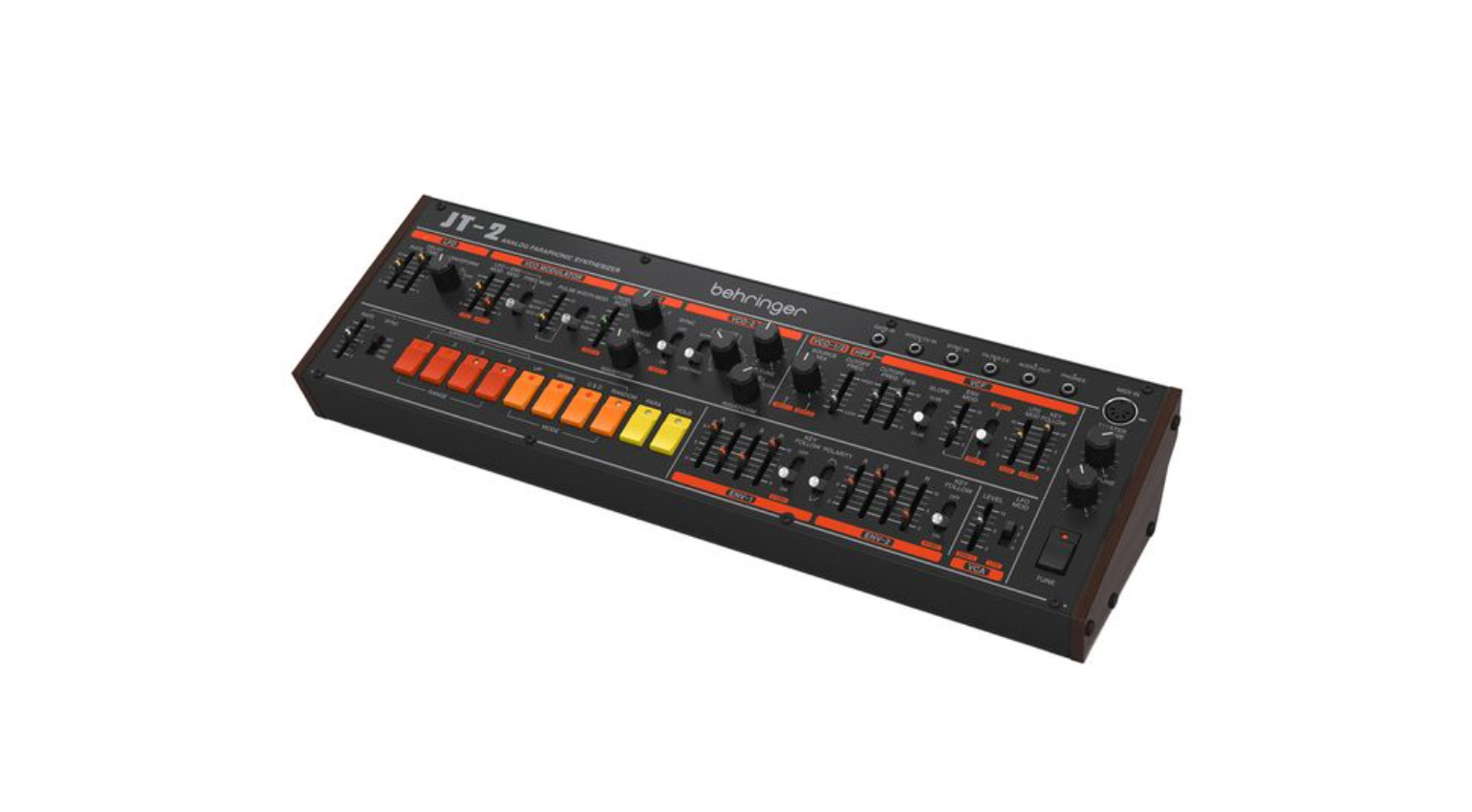
Claiming the number one spot as the highest-rated Behringer synthesizer on Thomann is the JT-2, a desktop module heavily inspired by the architecture of the iconic Roland Jupiter-8. While true polyphony is absent, the JT-2 operates as a two-voice paraphonic instrument, assigning each oscillator its own distinct voice while channeling them through a shared filtering stage.
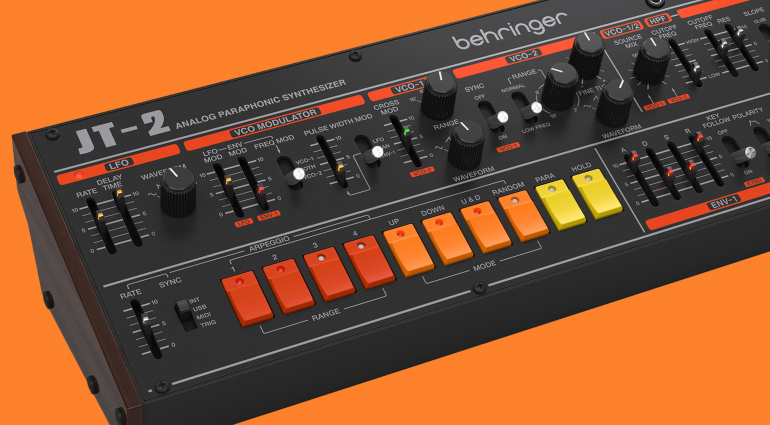
Under the hood, the unit is equipped with two analog Voltage Controlled Oscillators (VCOs) capable of generating sawtooth, triangle, square, and pulse waveforms, alongside a dedicated noise generator. The filtering section offers switchable 12dB or 24dB-per-octave lowpass configurations complemented by a highpass filter. Additional sound-shaping tools include a low-frequency oscillator (LFO), dual ADSR envelopes, and an onboard arpeggiator.
Customer reception has been overwhelmingly positive, with the JT-2 securing a flawless five-star average rating. Users frequently highlight the sturdiness of the physical controls—particularly praising the tactile response of the compact faders—and the authenticity of its vintage tone. Demonstrating the deep loyalty the device inspires, several end-users have reported purchasing multiple units to polychain them together, successfully creating an expanded eight-voice system reminiscent of the original Japanese polyphonic masterpiece.
2. Behringer MS-1 MKII: The Reimagined Monophonic Acid Weapon
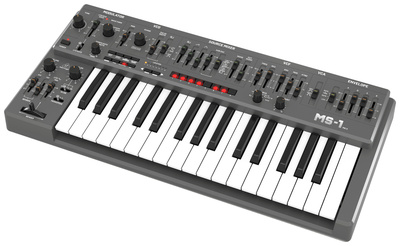
Securing the second position is another homage to a Roland classic: the MS-1 MKII. Modeled after the legendary SH-101 single-oscillator monosynth introduced in 1982, this updated iteration features refined filter circuitry and improved envelope generators designed to address limitations found in earlier clones.
Particularly favored for driving robust basslines, squelching acid patterns, and searing lead lines, the MS-1 MKII retains the versatile performance features of its predecessor. Equipped with a built-in 32-note keybed, strap pins, and a handgrip modulation controller, it can double as a fully functional keytar for live stage performance.

Holding an impressive 4.9-star rating, the instrument wins praise for its unexpected structural integrity. Reviewers frequently note that the chassis feels significantly heavier and more robust than anticipated at this price point. Furthermore, users emphasize that the sonic output sits remarkably close to the vintage hardware standard, making it a cost-effective alternative for musicians priced out of the booming vintage collector market.
3. Behringer Grind: A Hybrid Semi-Modular Exploration
Moving away from strict historical reproductions, the Behringer Grind represents a departure into hybrid territory. Part of the manufacturer’s popular desktop production series, the Grind pairs a digital multi-engine oscillator with a classic analog ladder filter.
The oscillator architecture draws heavily from open-source design concepts, offering 24 distinct synthesis engines. Fifteen of these are derived from Mutable Instruments’ acclaimed Plaits platform, providing access to a vast palette of sonic textures ranging from virtual analog and wavetable synthesis to frequency modulation and classic bass synth emulations. This digital engine is paired with a Moog-style 24dB-per-octave ladder filter and integrated into a semi-modular patching matrix controlled by a 32-step sequencer.
Earning a 4.9-star customer rating, the Grind is celebrated primarily for its hands-on immediacy and workflow fluidity. Reviewers describe the instrument as an endless source of sonic discovery, positioning it as one of the most innovative and inspiring hardware releases in Behringer’s contemporary production lineup.
4. Behringer Kobol Expander: The Elusive French Legend
Ranking fourth on the list is the Kobol Expander, a Eurorack-compatible desktop module that targets one of the rarest instruments in synthesizer history: the 1970s RSF Kobol Expander. Often referred to in vintage circles as the "French Minimoog," the original RSF units were produced in extremely limited quantities, making them nearly unattainable for the average studio owner.
Behringer’s analog recreation mirrors the signal path of the original, incorporating two VCOs, a Voltage Controlled Filter (VCF), a Voltage Controlled Amplifier (VCA), an LFO, dual envelope generators, a noise source, and extensive CV patch points. While its feature set may look modest on paper compared to complex digital workstations, the appeal lies entirely in its sonic signature.

The Kobol Expander commands a 4.8-star rating, with customer testimonials focusing on its distinct character. Buyers frequently describe the tone as warm, gooey, and rich, praising the manufacturer for successfully resurrecting an obscure European analog circuit for the modern production environment.
5. Behringer 2600: The Semi-Modular Heavyweight
Rounding out the top five is the Behringer 2600, a faithful adaptation of the legendary ARP 2600. Widely regarded as a landmark achievement in the evolution of electronic music, the original ARP 2600 established the standard for semi-modular architecture upon its release in the 1970s.
The hardware specification sheet reads like a comprehensive blueprint for sound design: three VCOs, a switchable resonant lowpass filter, a ring modulator, sample-and-hold functionality, a preamplifier with an envelope follower for processing external audio signals, multiple envelope generators, and a stereo VCA with adjustable panning. Additionally, the unit features an integrated digital spring reverb simulation.
Securing strong marks from the synthesis community, the Behringer 2600 is lauded for delivering an authentic vintage workflow. Users note that the physical layout encourages experimentation, yielding a sound that feels immediate, massive, and alive.

Market Implications and Industry Impact
The sustained high ratings of these hardware instruments underscore a broader shift within the music technology industry. By leveraging efficient manufacturing pipelines and global distribution networks through partners like Thomann and Sweetwater, Behringer has effectively lowered the financial barrier to entry for analog and hybrid synthesis.
While debates regarding intellectual property and the replication of historical designs continue to polarize industry forums, consumer data demonstrates a strong market demand for affordable physical instruments. For independent producers, educational institutions, and project studios operating on strict budgets, these top-rated synthesizers provide a viable bridge between vintage sound design methodologies and contemporary music production standards.