The modern music production landscape is largely dominated by In-The-Box (ITB) workflows, where digital audio workstations (DAWs), virtual studio technology (VST) plugins, and pristine software interfaces handle the vast majority of recording, mixing, and mastering tasks. While this digital centralization has democratized audio engineering, offering unprecedented recallability, crystal-clear routing, and massive processing power within a laptop screen, it has also introduced a unique psychological hurdle: creative fatigue. Staring at an endless grid of automation lanes, drop-down menus, and clinical graphical user interfaces can sometimes paralyze the songwriting process, leading to homogenous sonic choices. To combat this paralysis, producers, tracking engineers, and mix artists increasingly turn to specialized studio hardware specifically engineered to disrupt conventional workflows. By reintroducing tactile interfaces, analog circuit imperfections, and unexpected acoustic routing, these hardware tools compel creators to step away from the mouse and engage in genuine sonic exploration during the tracking and mixing phases.
The Role of Microphones in Spatial and Timbral Experimentation
Microphones are fundamentally utilitarian devices designed to translate acoustic air pressure waves into electrical signals with maximum fidelity. Consequently, they are rarely categorized as experimental sound design tools. However, multi-pattern condenser microphones fundamentally challenge this perception by acting as acoustic catalysts when paired with advanced stereo-miking techniques.
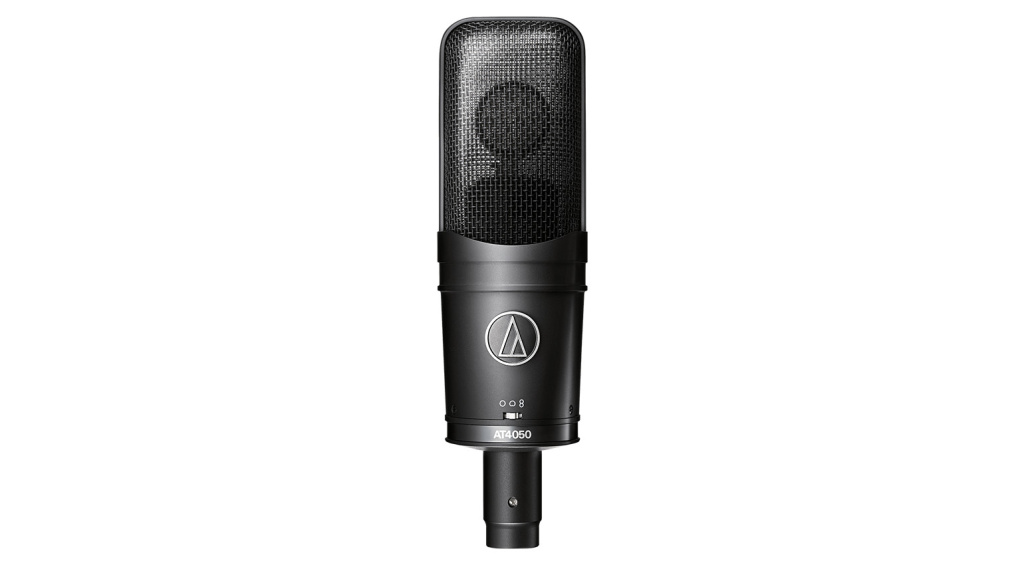
A prime example of this versatility is the industry-standard Audio-Technica AT4050. Renowned for its transparent, modern transient response and steadfast reliability across decades of studio applications, the AT4050 features three switchable polar patterns: cardioid, omnidirectional, and figure-8. While a cardioid setting provides direct, focused source isolation and an omnidirectional pattern captures expansive room ambiance, the true gateway to experimentation lies in utilizing the figure-8 setting for mid-side (M-S) recording configurations.
By pairing the AT4050—or any comparable high-grade multi-pattern condenser or ribbon microphone configured to a figure-8 polar pattern—with a secondary cardioid microphone, engineers can capture a coincident stereo image with absolute phase coherence. In practice, the mid-microphone points directly at the sound source to capture core mono energy, while the side-microphone captures lateral ambient information at a ninety-degree offset. During the mixing phase, this setup unlocks profound spatial flexibility. For instance, producers can manipulate the balance between the mid and side channels of an acoustic guitar track, attenuating the direct center signal while boosting the side channels. This pushes the guitar into a wide, enveloping stereo field that physically frames the mix, leaving a pristine, unobstructed pocket right down the center for a lead vocal to sit forward and punchy. This shift in tracking philosophy forces the engineer to make
spatial decisions at the source rather than relying on artificial spatial plugins later.
Merging Analog Saturation with DSP Versatility
Hardware multi-effects units have long bridged the gap between traditional outboard gear and modern digital flexibility. The Elektron Analog Heat +FX exemplifies this hybrid philosophy, merging tactile, component-level analog signal processing with a deeply programmable digital signal processing (DSP) architecture. Designed to integrate seamlessly into modern production environments, the unit functions both as a standalone stereo processor and as a class-compliant USB audio interface. Through Elektron’s proprietary Overbridge software, the Analog Heat +FX can be instantiated directly inside a DAW as a native plugin, allowing hardware analog warmth to be automated and recalled with digital precision.
At its core, the unit houses eight distinct stereo analog distortion circuits, offering a wide spectrum of harmonic coloration ranging from subtle tape warmth and transparent tube saturation to aggressive, germanium-fueled fuzz. This analog core is complemented by a versatile multimode filter featuring seven unique filter typologies and a two-band parametric EQ for precise frequency carving. Operating in tandem with the analog path is a powerful digital engine comprising seven modular effect blocks—including chorus, delay, reverb, compression, and bit-reduction—which can be freely reordered by the user.

The inclusion of such disparate processing tools in a single chassis fundamentally alters how producers approach sound design. Whether applied to individual drum hits, sustained synthesizer pads, or entire master busses, the ability to violently reshape harmonic structures and introduce complex temporal textures on the fly sparks immediate inspiration. It transforms mixing from a corrective phase of fixing frequency imbalances into an active, performative phase of textural re-imagining.
Temporal Fluidity and the Organic Imperfection of Tape Echoes
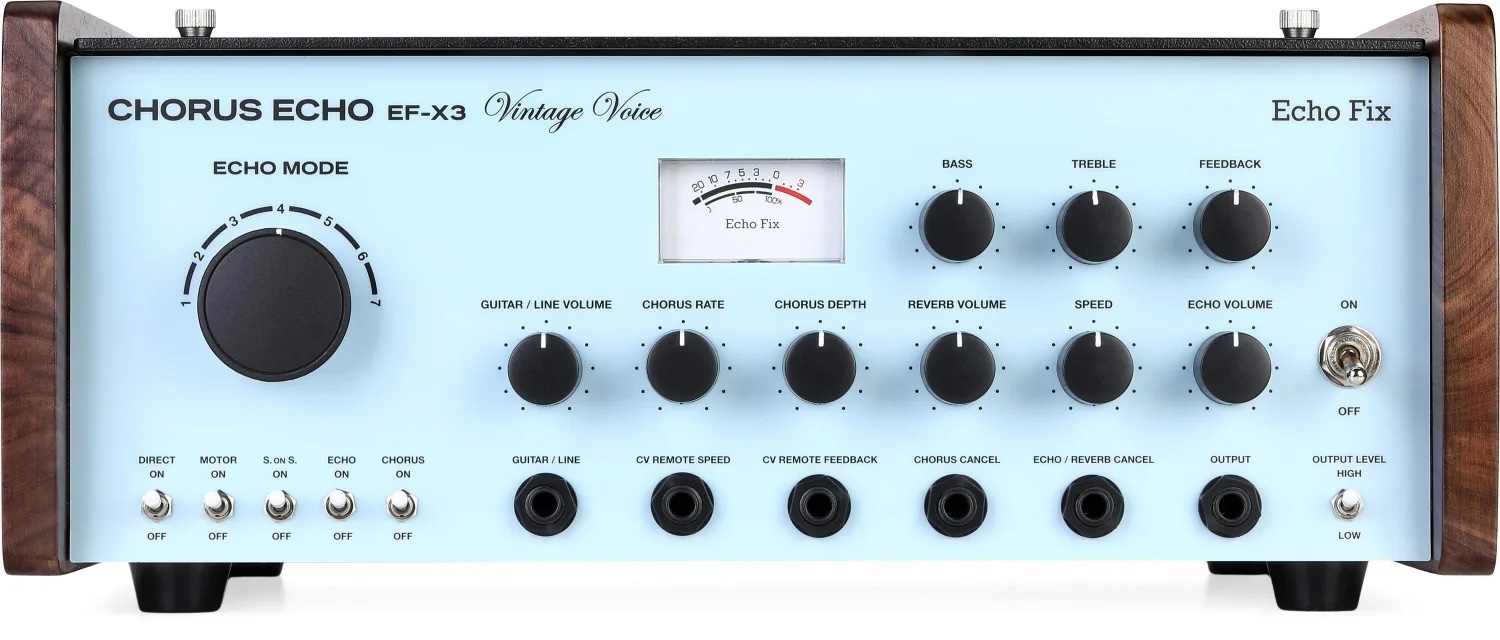
In an era where digital delays lock down exact millisecond repeats synchronized rigidly to the project’s internal clock, hardware tape echoes reintroduce the human element of mechanical drift and temporal fluidity. Echo units like the Echo Fix EF-X3 demonstrate why tape-based delay remains an enduring muse for musicians across genres. Whether an artist has spent years operating vintage tape units or relies entirely on algorithmic plugin emulations, physical tape echoes inherently resist rigid predictability, making every pass unique.
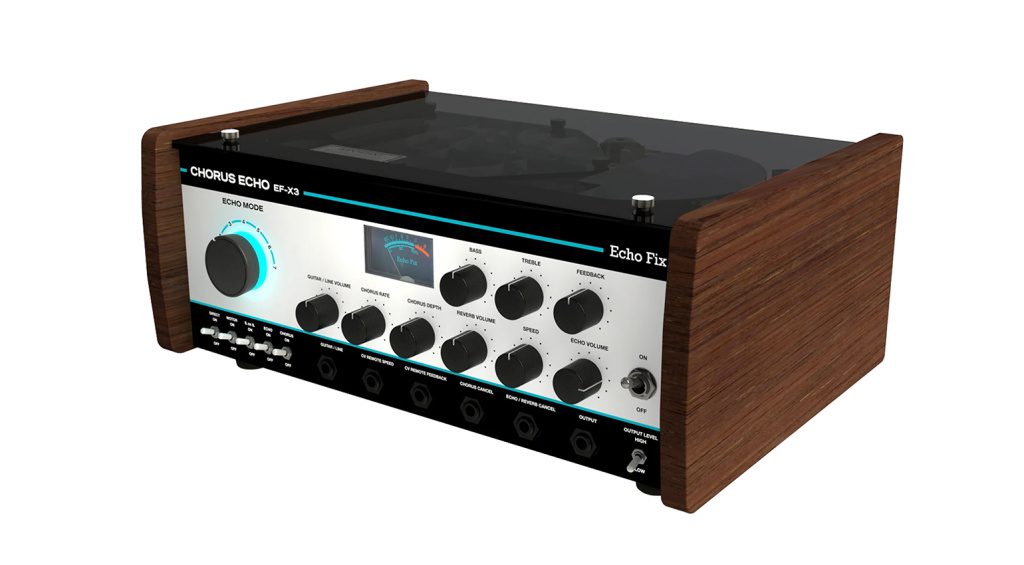
The primary architectural advantage of a tape echo is its continuous variability. Instead of quantizing delay times to grid increments, creators manipulate tactile knobs to sweep echo speeds and feedback parameters in real-time, inducing pitch-shifting artifacts and cascading self-oscillation that react dynamically to the incoming audio. Furthermore, units such as the EF-X3 integrate multiple playback heads with independent outputs alongside onboard analog bucket-brigade chorus circuits and genuine spring reverb tanks.
This multi-layered approach to time-based effects allows users to blend raw analog tape saturation, fluctuating echoes, lush chorus modulation, and chaotic spring reverberation into a cohesive signal chain. Feeding guitars, vocals, synthesizers, or drum machines through such a tactile processor invariably yields unexpected happy accidents. The sheer immediacy of physical transport controls encourages artists to ride the feedback threshold manually, turning a routine delay effect into an evolving, performative instrument.

Reinventing Dynamic Control with the Eventide Omnipressor
Dynamic range control is conventionally viewed as a transparent, corrective science—a way to tame transient peaks, smooth out vocal performances, or glue a mix bus together using established compressor topologies like VCA, optical, or FET designs. However, the Eventide Omnipressor, an iconic processor born during the golden age of studio engineering, approaches dynamics processing from a completely subversive angle.
The architectural innovation of the Omnipressor lies in its complete separation of the sidechain level-detection circuit from the voltage-controlled amplifier (VCA). This decoupled design effectively laid the conceptual groundwork for modern look-ahead and complex sidechain routing. True to its name, the Omnipressor is capable of processing signals above and below an established threshold simultaneously, entirely redefining how gain structures are manipulated.

Controlled primarily through a central Function knob, the unit transitions smoothly from traditional expansion and gating modes into classic compression and limiting, and eventually into extreme processing realms such as infinite compression and inverse (negative) compression. Infinite compression locks the output signal at an unyielding, constant level regardless of how violently the input signal fluctuates. Meanwhile, inverse compression inverts dynamic relationships entirely, driving quiet passages to maximum volume while crushing transient peaks down to a whisper.
This unconventional behavior makes the Omnipressor an extraordinary tool for creative experimentation. By turning standard dynamic expectations upside down, producers can pull hyper-detailed room resonance out of sparse tracks, pump the breath of a performance to unnatural prominence, or inject aggressive character into sterile recordings. The reissue of this classic hardware ensures that contemporary studios retain access to a dynamic processor that actively rewards boundary-pushing audio manipulation.
Expanding DAW Horizons via Guitar Pedal Integration
For decades, guitar stompboxes were strictly quarantined to the domain of electric guitarists and pedalboard aficionados. However, hardware interfaces designed to bridge balanced studio lines with high-impedance instrument levels—such as the Radial Engineering EXTC series and 500-series modules—have dismantled this arbitrary barrier. These re-amping and effects-loop interfaces allow producers to send balanced audio directly from a DAW out to a chain of guitar pedals and back again, integrating stompbox effects into standard mixing and recording sessions.
The creative implications of this hardware bridge are profound. The global market for guitar effects is staggering, encompassing thousands of boutique overdrive pedals, ring modulators, bit-crushers, lo-fi filters, and expansive digital reverbs that offer entirely different sonic signatures than rackmount studio gear or software plugins. Because stompboxes are engineered primarily for live, real-time performance, their interfaces prioritize tactile, hands-on knobs and foot switches that invite immediate, uncalculated tweaks.

Routing synths, drum machines, vocals, or entire string arrangements through a chain of distortion and modulation pedals injects an organic, lo-fi grit that is notoriously difficult to replicate purely inside a box. It encourages a performance-oriented workflow where mixing engineers actively play their effects chains, twisting filter cutoffs and driving gain stages by hand. While producers who adopt this approach often find themselves quickly amassing a dedicated collection of stompboxes, the resulting sonic discoveries validate the departure from conventional studio routing, proving that stepping outside the DAW is often the fastest path to originality.
Related posts: