Noah Kahan Will Perform This Classic Song During ‘In Memoriam’ Spot at 2026 Emmy Awards


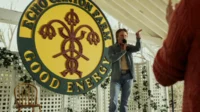
The selection of Noah Kahan for this performance marks a significant moment in the young artist’s career. Kahan, who has ascended to mainstream prominence through his introspective songwriting and powerful vocal performances, is currently riding a wave of critical acclaim. His inclusion in the Primetime Emmys’ most solemn segment underscores his growing status as a formidable talent capable of delivering emotional resonance on a national stage. Industry observers expect Kahan to be a significant contender during the upcoming Grammy Awards cycle, with nominations officially slated for announcement on November 16.
The Legacy of Bridge Over Troubled Water
The choice of "Bridge Over Troubled Water" as the backdrop for the in memoriam segment is a testament to the song’s enduring cultural significance. Originally released in 1970, the composition served as the title track for Simon & Garfunkel’s final studio album. The song dominated the Billboard Hot 100, maintaining the number one position for six consecutive weeks. Its critical success was equally profound; it secured Grammy Awards for both Record of the Year and Song of the Year. In 1998, the song was inducted into the Grammy Hall of Fame, cementing its place in the canon of American music history. Its frequent use in memorial settings stems from its lyrical themes of support, comfort, and transition, making it a quintessential choice for honoring those the industry has lost.
Honoring Dolly Parton
A primary focus of this year’s memorial segment will be a tribute to the legendary Dolly Parton, who passed away on August 25, 2026, at the age of 80. Parton, an icon whose influence spanned country music, film, and humanitarian efforts, left an indelible mark on television history. In 2001, she received a Primetime Emmy for Outstanding Television Movie as the executive producer of Dolly Parton’s Christmas on the Square. While specific details regarding the tribute remain under wraps, it is anticipated to be a centerpiece of the broadcast. Given Parton’s status as a beloved public figure, this segment is expected to draw substantial viewership and serve as a cathartic moment for fans worldwide. The Emmys are widely viewed as the first of many tributes planned across various major award ceremonies in the coming months.
Ceremony Leadership and Programming
The 2026 Primetime Emmys will be hosted by Mariska Hargitay, an industry veteran who recently garnered significant recognition for her work behind the camera. Hargitay won two awards last weekend—one for directing and one for producing My Mom Jayne: A Film By Mariska Hargitay, a documentary that explores the life and legacy of her mother, 1960s sex symbol Jayne Mansfield. Her selection as host reflects a broader industry shift toward acknowledging multifaceted creators who excel in both performance and production roles.
The ceremony’s roster of presenters further highlights the star-studded nature of the event, with appearances scheduled from Zendaya, Keke Palmer, Amy Poehler, Marcello Hernández, and Alan Cumming. The telecast itself is being managed by a seasoned production team, including Jesse Collins, Dionne Harmon, and Jeannae Rouzan-Clay of Jesse Collins Entertainment. Their stewardship is intended to provide a streamlined, high-production-value experience that balances the gravity of the memorial segments with the celebratory nature of the awards.
Recognition of Humanitarian Achievement
Beyond the memorial segments and competitive categories, the event will feature a special honor for Michael J. Fox. He is set to receive the Bob Hope Humanitarian Award, a distinction established in 2002 to recognize individuals who have leveraged their platform to bring about positive change. Fox’s career is unique in its breadth; he achieved massive success in television with Family Ties and transitioned into film stardom with Back to the Future. Both projects produced number one hits on the Billboard Hot 100, illustrating his wide-reaching cultural impact. His continued advocacy and resilience in the face of personal health challenges have made him a fitting recipient for an award that celebrates the intersection of celebrity and public service.
Technical Logistics and Programming Adjustments
The 2026 Emmy season has been characterized by a restructuring of the awards schedule. The initial two nights of the Primetime Emmys—formerly known as the Creative Arts ceremonies—concluded on September 5 and 6. In a departure from previous years, these programs were not broadcast or streamed live. Instead, producers have opted for an edited format. This comprehensive package, covering the technical and craft categories, is scheduled to air on FXX on Saturday, September 12, at 8 p.m. ET/PT, with a follow-up streaming release on Hulu the subsequent day. This shift is part of an ongoing strategy to manage the length of the telecast and ensure that the most high-profile awards receive the maximum possible audience attention during the main Monday night ceremony.
Broader Implications and Industry Analysis
The integration of Noah Kahan into the in memoriam segment highlights the ongoing convergence of the music and television industries. By inviting a current chart-topping artist to perform a classic standard, the Television Academy is bridging the generational divide and appealing to a younger demographic that remains highly engaged with digital platforms. This strategy is essential in an era where traditional linear television ratings are under constant pressure from streaming services and on-demand content.
Furthermore, the focus on Dolly Parton and Michael J. Fox demonstrates the industry’s commitment to institutional memory. Awards shows have historically functioned as the primary mechanism for collective industry mourning. By dedicating significant time to these figures, the Emmys validate their contributions not just as entertainment, but as vital components of the cultural zeitgeist.
As the industry looks toward the upcoming Grammy nominations in November, the exposure provided by this performance will undoubtedly bolster Noah Kahan’s profile. For the Primetime Emmys, the goal remains to deliver a telecast that is both somber and celebratory—a delicate balance that relies heavily on the quality of the musical performances and the authenticity of the tributes. With a strong production team at the helm and a carefully curated list of presenters and honorees, the 2026 ceremony is positioned to serve as a significant waypoint in the television calendar, setting the tone for the upcoming awards season.
As fans prepare for the ceremony, the anticipation surrounding Kahan’s rendition of "Bridge Over Troubled Water" serves as a reminder of the power of music to unite audiences. Whether viewed through the lens of nostalgia or contemporary pop culture, the performance is poised to be a highlight of the 2026 broadcast, reflecting the industry’s enduring respect for its past while simultaneously looking toward the future of artistic talent.