The Future of Sound: Nine Modern Synthesizers Destined for Legendary Status

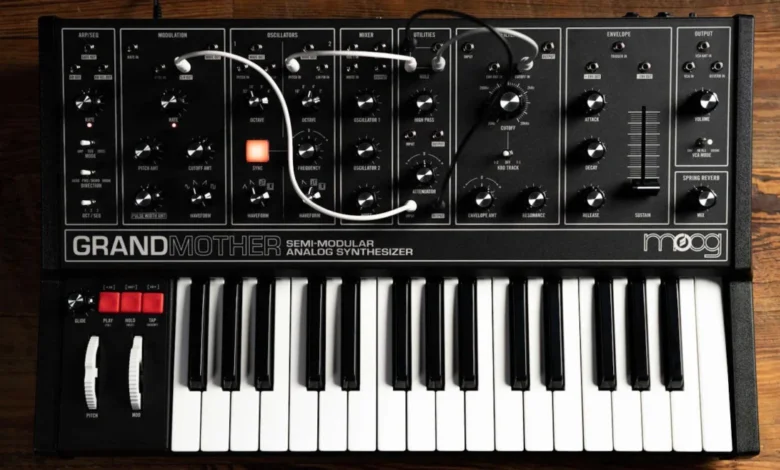
When music historians and synthesizer enthusiasts discuss legendary instruments of the past, the conversation almost invariably turns to vintage hardware from decades gone by. Icons such as the Moog Minimoog, introduced in 1971, the ARP Odyssey, the Yamaha CS-80, the Roland Jupiter-8, and the Access Virus T1 command mythical status in modern music production lore. These instruments are universally celebrated for their unique sonic signatures, pioneering engineering, and cultural impact, yet they share a common trait: they are historical artifacts, long out of production and largely confined to the secondary market at premium prices.

However, defining a "classic" synthesizer strictly by its age creates a false dichotomy in contemporary music technology. Today’s electronic music instrument landscape is experiencing a golden era of innovation, driven by advances in digital signal processing, analog circuit design, and manufacturing precision. A growing number of hardware synthesizers currently available on the market possess the sonic excellence, groundbreaking feature sets, and widespread industry adoption required to qualify as future legends. These modern classics are already shaping contemporary film scores, electronic dance music, pop productions, and sound design, ensuring that musicians decades from now will look back upon them with the same nostalgic reverence afforded to vintage analog behemoths.
Evaluating the Shift from Vintage Monopoly to Modern Innovation

The transition from vintage reverence to modern appreciation is rooted in how contemporary manufacturers approach instrument design. While vintage units often suffer from tuning instability, maintenance challenges, and scarcity of replacement components, modern synthesizers integrate the warmth and tactile satisfaction of analog circuitry with the reliability, flexibility, and expansive routing of digital technology. Manufacturers are no longer merely cloning the past; they are expanding the boundaries of human-instrument interaction.
This evolution has been accelerated by the demand for deeper sonic palettes and ergonomic performance controls. Features that were once considered exotic or experimental—such as polyphonic aftertouch, complex modulation matrices, wavetable morphing, and multi-dimensional tactile keyboards—have become standard expectations for flagship instruments. Consequently, musicians investing in hardware today are acquiring tools that not only honor historical lineages but actively forge new sonic territories. Below is an examination of nine modern hardware synthesizers currently in production that are destined to be remembered as the defining classics of the 21st century.
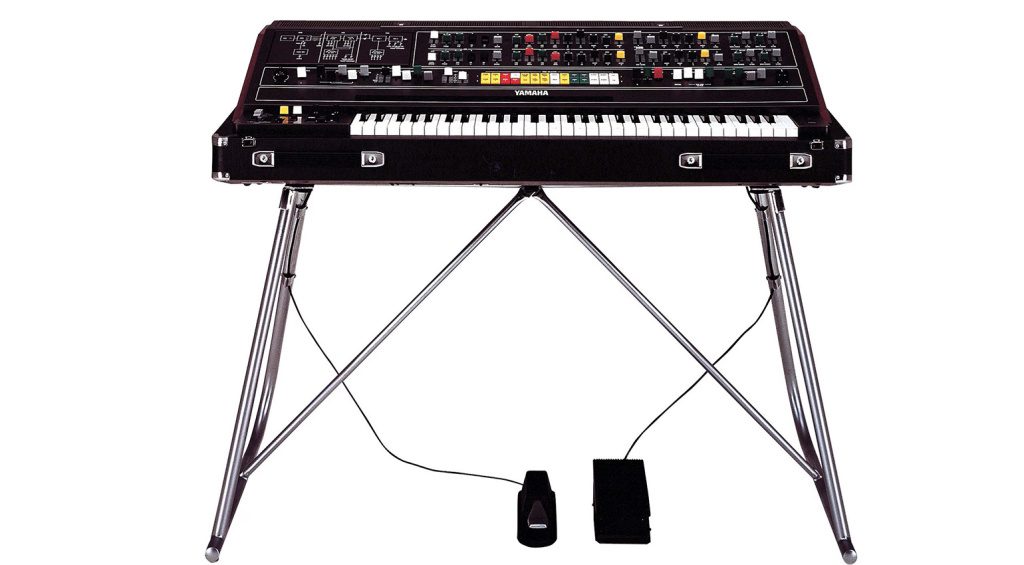
Arturia PolyBrute 12: The 21st-Century Analog Expression Powerhouse
French manufacturer Arturia has steadily built a reputation for developing forward-thinking hardware instruments, but the PolyBrute 12 stands out as a monumental achievement in analog polysynth design. Featuring a robust 12-voice polyphony architecture, the instrument is anchored by Arturia’s proprietary FullTouch MPE (MIDI Polyphonic Expression) keyboard technology. This innovative keybed allows for nuanced control over every individual note, bringing an unprecedented level of organic expressiveness to polyphonic analog synthesis.
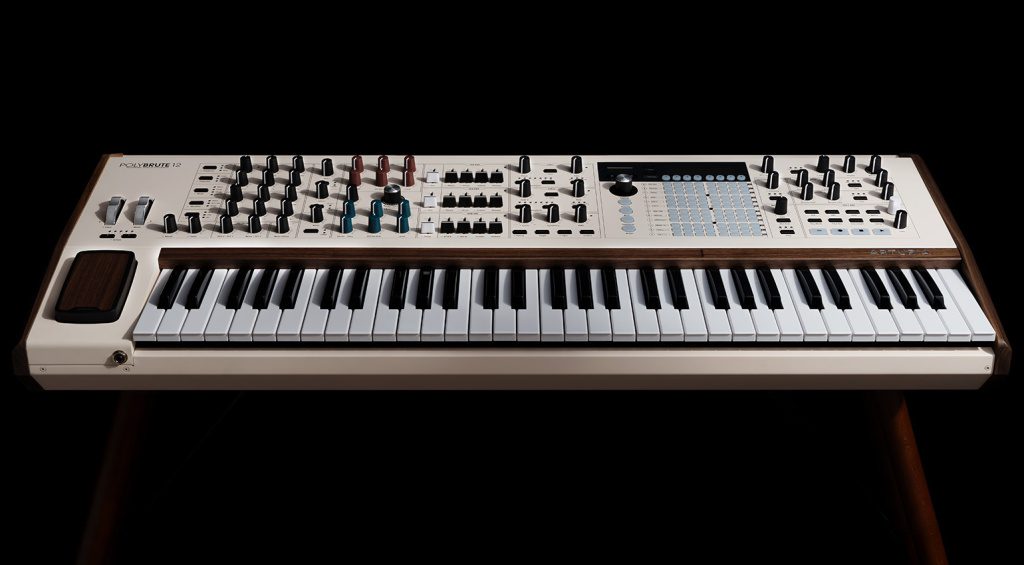
In the sonic department, the PolyBrute 12 delivers immense depth via its dual Brute analog oscillators and a sophisticated twin-filter design that combines Steiner-Parker and Ladder filter topologies. Supported by an expansive modulation matrix, the instrument functions as a modern spiritual successor to the legendary Yamaha CS-80, offering players a deeply tactile, highly expressive performance instrument. Industry analysts and reviewers widely regard the PolyBrute 12 as a definitive milestone in analog polyphony, guaranteeing its enduring legacy in professional studios for years to come.
Moog Grandmother: Semi-Modular Heritage Meets Modern Accessibility

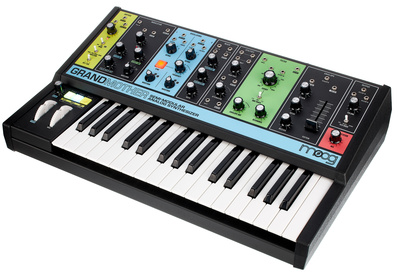
Moog Music remains a foundational pillar of electronic music history, having set the benchmark for monophonic synthesizers with the Minimoog more than fifty years ago. In 2018, the company introduced the Grandmother, a semi-modular analog synthesizer that bridges the gap between vintage Moog topology and contemporary modular accessibility. While it does not seek to outright replace the Minimoog, the Grandmother introduces a distinct workflow and sonic character that secures its place as a modern classic.
The instrument features a patchable, semi-modular architecture equipped with two analog oscillators, a classic Moog Ladder filter, and a built-in spring reverb tank—a rare inclusion in modern monosynths. By incorporating modular-inspired patching parameters alongside a traditional, highly playable keyboard, the Grandmother offers an ideal balance between immediate performance and deep sound design exploration. Its commercial success and distinctive, rich tonal quality have made it a staple in modern production environments.
Ashun Sound Machines Hydrasynth: Redefining Digital Wavetable Synthesis
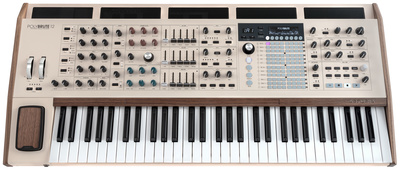
Proof that classic status is not restricted to analog circuitry, Ashun Sound Machines (ASM) disrupted the synthesizer market with the Hydrasynth series. Unabashedly digital, the Hydrasynth lineup has won over even staunch analog purists through its staggering sonic depth, pristine audio fidelity, and innovative architecture. Available in various formats ranging from keyboard versions to compact desktop modules and the ultra-portable Explorer, the Hydrasynth has become a ubiquitous tool for modern sound designers.

At the core of the Hydrasynth engine are three oscillators equipped with advanced wavetable synthesis capabilities, complemented by unique "Mutant" wave-shaping tools, dual filters, and comprehensive modulation routing. Performance features such as polyphonic aftertouch and a built-in ribbon controller elevate the instrument from a standard digital synth to a highly expressive performance controller. The Hydrasynth’s ability to generate everything from pristine digital pads to aggressive, evolving textures ensures its enduring relevance in electronic music production.
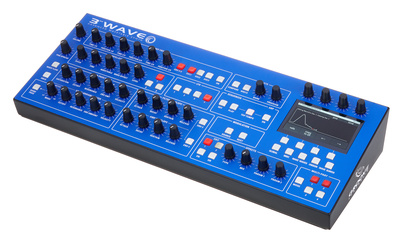
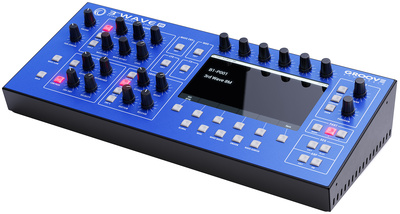
Groove Synthesis 3rd Wave: The Ultimate Wavetable Evolution

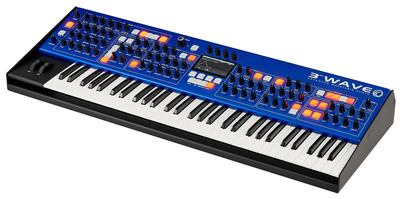
Inspired by the pioneering PPG Wave synthesizers of the 1980s, the Groove Synthesis 3rd Wave is a digital and hybrid powerhouse designed to stand the test of time. It combines three oscillators capable of playing advanced wavetables and virtual analog waveforms, paired with a hybrid filter architecture that incorporates both analog and digital filtering options.
Groove Synthesis has continually expanded the instrument’s capabilities through firmware updates, introducing features such as user sampling, poly unison modes, and lo-fi wavetable importing. The 3rd Wave excels at reproducing vintage digital textures while seamlessly crossing over into ultra-modern, high-resolution soundscapes. Its robust build quality, deep synthesis engine, and professional-grade interface place it firmly in the pantheon of modern digital classics.
Expressive E Osmose: A Paradigm Shift in Keyboard Expression
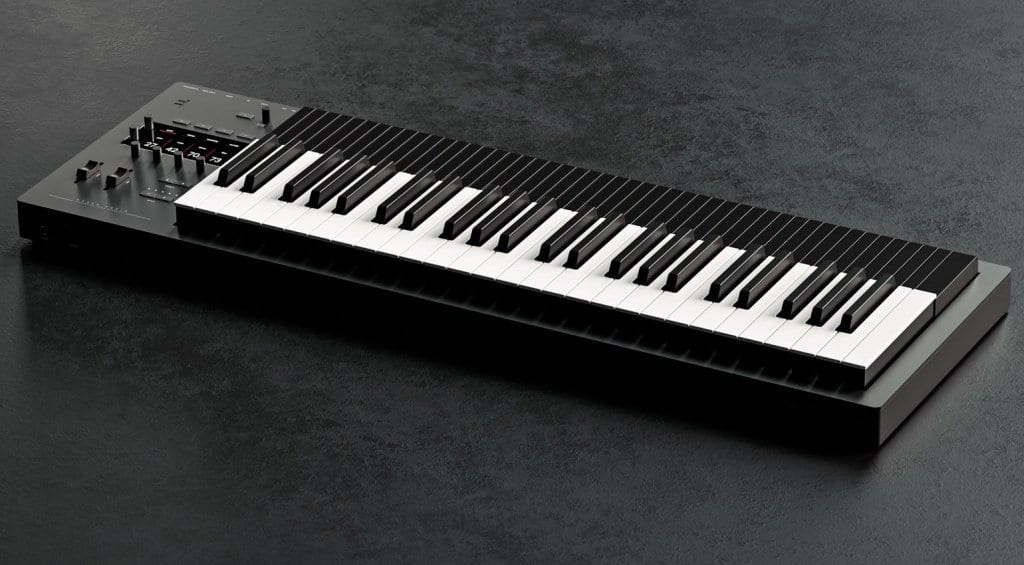
While most synthesizer evaluations focus heavily on internal sound engines, Expressive E fundamentally altered the conversation with the Osmose, an instrument where the physical interface is the primary innovation. Driven by the company’s proprietary Augmented Keyboard Action, the Osmose keybed offers three dimensions of continuous, independent control per note, allowing performers to bend pitches, add vibrato, and modulate timbres directly from the keys without relying on external wheels or controllers.

Beneath this revolutionary keybed lies a powerful sound engine powered by Haken Audio’s EaganMatrix technology, capable of physical modeling, FM synthesis, and virtual analog sounds. The synergy between the hyper-expressive physical interface and the deeply programmable sound engine makes the Osmose a watershed moment in instrument design. It represents a paradigm shift that will be studied and emulated by instrument designers for generations.
Sequential Prophet-6: Dave Smith’s Modern Masterpiece

Sequential, founded by the late industry pioneer Dave Smith, boasts a rich heritage that includes the original Prophet-5, one of the most important polysynths in history. When the company developed the Prophet-6, the goal was not merely to recreate the past, but to reimagine the classic polyphonic analog workflow with contemporary engineering reliability and expanded sonic capabilities.
The Prophet-6 features two discrete voltage-controlled oscillators per voice, continuous wave-shaping, bi-directional low-pass and high-pass filters, and a modern adaptation of Sequential’s famous Poly Mod section. While the primary signal path remains strictly analog, the instrument incorporates high-quality digital effects that can be entirely bypassed for purists seeking uncolored analog warmth. The Prophet-6 represents a masterclass in modern analog polysynth design, honoring its lineage while establishing a distinct legacy of its own.

Korg Minilogue Series: Democratizing Analog Synthesis for a New Generation
When Korg launched the original Minilogue, it fundamentally shifted the market by offering an accessible, four-voice polyphonic true-analog synthesizer at a price point targeted at everyday musicians. Its brash, modern sonic character, intuitive oscilloscope display, and hands-on control layout made it an instant commercial success. Over nearly a decade on the market, the Minilogue series has expanded to include variants like the Minilogue XD, which incorporates a user-customizable digital multi-engine oscillator.
The series has served as an entry point for an entire generation of electronic musicians, cementing its status as a modern classic for the masses. By proving that high-quality analog polyphony could be manufactured affordably without sacrificing sonic integrity or build quality, Korg ensured the Minilogue name will be remembered alongside historical milestones in synth history.
Teenage Engineering OP-1 Field: Portable Innovation and Polarizing Design
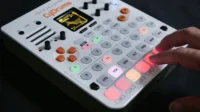
Swedish design collective Teenage Engineering carved out a unique space in music technology with the original OP-1, a portable all-in-one synthesizer, sampler, and sequencer praised for its lo-fi charm and unconventional workflow. In 2023, the company introduced its successor, the OP-1 Field, refining nearly every aspect of the hardware while maintaining its distinct, highly portable philosophy.
The OP-1 Field packs a synthesizer engine, advanced sampler, drum machine, vocoder, built-in FM radio, and a simulated multi-track tape recorder into a slim, battery-powered aluminum chassis. While Teenage Engineering products often elicit strong, polarized reactions regarding their workflow philosophy and market positioning, the technical achievement and cultural footprint of the OP-1 Field are undeniable. It remains a defining instrument of the modern portable production movement.
Novation Summit: The Flagship Hybrid Powerhouse
As a dark horse contender in the realm of flagship synthesizers, the Novation Summit represents the culmination of advanced British engineering. Built around two powerful Peak synthesis engines, the Summit is a 16-voice hybrid polyphonic synthesizer utilizing three FPGA-generated "New Oxford Oscillators" per voice, capable of virtual analog, FM, and wavetable synthesis.
The instrument routes these digital oscillators through dual analog filters and three stages of analog distortion, offering comprehensive split and layer capabilities alongside an onboard wavetable editor. Despite flying somewhat under the radar compared to some of its competitors, the Summit is universally praised by professional sound designers for its immense sonic versatility, pristine build quality, and deep programming potential. As time progresses, the Novation Summit is widely projected to attain revered status among connoisseurs of hybrid synthesis.
Implications and Future Outlook

The breadth of instruments currently available highlights an industry that refuses to stagnation. From the uncompromising analog expression of the Arturia PolyBrute 12 and Sequential Prophet-6 to the digital innovation of the ASM Hydrasynth and Groove Synthesis 3rd Wave, modern synthesizers offer creators unprecedented sonic tools.
As these instruments mature within the global music production community, their cultural impact will only solidify. Whether through analog warmth, wavetable complexity, or multi-dimensional physical control, these nine synthesizers have secured their places not just in contemporary studios, but in the permanent history of electronic music instrumentation.