The contemporary jazz landscape has seen a significant influx of high-caliber releases throughout the latter half of 2025, marked by a trend toward deeply personal composition and technical evolution. Three distinct projects—the Kris Davis Trio’s Lost In Geneva, John Donaldson’s We Were Together, I Forget The Rest, and Billy Mohler’s Covell—illustrate the diverse directions the genre is currently taking, ranging from avant-garde abstraction to poignant, narrative-driven chamber jazz. These releases, recorded between September 2025 and an undisclosed date earlier that year, represent the culmination of years of professional development and personal introspection by three of the most respected figures in modern improvisational music.
Kris Davis Trio: A Study in Technical Evolution and Abstract Improvisation
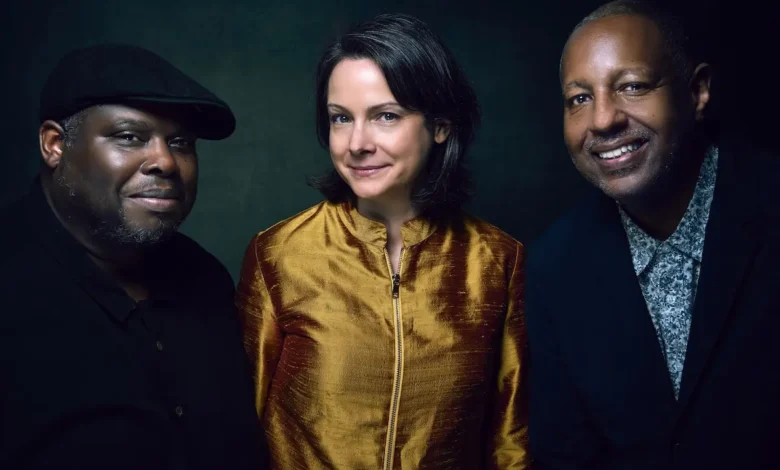
The Kris Davis Trio has effectively transitioned from its 2024 debut—a project paying homage to foundational female pianists—into a self-assured, experimental entity. The group, featuring bassist Robert Hurst and drummer Johnathan Blake, underwent a rigorous period of touring following their debut release, a process Davis noted was essential to establishing a clear collective identity. This period of artistic maturation culminated in a highly acclaimed residency at New York’s Village Vanguard in January 2025, where the trio’s synergy and innovative approach to ensemble dynamics drew significant praise from critics.
The resulting album, Lost In Geneva, released via 4166 Records, serves as a technical showcase for the trio’s ability to navigate complex, often jarring rhythmic structures. The composition Subtext exemplifies this, featuring an intricate “crosstalk” style of piano interplay that mirrors the ambiguity of subtext in human communication. The album also offers a unique commentary on contemporary urban life; Congestion Pricing stands as a thematic exploration of New York City’s infrastructure changes, translated into a knotty, dramatic musical score.
The trio’s ability to find inspiration in the mundane is further highlighted by the title track, Lost In Geneva, which draws from the disorientation of international touring, including the physiological effects of jet lag and the psychological strain of navigating unfamiliar territories. Furthermore, the inclusion of Morton Feldman’s Nature Piece provides an anchor for the album, interpreted here with an angular, abstract groove that highlights Davis’s capacity for reinterpreting minimalism. The recording, captured on September 15, 2025, in Mount Vernon, New York, serves as a testament to the group’s dedication to spontaneous composition, particularly on tracks like Mourning Dove and Northern Flicker, which emerged from group improvisations based on birdsong motifs.
The Emotional Landscape of John Donaldson’s Sextet
In a sharp contrast to the abstract explorations of the Davis trio, John Donaldson’s We Were Together, I Forget The Rest (Hexagonal Records) offers a somber, deeply personal narrative. Dedicated to his late wife, Agatha Coffey, who passed away in 2021, the album functions as a cathartic examination of grief, recovery, and hope. The recording, which took place in Box, Wiltshire, in early September 2025, utilizes a sextet format that emphasizes textural depth and vocal precision.
Donaldson’s compositional style on this project draws heavily from his established influences, specifically the pianism of McCoy Tyner and Bheki Meseleku. However, the emotional weight of the project is carried by the vocal performances of Norma Winstone and Rebecka Edlund. The interaction between these two vocalists provides a clear, resonant quality that elevates Donaldson’s lyrics, most notably on the track Chanterelle.
The album’s structure follows a narrative arc from the somber reflections of loss to the optimistic, albeit guarded, outlook of the final track, New Dawn. The technical contributions of Rob Luft on guitar cannot be overstated; his virtuosic, fluent lines provide a counterweight to the often-heavy thematic material. Additionally, the brass and woodwind contributions from Iain Ballamy and Graeme Flowers provide a sinuous, atmospheric quality, particularly on Agatha’s Song, where Flowers’ trumpet work provides a poignant, high-register conclusion. The album stands as a significant contribution to the genre of "tribute jazz," successfully balancing the intimacy of personal mourning with the professional requirements of a high-fidelity jazz recording.
Billy Mohler’s Minimalist Retrospective: Covell
Billy Mohler’s Covell (Contagious Music) represents a departure from the multi-instrumentalist’s extensive resume, which includes collaborations with artists as diverse as Herbie Hancock, Nile Rodgers, and Dolly Parton. Recorded at the Hotel Covell in Los Angeles, this project is characterized by a restrained, unadorned aesthetic that relies on the strength of the compositions rather than complex arrangements.
Mohler, supported by saxophonist Mark Turner and drummer Joe LaBarbera, utilizes this trio setting to explore themes of ancestry, deception, and personal reckoning. The Reckoning, the album’s opening track, serves as a thematic centerpiece, exploring Mohler’s response to the death of his father—an event he described as a fundamental shift in his understanding of the world. The track Consolation further highlights this internal focus, functioning as a solo statement on the persistence of truth in the face of deception.
The album also engages with Mohler’s Native American heritage, notably in the tracks Ceremony and Slowdive. The former serves as a rhythmic showcase for LaBarbera, while the latter highlights Turner’s eloquent saxophone phrasing. The inclusion of Ornette Coleman’s Round Trip provides a brief, ebullient interlude that showcases the trio’s ability to handle high-tempo, technical jazz standards alongside Mohler’s more contemplative, slow-burning originals. Covell is an album that demands patience; its power lies in the subtle shifts in texture and the delicate, often fragile, emotional delivery of its core trio.
Comparative Analysis and Industry Implications
The simultaneous release of these three albums offers a snapshot of the current state of professional jazz in late 2025. Each project highlights a different pillar of the genre:
- Technical Innovation: The Kris Davis Trio demonstrates that the genre remains a fertile ground for formal experimentation and rhythmic complexity, pushing the boundaries of what a piano trio can accomplish in a live and studio setting.
- Thematic Narrative: John Donaldson’s project underscores the ongoing relevance of jazz as a medium for personal expression and social documentation, proving that technical virtuosity is most effective when tethered to a compelling human narrative.
- Minimalist Authenticity: Billy Mohler’s work reminds listeners of the power of the "unadorned" trio, proving that in an era of high-production pop-jazz, the raw, acoustic interaction of three master musicians remains the gold standard for emotional honesty.
These recordings are set against a backdrop of a global jazz industry that is increasingly valuing "authenticity" over "commercial polish." As streaming data from the first three quarters of 2025 indicates, listeners are gravitating toward projects that offer clear artistic intent and biographical resonance.
The production quality of all three albums reflects the high standards of current independent labels. The use of specific, unconventional recording environments—such as the Hotel Covell for Mohler and the deliberate acoustic choices made for the Davis trio—suggests a growing trend toward site-specific recording, where the environment is intended to color the final output.
From an economic perspective, these releases demonstrate the viability of the jazz trio and sextet models in the mid-2020s. Despite the challenges of touring and the rising costs of physical production, these artists have maintained a consistent output, bolstered by the support of labels like 4166 Records, Hexagonal Records, and Contagious Music. For the consumer, these albums represent a "golden age" of sorts, where the technical mastery of the 20th century is being synthesized with the introspective, genre-defying sensibilities of the 21st. As the industry moves into 2026, the success of these projects will likely encourage further experimentation with long-form storytelling and avant-garde composition within the mainstream jazz market.