Global Rhythms and Modern Jazz Converge: Nicolas Kummert and Lionel Loueke Unveil La Diversité

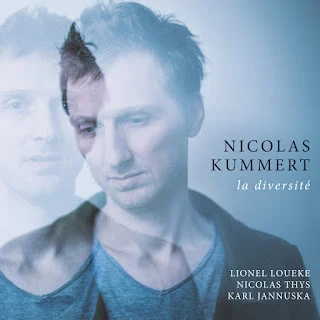
The contemporary jazz landscape is continually shaped by cross-cultural pollination, where artists draw from traditional roots outside the standard American songbook to forge new sonic identities. A prime example of this global synthesis is found in the work of Belgian saxophonist and composer Nicolas Kummert. With the release of his critically acclaimed album La Diversité, Kummert solidifies a career-long dedication to blending European modal jazz frameworks with the rich, polyrhythmic traditions of the African continent. Joined by world-renowned Beninese guitarist Lionel Loueke, alongside double bassist Nicolas Thys and drummer Karl Jannuska, Kummert presents a cohesive, genre-defying body of work that highlights the boundless possibilities of modern acoustic and electric jazz collaboration.
Main Facts of the Release
La Diversité serves as a culmination of Kummert’s extensive international musical explorations, which began in his youth and have since spanned multiple continents. Released following a steady stream of progressive recordings—including 2014’s Voices and 2015’s Flow—the 2017 album features a diverse 14-track listing that captures both intricate quartet arrangements and intimate duo performances.
At the core of the album’s success is the interplay between Kummert’s winding, serpentine saxophone lines and Loueke’s sophisticated harmonic accompaniment. Rather than relying on traditional head-solo-head structures, the compositions on La Diversité treat rhythm, texture, and space as equal partners. The rhythm section, anchored by Thys and Jannuska, provides a dynamic yet unobtrusive foundation, allowing the frontline of saxophone and guitar to weave complex emotional narratives. From the West African rhythmic undercurrents of tracks like "Rainbow People" to the smoldering, reflective mood of "Diversity Over Purity," the album challenges listeners while remaining deeply accessible through its melodic clarity.
A Lifelong Journey: The Chronology of Nicolas Kummert’s Global Education
To fully understand the artistic maturity displayed on La Diversité, one must examine the formative years of Nicolas Kummert’s musical upbringing. Born in Belgium, Kummert displayed an early curiosity for sounds that transcended Western classical and jazz education. A pivotal turning point occurred when he was just 17 years old, embarking on a transformative two-month stay in Senegal.
During his time in Senegal, Kummert immersed himself in local musical communities, studying indigenous rhythms, vocal styles, and instrumental approaches directly from West African masters. This foundational experience planted a seed that would dictate the trajectory of his career. Over the subsequent decades, Kummert’s insatiable desire for cross-cultural collaboration led him to travel extensively across the African continent. He collaborated with local artists and absorbed regional idioms in Benin, Mali, Kenya, São Tomé and Príncipe, Morocco, and Tunisia. These immersive encounters did not merely result in stylistic pastiche; rather, they fundamentally reconfigured Kummert’s approach to phrasing, time-feel, and harmonic exploration.
The genesis of his professional relationship with Lionel Loueke—a central catalyst for La Diversité—dates back to a 2008 recording session for acclaimed Beninese singer Patrick Ruffino. Loueke, already an internationally celebrated guitarist known for his tenure with Herbie Hancock and his distinctive blend of West African guitar techniques with modern jazz harmony, immediately established a profound musical and personal rapport with Kummert. Over the next several years, the two artists maintained a mutual respect and informal artistic dialogue. By 2015, as Kummert was conceptualizing the material that would become his next major release, he formally invited Loueke to join his newly formed band, setting the stage for the transcontinental partnership heard on the record.
Musical Architecture and Track Analysis
La Diversité is distinguished by its structural variety and the distinct sonic palettes brought by its personnel. A detailed examination of the album reveals a masterclass in dynamic contrast.
On tracks such as "We’ll Be Alright," Loueke steps away from his trademark understated, textural accompaniment to deliver a more boisterous, high-energy performance that pushes the ensemble into fiery modal territory. Conversely, compositions like "And What If We’re Not?" offer an antipodean deliverance, showcasing Loueke’s seamless transition between electric and acoustic setups. His technical versatility is further underscored on "Le Vent Se Lève," where he utilizes crystalline, bell-like harmonics, and on "Le Peuple De L’Arc-En-Ciel," which highlights his dexterous finger-picking technique.
The chemistry between Kummert and Loueke reaches an intimate peak on "Gnossienne A Deux." Stripped down to a duo setting, the track exposes the raw, telepathic connection between the saxophonist and the guitarist, allowing subtle breathing room and micro-tonal nuances to take center stage.
A notable highlight of the album is its dual interpretation of Leonard Cohen’s iconic composition "Hallelujah." Re-imagining a universally recognized anthem can often border on redundancy in the hands of lesser artists. However, Kummert approaches the material with deep reverence, presenting two distinct versions: one performed by the full quartet and an acoustic rendition titled "Hallelujah Again," dedicated to the memory of the late singer-songwriter. These interpretations are handled with a delicate, understated grace that honors the emotional weight of Cohen’s original work while adapting it seamlessly to the contemporary jazz idiom.
The complete track listing for La Diversité encompasses a broad emotional and geographical spectrum:
- Rainbow People
- Le Vent Se Lève
- Harmattan
- Lighthouse
- Hallelujah
- Gnossienne
- Gnossienne A Deux
- Liberté
- Le Peuple De L’Arc-En-Ciel
- La Terre Ne Ment Pas
- Diversity Over Purity
- We’ll Be Alright
- And What If We’re Not?
- Hallelujah Again (In Memory of Leonard Cohen)
The Ensemble: Supporting Data and Personnel
The success of a project deeply rooted in rhythmic subtlety and harmonic sophistication relies entirely on the caliber of its personnel. La Diversité features a rhythm section uniquely equipped to handle the demands of Kummert’s cross-cultural compositions.
- Nicolas Kummert (Tenor Saxophone): Serving as the primary composer and conceptual leader, Kummert brings a warm, resonant tone and a fluid harmonic vocabulary to the tenor saxophone. His playing avoids excessive pyrotechnics in favor of lyrical integrity, prioritizing narrative flow and emotional resonance.
- Lionel Loueke (Guitar): Hailing from Benin, Loueke is widely recognized as one of the most original voices in modern jazz guitar. By integrating West African vocal techniques—such as clicks and vocalizations—simultaneously with his guitar playing, Loueke expands the traditional chord-melody lexicon of the instrument.
- Nicolas Thys (Double Bass): A stalwart of the European jazz scene, Thys provides a rock-solid yet flexible acoustic bass foundation. His ability to anchor complex polyrhythms while maintaining a warm, woody acoustic tone is vital to the album’s organic feel.
- Karl Jannuska (Drums): Canadian-born and European-based, Jannuska brings a nuanced, textural approach to percussion. Rather than relying on heavy-handed backbeats, his drumming interacts dynamically with Kummert’s saxophone and Loueke’s guitar, driving the music forward with sophisticated cymbal work and polyrhythmic flair.
Critical Perspectives and Official Responses
Music critics and industry observers have widely praised La Diversité for its refusal to pander to commercial homogenization. In promotional statements and interviews surrounding the release, Kummert emphasized that the album’s title is both a musical description and a socio-cultural philosophy. By bringing together artists from Belgium, Benin, Canada, and various European traditions, the ensemble embodies the very diversity it seeks to celebrate in sound.
Peers and collaborators have noted that Kummert’s approach bridges a historical gap in jazz. While American jazz has long engaged with Afro-Cuban and Brazilian traditions, direct artistic dialogues with West African contemporary musicians remain relatively specialized. Loueke’s integration into Kummert’s quartet represents a vital bridge, demonstrating that the dialogue between Western jazz improvisation and African rhythmic concepts can yield results that are both intellectually rigorous and emotionally compelling.
Broader Impact and Industry Implications
The release of La Diversité arrives at a time when the global jazz community is increasingly examining its relationship with cultural appropriation versus authentic cross-cultural collaboration. Kummert’s work offers a masterclass in the latter. Because his affinity for African music was forged through decades of immersive, ground-level participation—rather than superficial sampling or momentary trend-chasing—his compositions possess an authentic architectural integrity.
For the European jazz market, albums like La Diversité signal an ongoing shift away from rigid adherence to American bebop standards toward a more decentralized, globalized identity. European artists are increasingly defining their sound through their unique geographical and cultural intersections. By incorporating the modal sensibilities of European chamber jazz with the rhythmic complexity of West African traditions, Kummert and his bandmates contribute a valuable blueprint for the future evolution of improvised music.
As audiences continue to seek out art that reflects an interconnected world, La Diversité stands out as a triumph of listening, respect, and shared creativity. Through the poignant interplay of saxophone and guitar, Nicolas Kummert and Lionel Loueke have crafted a timeless testament to the power of musical dialogue across borders.