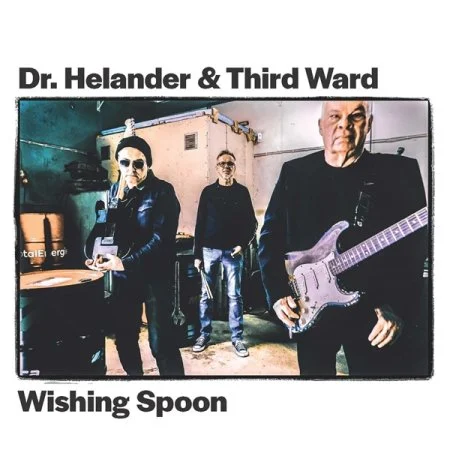
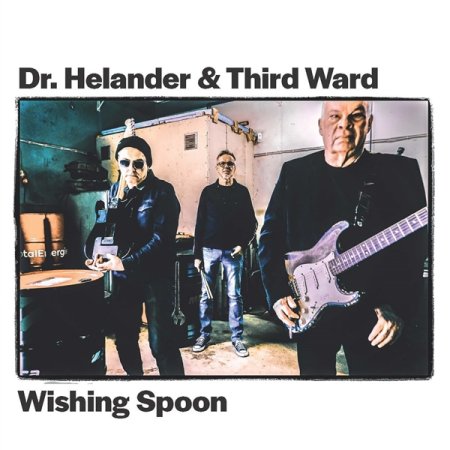
The international reach of the American blues tradition continues to manifest in unexpected corners of the globe, most notably through the output of the Finnish blues trio Dr. Helander & Third Ward. Celebrating their eighth year of musical operations since their inception, the group has officially released their fourth full-length compact disc, Wishing Spoon, via Bluelight Records. Spanning ten tracks and running a concise 35 minutes and 41 seconds, the new record encapsulates the band’s signature "in your face" aesthetic, characterized by a heavy, unyielding guitar assault that bridges traditional delta sensibilities with contemporary European blues-rock intensity.
The core ensemble comprises founding frontman and guitarist Ilkka Helander, bassist and secondary guitarist Esa Kuloniemi, and percussionist Leevi Leppanen. While the primary trio drives the bulk of the material, the project is further bolstered by guest appearances from notable session players who add texture through authentic harmonica and dynamic saxophone arrangements. With the singular exception of a Freddie King cover, the entirety of Wishing Spoon consists of original compositions penned by the band members. However, these new creations frequently pay homage to the foundational architects of the genre, weaving familiar motifs, classic riffs, and historical nods into a contemporary framework that highlights both reverence and reinvention.
Main Facts and Musical Architecture of Wishing Spoon
The artistic direction of Dr. Helander & Third Ward on Wishing Spoon relies heavily on a high-energy delivery system that favors punchy, aggressive arrangements over sprawling, meandering jams. Recorded across three distinct studio sessions—a detail that subtly influences vocal continuity and linguistic delivery—the album serves as a masterclass in how European artists internalize and project the American blues canon.
From the opening movements, the trio establishes a sonic blueprint dominated by Ilkka Helander’s rustic, unadorned vocals and fluid guitar work, complemented seamlessly by Esa Kuloniemi’s robust basslines and occasional lead slide interventions. The tracks are tightly wound, designed to maximize impact within a compressed runtime. Rather than attempting to reinvent the genre wholesale, the band anchors its sound in familiar rhythmic foundations, utilizing recognized blues idioms as launchpads for their own hard-driving sonic explorations.
The production value, overseen and distributed by Bluelight Records, ensures that every punch of the snare drum and every distorted bite of the guitar cuts through the mix with crystalline clarity. This sonic crispness allows the subtle nuances of the guest musicians—such as the wailing harmonica passages and the smoky saxophone fills—to occupy their own distinct spaces without muddying the overarching wall of sound that defines the band’s trademark style.
Chronology and Recording Evolution
To fully understand the artistic weight of Wishing Spoon, it is necessary to examine the trajectory of Dr. Helander & Third Ward since the band’s formation eight years ago. Emerging from the vibrant, albeit niche, Finnish blues scene, the trio steadily built a reputation for electrifying live performances and uncompromising studio releases. Their fourth full-length album represents a maturation of the sound they cultivated across their previous three records.
The creation of Wishing Spoon was not a singular, continuous studio event; rather, the material was compiled from three separate recording sessions. This fragmented timeline offers a fascinating window into the band’s creative evolution, explaining minor variations in vocal inflection and production sheen from track to track. For instance, tracks like the energetic opener "Congratulations" showcase a seamless integration of classic blues DNA, borrowing the unmistakable rhythmic riff from Dr. Ross’s legendary "Cat Squirrel"—a motif famously adapted by rock institutions such as Cream and Jethro Tull. Here, the band pairs Ilkka Helander’s vocal delivery with the sharp, crying harmonica of guest artist Jantso Jokelin and Esa Kuloniemi’s searing slide guitar, setting an intense tone for the first leg of the album.
As the tracklist progresses into the hard-charging momentum of "Monkey on My Back," the listener is treated to Ilkka’s fluid, articulate guitar solos, proving that the band’s aggression is matched by technical proficiency. The chronology of the sessions also yields clever structural callbacks, such as "My Home Town-Slight Return," which deftly appropriates the universally recognized melody of "Catfish Blues" and reinterprets it through the group’s patented heavy-guitar lens.
Midway through the album, the sequencing introduces stylistic variety. "Big Bad Wolf" offers a rare vocal turn from Esa Kuloniemi, who channels the spirit of Howlin’ Wolf complete with an authentic, haunting howl that anchors the track’s familiar, menacing riff. This is immediately followed by the brief, highly entertaining instrumental interlude "’Yac and ‘Pane," which highlights standard guitar and slide interplay before yielding to the rocking, harmonica-driven dynamism of "Hotel by the Sea."
Supporting Data and Track Breakdown
An analytical breakdown of Wishing Spoon reveals a careful balance between original songwriting and strategic nods to blues history. The album’s ten tracks traverse a wide emotional and stylistic landscape despite its brief 35-minute duration:
- Congratulations: Features the adapted "Cat Squirrel" riff, guest harmonica by Jantso Jokelin, and guest slide guitar by Esa Kuloniemi. It establishes the album’s high-energy pacing.
- Monkey on My Back: Highlights Ilkka Helander’s fluid, articulate blues-rock guitar phrasing.
- My Home Town-Slight Return: Utilizes the structural melody of "Catfish Blues" filtered through a heavy, contemporary guitar tone.
- Big Bad Wolf: The sole track featuring lead vocals by Esa Kuloniemi, highlighted by a Howlin’ Wolf-inspired vocal delivery and menacing riffage.
- ‘Yac and ‘Pane: A concise, highly energetic instrumental track showcasing classic guitar and slide techniques.
- Hotel by the Sea: Delivers high-octane, harmonica-driven blues reminiscent of mid-century Chicago sounds adapted for a modern European ear.
- Morgantown: Features atmospheric saxophone contributions from William Suvanne, adding a smoky, late-night texture to the proceedings.
- Wishing Spoon (They Put a Man on the Moon): A thematic and sonic centerpiece featuring wailing guitar work and distinct vocal inflections resulting from the album’s multi-session recording process.
- Son of Jose: A faithful yet fiercely energetic interpretation of a Freddie King instrumental, demonstrating the band’s deep appreciation for Texas blues guitar masters.
- Another Song: Serves as a traditional, roots-conscious closer built on classic slide guitar and weeping harmonica.
Throughout these tracks, guest contributors like saxophonist William Suvanne elevate the material, particularly on cuts like "Morgantown," where the addition of woodwind textures prevents the heavy guitar assault from becoming fatiguing, adding a sophisticated layer to the band’s aggressive approach.
Official Responses and Industry Reception
While formal critical consensus from major international mainstream outlets is still developing, initial responses from specialized blues syndicates and European music journalists have been overwhelmingly positive. Bluelight Records has positioned Wishing Spoon as a milestone release for the trio, emphasizing its role in cementing the group’s status as a premier export of Nordic blues-rock.
Industry insiders have noted that Dr. Helander & Third Ward occupy a unique space in the contemporary European roots scene. Rather than leaning into the hyper-polished, modern blues-pop crossover style favored by many contemporary acts, the Finnish trio embraces a raw, unapologetic ethos that appeals to purists while maintaining the dynamic punch required by rock audiences. Representatives for the band have highlighted that the decision to record across multiple sessions was an intentional effort to capture different facets of their live energy rather than adhering to a uniform studio blueprint. This organic approach has resonated strongly with critics who value authenticity over clinical perfection.
Broader Impact and Industry Implications
The release of Wishing Spoon carries significant implications for the perception and export of blues music originating outside of North America and the United Kingdom. For decades, the global blues community maintained a rigid geographic hierarchy regarding authenticity. However, the success of acts like Dr. Helander & Third Ward demonstrates that the emotional resonance and technical vocabulary of the blues can be completely internalized, mastered, and re-expressed by artists from non-traditional markets such as Finland.
By taking historical fragments—from Dr. Ross and Freddie King to Howlin’ Wolf and traditional delta motifs—and passing them through a distinctly Nordic lens, the trio contributes to the ongoing evolution of the genre. They prove that the blues is not a static museum piece to be preserved under glass, but a living, breathing musical language capable of infinite adaptation.
Furthermore, Wishing Spoon serves as a commercial and artistic validation for independent European labels like Bluelight Records, which continue to champion niche roots artists in an increasingly consolidated global music market. As Dr. Helander & Third Ward mark their eighth year of operation with this robust ten-track offering, they not only solidify their own catalog but also pave the way for a broader appreciation of the vibrant, highly skilled, yet often overlooked European blues underground.