Unearthing the Sonic Landscapes of Chrome Chasm: An In-Depth Exploration of Houston’s Experimental Improvisational Trio

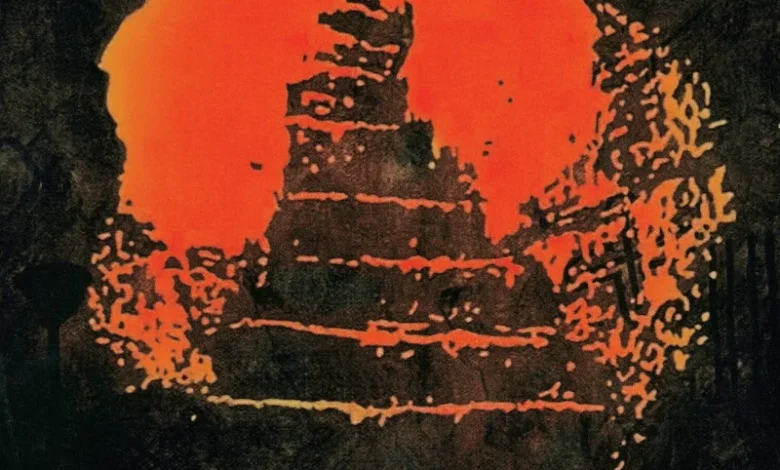
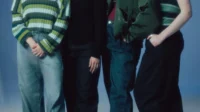
The contemporary landscape of underground American music often thrives in the margins, far away from commercial radio formats and algorithm-driven playlists. In the sprawling, culturally diverse metropolis of Houston, Texas, a singular musical entity known as Chrome Chasm has quietly emerged as a beacon of uncompromising sonic exploration. Comprising three seasoned veterans of the avant-garde and indie-rock underground—guitarist Tom Carter, saxophonist and flautist Mlee Marie, and pedal steel player Will Adams—the trio specializes in an unscripted, highly atmospheric brand of music that defies easy categorization. Recently, the ensemble sat down for an extensive discussion with the cultural publication Aquarium Drunkard to dissect their creative methodology, their individual artistic histories, and the alchemy that occurs when three distinct improvisational minds converge in real time.
The genesis of Chrome Chasm is rooted in the rich, intersecting histories of Texas’s underground music community and the broader American experimental scene. To understand the weight and texture of the trio’s output, one must first examine the formidable pedigrees of its individual members. Guitarist Tom Carter is perhaps best known as a co-founder of Charalambides, the legendary psychedelic folk and drone outfit he established alongside Aloke Texas in Austin back in 1991. Over three decades, Carter has cultivated a reputation as a master of textural guitar work, utilizing microtones, sustained feedback, and intricate fingerpicking to evoke vast emotional topographies. His participation in countless collaborative projects and solo endeavors has cemented his status as a pillar of modern American underground guitar.
Complementing Carter’s expansive six-string explorations is Mlee Marie, whose work as the driving force behind Hearts of Animals and various experimental configurations has brought a distinct melodic sensitivity to the group. A proficient multi-instrumentalist focusing primarily on saxophone and flute, Marie bridges the gap between structured songwriting and free-form expression, injecting woodwind textures that can shift effortlessly from piercing dissonance to haunting, breathy lyricism. Rounding out the trio is pedal steel player Will Adams, whose credits include notable tenures with Lower Dens and Ka-Nives. Adams brings a uniquely American idiom to the table, bending the metallic cries of the pedal steel guitar into unconventional, ambient shapes that serve as both the foundation and the atmospheric canopy of Chrome Chasm’s sound.
The Collaborative Chemistry and Aesthetic Philosophy
When these three distinct musical trajectories intersect, the result is an uncanny sonic hybrid that reviewers and fans have struggled to neatly define. The music of Chrome Chasm has been frequently described as bewitching and twilit, characterized by a delicate balance between minimalism and wide-open expanse. Despite the sparse arrangement—utilizing guitar, woodwinds, and pedal steel—the trio manages to construct vast, cinematic soundscapes that teem with microscopic sonic details.
In their conversation with Aquarium Drunkard, the members of Chrome Chasm emphasized that their process relies entirely on active listening and mutual trust. There are no pre-composed melodies, no rigid chord charts, and no predetermined structural signposts when they take the stage or enter the studio. Instead, each performance is treated as a blank canvas, dictated solely by the acoustic properties of the room, the psychological state of the performers, and the immediate currents of inspiration passing between them.
This approach aligns with the rich traditions of free improvisation and avant-garde jazz pioneered in the mid-20th century by figures like Ornette Coleman, John Coltrane’s late-era ensembles, and the European free improvisation movement spearheaded by labels like ECM and Incus. However, Chrome Chasm filters these rigorous practices through a distinctly contemporary, American lens, drawing subtle threads from ambient music, drone, cosmic country, and psychedelic rock. The pedal steel of Will Adams anchors the compositions in a vaguely familiar Americana soil, while Tom Carter’s guitar work dissolves those boundaries into abstract expressionism, and Mlee Marie’s flute and saxophone weave delicate narrative threads through the sonic haze.
The Chronology of the Modern Improvisational Scene
The formation and subsequent activities of Chrome Chasm arrive at a fascinating juncture for experimental and improvised music in the United States. Following the disruptions of the global COVID-19 pandemic, which heavily impacted the live music infrastructure and forced independent artists to pivot toward remote collaboration or prolonged hiatuses, the return of localized, intimate improvisational performance has taken on renewed cultural significance.
While a precise, public timeline of Chrome Chasm’s earliest rehearsals remains tightly held within the band’s internal lore, their emergence into the public consciousness reflects a growing appetite for unmediated, authentic artistic expression. In an era dominated by hyper-produced pop, digital perfection, and the relentless pursuit of streaming metrics, projects like Chrome Chasm offer a counter-narrative. They celebrate imperfection, serendipity, and the ephemeral nature of live creation—elements that cannot be replicated or algorithmically generated.
As the trio continues to develop its repertoire through live performances and studio recordings, music critics have noted a steady maturation in their dynamic range. Early underground recordings and live bootlegs capture a tentative, exploratory phase where the musicians tested the boundaries of their respective instruments against one another. Over time, however, that initial friction has evolved into a telepathic fluency. Performances that once relied heavily on prolonged periods of sonic searching now demonstrate a remarkable cohesion, where transitions between thunderous walls of feedback and hushed, meditative passages feel entirely natural and unforced.
Industry Analysis and the Economics of Independent Music
The dissemination of Chrome Chasm’s work highlights ongoing shifts in the economics of independent music journalism and distribution. The band’s recent feature on Aquarium Drunkard underscores the vital role played by independent cultural platforms in sustaining niche artistic communities. Founded as a music blog and evolving into a respected tastemaker institution, Aquarium Drunkard operates largely on a patronage model, relying on direct financial support from its readership to maintain its digital infrastructure and fund in-depth journalistic endeavors.
In an era where traditional music magazines have either shuttered or succumbed to click-driven listicles, platforms that offer long-form interviews with artists like Tom Carter, Mlee Marie, and Will Adams serve an essential archival function. They provide the necessary context for listeners to appreciate music that does not conform to standard radio edits or three-minute pop formulas. For experimental ensembles, these features are crucial for building geographically dispersed audiences, bridging the gap between local scenes in cities like Houston, Austin, Baltimore, and the broader global underground.
Furthermore, the operational model of Chrome Chasm reflects broader trends among veteran musicians seeking creative autonomy. By operating outside the traditional major-label ecosystem, the trio retains absolute control over their artistic output, their release schedules, and their performance opportunities. While this DIY ethos often limits commercial reach, it guarantees a level of artistic integrity that is frequently compromised under corporate label structures.
Broader Cultural Implications and Future Outlook
The cultural implications of Chrome Chasm’s work extend far beyond the confines of the Houston experimental scene. As contemporary society becomes increasingly saturated with artificial intelligence, synthetic media, and homogenized cultural products, the raw, human-driven imperfection of free improvisation assumes a subversive quality. When Tom Carter, Mlee Marie, and Will Adams step up to their respective instruments to create music that exists only in the exact moment of its making, they are participating in a deeply human ritual of communication and shared presence.
Looking forward, the trio’s ongoing collaboration signals a vibrant future for Texas’s underground music infrastructure. Historically known for blues, psych-rock, and outlaw country, the state has quietly nurtured a thriving avant-garde community that stretches from the historic art-rock happenings of Austin to the diverse, multicultural sonic laboratories of Houston and Dallas. Chrome Chasm stands as a testament to the longevity and vitality of this underground network, proving that veteran artists can continue to push boundaries, strip away ego, and discover new emotional depths through pure, unscripted collaboration.
As listeners continue to seek out authentic experiences in an increasingly digital world, the expansive, twilit landscapes crafted by Chrome Chasm provide a much-needed sanctuary. Whether through specialized print features, intimate club performances, or underground tape releases, the trio’s ongoing journey remains a vital chapter in the ongoing evolution of American experimental music—a reminder that some of the most profound artistic statements are those whispered in the spaces between notes.