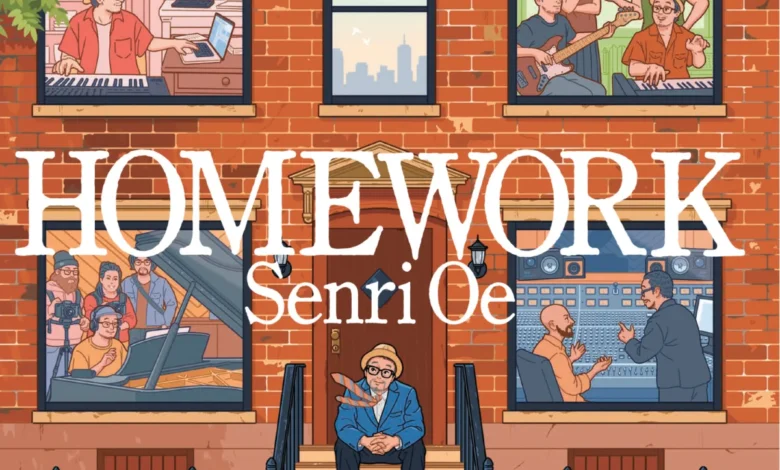
The trajectory of Senri Oe’s career represents one of the most significant musical pivots in contemporary trans-Pacific artistry. Once a household name in Japan, filling massive arenas as a dominant force in the nation’s pop music landscape, Oe made the radical decision at age 47 to abandon his established celebrity to reinvent himself as a jazz pianist in New York City. Now, eighteen years into his American residency, his latest album, Homework, serves as both a culmination of this decade-plus artistic migration and a deeply personal exploration of grief, resilience, and the relentless pursuit of creative authenticity.
The Great Pivot: A Departure from Pop Stardom
For decades, Senri Oe was synonymous with the Japanese pop zeitgeist. His compositions were fixtures on radio charts, and his concerts were sell-out events that cemented his status as a cultural icon. However, by the mid-2000s, the artist began to experience a profound sense of creative dissonance. The mechanics of the pop industry, while lucrative and fame-affirming, left little room for the improvisational depth he craved.
In 2008, at the age of 47—an age when most artists are firmly cemented in their established genres—Oe made the life-altering decision to relocate to New York City. This was not a hiatus, but a complete professional reset. He enrolled at The New School for Jazz and Contemporary Music, intentionally placing himself in the position of a student rather than an authority. Studying under jazz luminaries such as Junior Mance and Aaron Goldberg, Oe began the arduous process of deconstructing his pop-trained sensibilities to integrate the complex harmonic language of jazz.
Chronology of an Artistic Evolution
The timeline of Oe’s transformation reveals a steady, intentional progression. Following his graduation from The New School, he did not rush to reclaim the spotlight. Instead, he spent the next several years immersing himself in the rigorous club scene of Brooklyn and Manhattan.
- 2008: Oe moves to New York City and enrolls at The New School to study jazz piano and composition.
- 2012: Release of his debut jazz album, marking his formal transition from pop idol to jazz composer.
- 2013–2020: A prolific period of experimentation, resulting in a series of albums that saw Oe blending straightahead jazz with elements of his pop background, gradually refining his signature "soundtrack for a cinema without visuals."
- 2020–2022: The COVID-19 pandemic forces a global hiatus on live performances. During this period, Oe faces significant personal losses, including the passing of his beloved dachshund, Peace, and the death of his father.
- 2025/2026: The release of Homework, a reflection on the intersection of his past and present, signaling a move toward more introspective and philosophical composition.
Musical Analysis: The Sound of Homework
Homework is widely regarded by critics as Oe’s most vulnerable work to date. The album functions as a sonic diary, capturing the dualities of life in New York City—a place that offers both boundless opportunity and profound isolation.
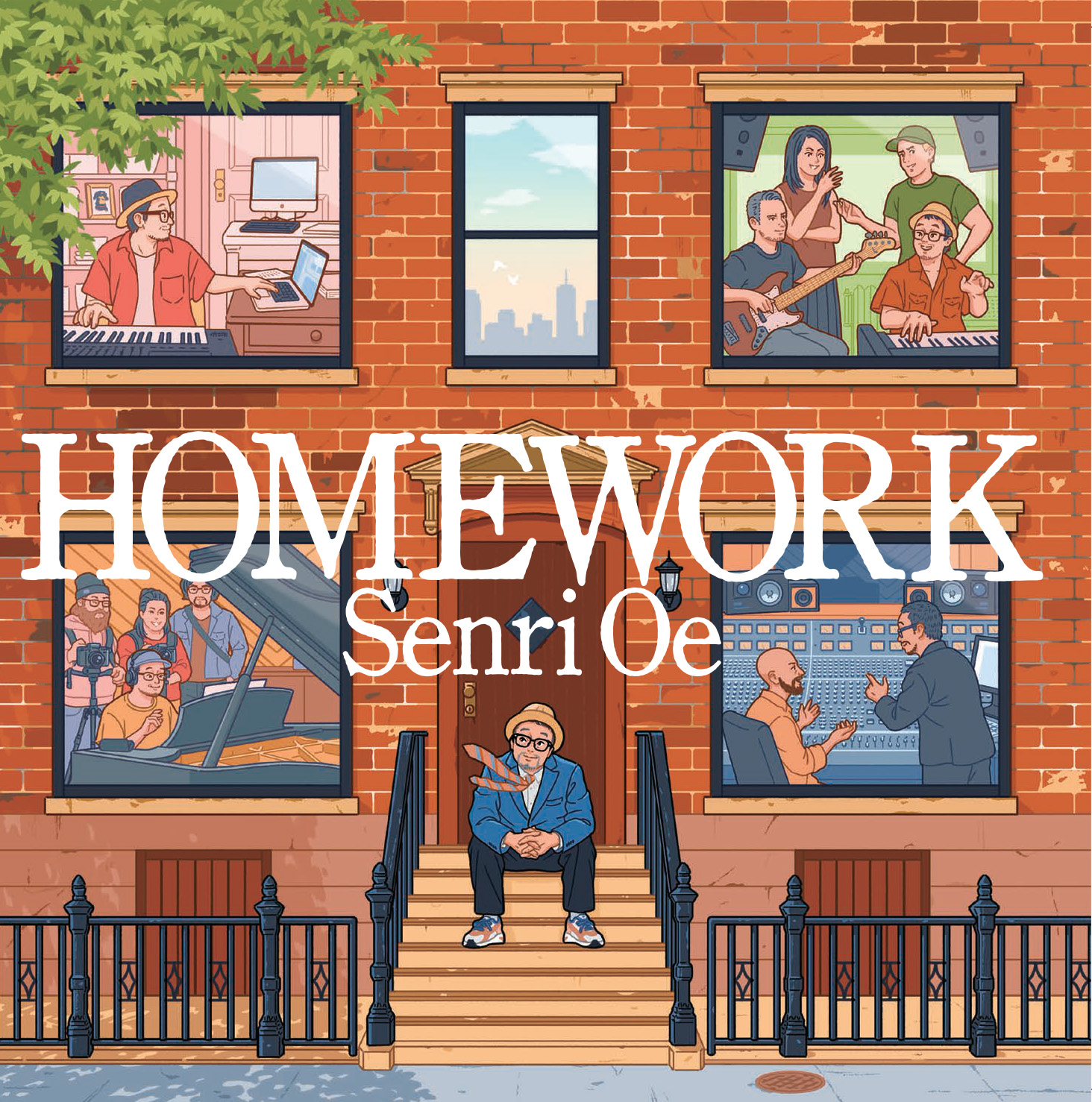
The track "Stormy Day" is perhaps the most illustrative example of his current style. Featuring bassist Matt Clohesy and drummer Ross Pederson, the piece utilizes a mix of acoustic and electric instrumentation to create a sonic landscape that feels both modern and nostalgic. Musically, the composition avoids the trap of melancholy. While the title and the inspiration behind the track—born from the quiet, lonely aftermath of loss—could easily have pushed the music into a darker, minor-key space, Oe’s arrangement is buoyant. The electric keyboards provide a twinkling, ethereal texture that contrasts with the rhythmic drive of the bass and drums, effectively balancing grief with a forward-looking optimism.
The Philosophical Shift: Loss and Transparency
The thematic weight of Homework is inextricably linked to the trials Oe faced during the height of the pandemic. The shuttering of New York’s iconic jazz clubs did more than just silence stages; it forced a period of intense self-reflection for many artists. For Oe, the intersection of pandemic isolation and personal bereavement catalyzed a shift in his artistic motivation.
"The overwhelming sense of loss stripped away all need for pretension," Oe noted in recent discussions regarding his creative process. This stripping away of ego is evident in his current playing style, which is notably more nuanced than his earlier jazz work. He has transitioned from a focus on technical mastery to an emphasis on emotional clarity. He now views his life and career through a more philosophical lens, prioritizing the honest expression of his musical personality over the demands of commercial viability.
Broader Impact and Industry Implications
Oe’s career arc offers a unique case study in artistic longevity. In an industry that often discards artists once they pass the traditional "prime" age of youth, Oe’s successful transition suggests that the pursuit of a new artistic voice is not only possible but can lead to a more profound connection with one’s audience.
His ability to bridge the gap between pop and jazz has also expanded the listener base for his work. By retaining a melodic sensibility born from his pop years while utilizing the structural complexity of jazz, he attracts listeners who might otherwise find "pure" jazz inaccessible. This "crossover" appeal, however, is not a compromise; it is an evolution.
Furthermore, Oe’s story serves as a testament to the influence of the New York City jazz ecosystem. The city remains a crucible where established international stars can go to be challenged, humbled, and eventually reborn. His persistence through the difficult economic environment for musicians during the 2020s underscores the resilience required to maintain a career in the arts.
The Future of a Multi-Dimensional Composer
As Oe continues to promote Homework, the focus remains on his trajectory toward a more refined, minimalist, and deeply personal expression. His recent works indicate a move away from the high-energy, technical improvisation that often characterizes mid-career jazz pianists, toward a more deliberate, cinematic approach to storytelling through keys.
For the jazz community, Oe represents a bridge between distinct cultural histories. He carries the discipline and melodic accessibility of the Japanese pop tradition into the improvisational, grit-heavy environment of the American jazz scene. As he looks toward his next chapter, the question remains: how much further can this late-blooming jazz visionary push his own boundaries?
Ultimately, Senri Oe’s journey is one of shedding expectations. Having conquered the world of pop, he has spent nearly two decades proving that the most important audience an artist must satisfy is their own. In Homework, he has succeeded in doing just that—creating a body of work that is not for the masses, but for the soul. As he continues to evolve, his work remains a vital contribution to the ongoing conversation about what it means to live a life in music, proving that it is never too late to begin a new act.
By prioritizing authenticity over the preservation of his past fame, Oe has secured a lasting place in the contemporary jazz canon, ensuring that his name will be remembered not just for the stadiums he once filled, but for the depth of the music he found when he finally decided to follow his own path.
Related posts: