Equally Stupid Returns with a More Lyrical and Expansive Sound on Escape from The Unhappy Society

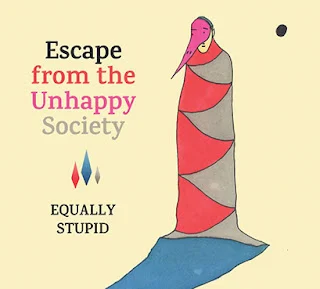
The multinational contemporary jazz and improvised music ensemble Equally Stupid has officially established its artistic trajectory with the release of their sophomore studio album, Escape from The Unhappy Society. Building upon the foundation laid by their 2014 debut album, Exploding Head, the trio delivers a noticeably evolved sonic architecture. While their initial offering was defined by a brash, confrontational, and high-energy approach, this subsequent project showcases a distinct stylistic shift toward melody, spaciousness, and textural depth. The ensemble, comprising Icelandic guitarist Sigurður Rögnvaldsson, Finnish saxophonist Pauli Lyytinen, and Swiss drummer David Meier, continues to challenge the conventional boundaries of European avant-garde jazz while demonstrating a mature restraint that highlights their individual virtuosity and collective cohesion.
Background Context and Formation of the Ensemble
Equally Stupid emerged from the vibrant and interconnected European contemporary jazz scene, a circuit known for fostering cross-border collaborations and breaking down traditional genre constraints. The three members brought distinct regional influences and technical proficiencies to the collective. Sigurður Rögnvaldsson, operating primarily out of Iceland, introduced a heavy, texturally driven guitar style that often blurred the lines between ambient soundscapes and aggressive rock riffing. Pauli Lyytinen, a prominent figure in the Finnish jazz community, brought a versatile reed approach, mastering tenor, alto, and bass saxophones alongside electronic effects. David Meier, a fixture of the Swiss creative music scene, anchored the rhythm section with a muscular yet nuanced percussion style capable of shifting fluidly from driving swing to abstract textural clatter.
The trio’s formation was predicated on a shared vision: to create an unpretentious, highly interactive musical dialogue that prioritized organic group dynamics over technical self-indulgence. When they released Exploding Head in 2014, critics and audiences took notice of their raw intensity. The album established them as a formidable presence in modern improvised music, earning them international festival appearances and critical acclaim for their fearless sonic exploration. However, rather than repeating the successful formula of their debut, the members of Equally Stupid chose to pivot, spending the subsequent three years refining their collective sound in preparation for a more contemplative and nuanced release.
Chronology and Development of Escape from The Unhappy Society
The creative process for Escape from The Unhappy Society spanned several years of touring, compositional development, and collaborative experimentation following the release of their debut. As the trio performed across Europe, they began to explore the structural possibilities of giving their music more breathing room. The transition from the high-octane environment of Exploding Head to the more deliberate atmosphere of the second album was intentional, driven by a desire to test the limits of their dynamic range.
During the recording sessions, the ensemble focused heavily on expanding their sonic palette. A critical element of this evolution was Rögnvaldsson’s adoption of the baritone guitar. This instrument introduced a significantly lower frequency range and a darker resonance, which fundamentally altered how the guitar and saxophone interacted. Concurrently, Lyytinen incorporated subtle effects into his saxophone setup, expanding his tonal range from round, warm acoustic expressions to eerie, delayed soundscapes. Meier’s role also evolved; rather than merely driving the tempo, his percussion increasingly functioned as a textural glue, utilizing brushed techniques and intricate rhythmic counterpoints to support the overarching melodic frameworks.
Musical Analysis and Track Breakdown
Escape from The Unhappy Society presents a diverse nine-track listing that navigates various emotional and stylistic territories. The album opens with Politician’s Nightmare and moves through pieces such as Birdlife, Legacy to the Children of the 21st Century, Fool’s Paradise, Cruising Back to Mother Earth, The Garden of Edward James, Paranoia, Transpiration, and the title track, Escape from The Unhappy Society.
A prime example of the album’s textural experimentation is found on Fool’s Paradise. The track features lilting saxophone phrasing underpinned by the deep, resonant rhythms of Rögnvaldsson’s baritone guitar. Accompanied by Meier’s delicate brushed percussion, the composition avoids the aggressive surges of their earlier work, opting instead for an expansive, contemplative atmosphere. The arrangement demonstrates the group’s capacity to build tension through space and subtlety rather than sheer volume.
Conversely, tracks like Paranoia reassure longtime fans that the ensemble has not abandoned its penchant for intricate interplay and rhythmic muscle. On this piece, Lyytinen’s riffing saxophone and Rögnvaldsson’s driving guitar weave around one another in a dynamic, childlike chase before breaking into a lyrical solo section. This seamless integration of playful composition and rigorous improvisation highlights the group’s technical prowess, proving that their restraint is a deliberate artistic choice rather than a loss of vigor.
Industry Reception and Critical Analysis
Upon its release, Escape from The Unhappy Society received widespread praise from contemporary music critics and jazz publications. Reviewers frequently highlighted the organic nature of the recording, noting that despite its polished production values, the album successfully avoided the sterile, over-engineered sound that often characterizes modern studio jazz projects. The raw chemistry between the three musicians remains the focal point, ensuring that the listener experiences a living, breathing performance rather than a clinical execution of written charts.
Industry analysts have noted that the trio’s approach represents a broader trend within contemporary European jazz, where genre boundaries are increasingly porous. By blending elements of rock instrumentation, free improvisation, and lyrical modern jazz, Equally Stupid has carved out a distinct niche that appeals to a diverse demographic of music listeners, bridging the gap between traditional jazz enthusiasts and younger audiences accustomed to alternative and experimental rock.
Broader Impact and Future Implications
The success of Escape from The Unhappy Society solidifies Equally Stupid’s standing as a vital voice in modern creative music. By successfully navigating the critical sophomore album phase without compromising their artistic integrity or falling into stylistic stagnation, the trio has demonstrated remarkable longevity and adaptability.
The implications of their musical evolution extend beyond their own catalog. As young European artists continue to dismantle stylistic dogmas, ensembles like Equally Stupid serve as a blueprint for international collaboration and genre-defying composition. Their commitment to maintaining the human element in their music—balancing technical mastery with emotional accessibility—sets a high standard for the contemporary jazz landscape. As the ensemble continues to tour and promote their sophomore release, the international music community watches closely to see how this dynamic trio will continue to redefine the parameters of modern improvised music.