The Sonic Architect of Pittsburgh: Remembering the Life and Musical Legacy of Donnie Iris

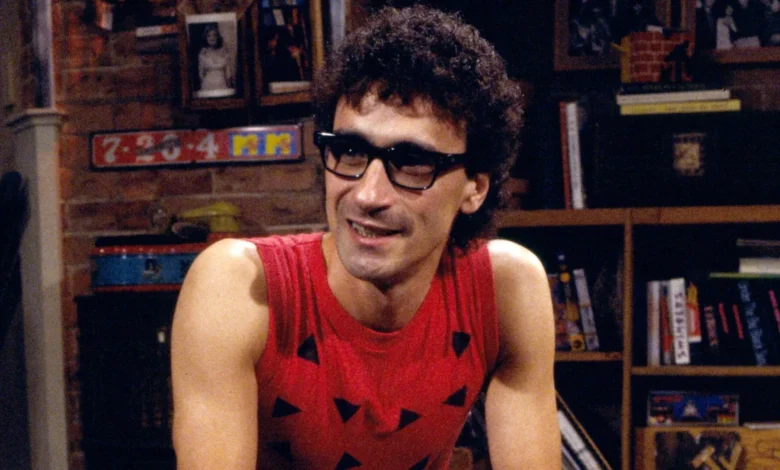
The late Donnie Iris, a singular force in the American rock landscape and a definitive icon of the Pittsburgh music scene, leaves behind a career defined by innovative production techniques, vocal virtuosity, and an enduring influence that bridged the gap between classic pop sensibilities and the high-energy rock of the 1980s. Born Dominic Ierace on February 28, 1943, in New Castle, Pennsylvania, Iris was a musician whose unassuming stage presence—often defined by his trademark glasses and a modest, Buddy Holly-esque aesthetic—belied a vocal range and creative ambition that commanded the respect of industry titans, including Steve Perry of Journey and Huey Lewis. Following his passing on October 26, 2023, at the age of 83, the music industry has reflected on a career that spanned six decades, marked by technical experimentation and a profound connection to the blue-collar spirit of his home region.
A Foundation in Songwriting and Early Success
Long before he became a solo star, Donnie Iris was a pivotal figure in the regional music circuit. His initial foray into the national consciousness occurred in 1964 with the formation of The Jaggerz. As the primary songwriter for the group, Iris demonstrated a knack for crafting infectious hooks that resonated with radio programmers and audiences alike. The group’s zenith arrived in 1970 with the release of "The Rapper," a track that climbed to No. 2 on the Billboard Hot 100. This achievement solidified Iris’s reputation as a songwriter capable of capturing the zeitgeist of the era, blending soul-inflected pop with a narrative drive that would become his hallmark.
After departing The Jaggerz in 1976, Iris briefly lent his talents to the funk-rock outfit Wild Cherry, the group responsible for the ubiquitous 1976 anthem "Play That Funky Music." This period was instrumental in his trajectory, as it was during this tenure that he began collaborating with keyboardist and producer Mark Avsec. The partnership between Iris and Avsec would prove to be the most significant creative alliance of his life, providing the sonic architecture for his transition into the solo artist known as Donnie Iris and the Cruisers.
The Innovation of the Stacked Sound
The hallmark of the Donnie Iris sound, particularly on his 1980 debut solo album Back on the Streets, was an innovative vocal layering technique. Working in tandem with Avsec, Iris employed extensive overdubbing—often stacking his vocals more than 60 times for the chorus sections of songs like the hit single "Ah! Leah!" This was not merely a studio trick; it was a deliberate attempt to achieve a wall-of-sound effect that rivaled the production values of contemporary arena rock acts.
This sonic density caught the ear of Steve Perry, who famously recounted a moment while driving across the Golden Gate Bridge in 1980 when he heard "Ah! Leah!" on the radio. Perry was so struck by the vocal power and clarity of the chorus that he sought out Iris when their paths crossed later that year. During a tour stop in Ohio where The Cruisers opened for Journey, Perry made a point to visit the band’s dressing room, telling Iris, "That’s the way vocals are supposed to sound."
This validation from a vocalist of Perry’s caliber highlights the technical respect Iris commanded among his peers. Mark Avsec, reflecting on their collaboration during a 2021 reissue of Back on the Streets, noted that Iris possessed a unique "Beatles-style" versatility. "His normal voice is not that distinctive," Avsec remarked, "but as we worked together more and more, I discovered the depth and range of his ability… he has the raspy growl that plays opposite the falsetto for such a dramatic contrast."
Chronology of a Career
The arc of Donnie Iris’s career can be categorized into three distinct eras: the foundational years with The Jaggerz (1964–1976), the peak of his commercial solo success (1980–1983), and his long-standing tenure as a regional cultural institution.
- 1970: "The Rapper" peaks at No. 2 on the Billboard Hot 100, marking the high-water mark for The Jaggerz.
- 1980: Back on the Streets is released. "Ah! Leah!" becomes a mainstay on American rock radio, peaking at No. 29 on the Billboard Hot 100.
- 1981: The follow-up album King Cool produces the Top 40 hit "Love Is Like A Rock," further cementing his status as a radio-friendly rocker.
- 1980s–2000s: While national chart success waned, Iris remained a consistent touring act, particularly in the tri-state area of Pennsylvania, Ohio, and West Virginia, where he maintained a fiercely loyal fan base.
- 2010: Releases the holiday-themed collection Ah! Leluiah!, his final studio album.
- 2023: Diagnosed with bladder cancer; performs a final farewell show in Pittsburgh on September 28; announces retirement on October 9.
- October 26, 2023: Passes away at age 83.
Industry Recognition and Legacy
The retrospective analysis of Iris’s career reveals an artist who was frequently described by his peers as "underrated." Huey Lewis, who worked with Iris on several occasions in the 1980s, offered a sentiment echoed by many in the industry: "He was tremendous. I’ve always been surprised he wasn’t much more popular considering how great he was."
This discrepancy between critical acclaim and commercial scale is often attributed to the shifting nature of the music industry in the early 1980s, yet it did little to dampen the loyalty of his audience. In Pittsburgh, Iris was viewed as more than a musician; he was a cultural icon whose songs functioned as a soundtrack to the region’s resilience. His final recorded anthem, "Pittsburgh Made," served as a capstone to this identity, honoring the city that supported him through every phase of his evolution.
Artistic Approach: The Creative Process
Iris was famously modest about his own contribution to his success, frequently crediting the collaborative environment he built with Avsec. Discussing the origins of his signature hit, "Ah! Leah!", Iris explained that the name was an afterthought, derived from a real person he knew. "We started out with just the hook, not even realizing it was a name. We just wanted some sort of a chant vocal going on in the song. I said, ‘I know this girl named Leah. Why don’t we just make the song about her?’"
This anecdotal approach to songwriting—prioritizing the melody and the "chant" before the narrative—speaks to a producer-led, pop-centric philosophy that favored the listener’s experience. His ability to blend his "growl" with his falsetto allowed for a dynamic range that few of his contemporaries could replicate, making his tracks instantly recognizable on radio formats that demanded high production value and ear-catching choruses.
Implications of His Passing
The death of Donnie Iris marks the end of a specific chapter in the history of regional rock and roll. His passing has triggered a period of mourning in the music community, particularly among artists who came of age during the transition from the late-70s radio environment to the MTV era. The outpouring of tributes from fellow musicians and fans underscores the lasting impact of his work.
Beyond the nostalgia, the study of Iris’s career offers valuable insight into the mechanics of 1980s radio success. His ability to bridge the gap between funk-influenced rock and standard pop-rock, all while maintaining a DIY ethos in the studio, serves as a case study for mid-tier artists of that decade who navigated the complexities of major label contracts and the intense pressure of the Billboard charts.
As the music industry continues to digitize and preserve the history of 20th-century pop, the legacy of Donnie Iris remains secure. He was a master of the craft, a vocal pioneer, and a testament to the idea that lasting influence is often found not in the fleeting nature of superstardom, but in the enduring quality of a well-crafted hook. His final message to his fans, delivered via social media shortly before his death, remains the definitive summary of his professional life: "Music has given me far more than I could ever put into words." In those words, he captured the gratitude of a performer who understood that his art had served a purpose far greater than the charts—it had become a permanent part of his audience’s collective memory.