The Future of Home Cinema: Why Filmmaker Mode Is Facing an Identity Crisis in the Modern TV Landscape

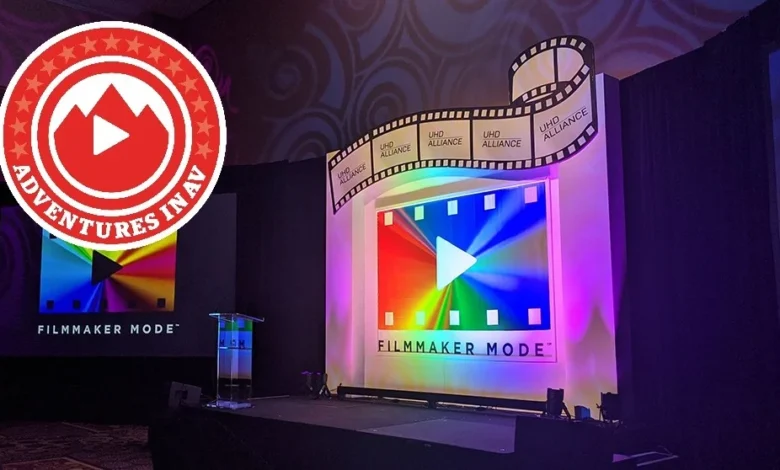
For many consumers, navigating a modern television’s picture settings menu is an exercise in frustration, often resulting in a labyrinth of cryptic labels and technical jargon that can leave a high-end display looking worse than its factory defaults. While manufacturers have historically prioritized "Vivid" or "Shop" modes to make screens pop under the harsh fluorescent lights of retail environments, these settings often distort the creator’s intent through aggressive edge enhancement, over-saturation, and artificial motion smoothing. In response to this industry-wide trend, the UHD Alliance introduced Filmmaker Mode in 2019, a standardized preset designed to bypass unnecessary digital processing. However, as TV technology advances, the industry finds itself at a crossroads regarding whether this universal standard remains relevant or if it is being supplanted by proprietary, manufacturer-specific calibration modes.
The Origins and Objectives of Filmmaker Mode
The inception of Filmmaker Mode was driven by a coalition of Hollywood’s most prominent directors, including Martin Scorsese, Christopher Nolan, and Denis Villeneuve. Their primary grievance was the "soap opera effect"—a byproduct of motion interpolation that makes cinematic 24-frame-per-second content appear unnaturally fluid, stripping away the filmic texture that directors carefully curate during production.
In 2019, the UHD Alliance, an organization composed of major studios and electronics manufacturers, launched the initiative to establish a "neutral" baseline. The certification requires that a display automatically disables post-processing features such as noise reduction, sharpening, and motion smoothing when the TV detects content tagged with specific metadata. The goal was to provide a "one-click" solution for the average consumer to view content as the director intended, without requiring an expensive professional calibration.
Chronology of Adoption and Industry Shifts
Following its debut at CES 2020, Filmmaker Mode saw rapid adoption among major players, including LG, Panasonic, Samsung, and Vizio. These companies integrated the mode into their firmware, often allowing it to trigger automatically when HDR content was detected.
However, the industry has never been monolithic in its approach to display standards. Sony, a titan in both content creation and hardware manufacturing, notably abstained from the UHD Alliance’s certification. Instead, Sony has historically championed its own "Professional" and "Custom" modes, arguing that its internal image processing—driven by its proprietary XR processors—is superior to a "bypass" mode. By applying intelligent, hardware-accelerated processing that identifies focal points and enhances depth without introducing the artifacts associated with traditional "Vivid" modes, Sony has maintained that its own standards better reflect the spirit of the creator’s intent.
The narrative took a significant turn in late 2025 and early 2026 as other manufacturers began to question the utility of the "Filmmaker Mode" branding. Philips, for instance, has moved to replace the standardized mode with its own "Reference" preset in its 2026 OLED lineup. The manufacturer’s rationale centers on user experience: consumer feedback suggested that the term "Filmmaker" was often misinterpreted as a setting intended for home video editing rather than a playback preset for cinematic content.
Technical Implications of Modern Image Processing
The debate over Filmmaker Mode is complicated by the fact that modern televisions are fundamentally reliant on image processing to function at a high level. Even when a user selects a "pure" or "reference" mode, the TV’s processor is still actively managing the panel’s output.
Modern displays—particularly OLED and Mini-LED models—require complex algorithms to handle peak brightness, color volume, and the transition from low-light to high-light scenes. When a user selects Filmmaker Mode, they are requesting that the TV minimize its intervention; however, they are not bypassing the hardware’s fundamental operating systems.
For example, when reviewing the Philips OLED911, industry analysts noted that while the "Reference" mode attempts to emulate a neutral image, it simultaneously applies an HDR-upscaling system to standard dynamic range (SDR) content. This highlights the inherent tension in the market: manufacturers want to showcase the prowess of their proprietary silicon, which often means layering "smart" processing on top of even the most "accurate" presets. Consequently, the term "authentic" has become increasingly subjective, varying wildly from one brand’s internal testing laboratory to the next.
Data and Performance Metrics
The efficacy of these modes is usually measured by Delta E values, which quantify the difference between the color a display shows and the color intended by the source. An ideal, calibrated display aims for a Delta E of under 3.0, and ideally under 1.0.
Independent testing has shown that Filmmaker Mode consistently delivers a high-quality, color-accurate image out of the box, typically achieving a Delta E of 2.0 to 3.5 on premium LG and Panasonic panels. By comparison, "Vivid" modes often produce Delta E values exceeding 10.0, indicating significant color inaccuracy.
However, the performance gap between a manufacturer’s "Cinema" mode and the industry-standard "Filmmaker" mode has narrowed significantly in recent years. Samsung’s "Movie" mode, for instance, has been praised for providing a punchier, higher-brightness experience that still adheres to D65 white-point standards, appealing to viewers who find the slightly dimmer, more "accurate" Filmmaker Mode too dark for their ambient lighting conditions.
Official Perspectives and Market Responses
The UHD Alliance maintains that the certification remains essential for providing a consistent experience across brands. Their stance is that a standardized, certified mode prevents the "wild west" of marketing-driven picture settings.
Conversely, manufacturers like Philips argue that the evolution of display technology necessitates more flexible naming conventions. In their view, a "Reference" mode can encompass the same technical goals as Filmmaker Mode while offering a more intuitive label for the modern user.
Some industry experts argue that the shift away from a single, standardized mode could fragment the consumer experience. If every manufacturer creates a proprietary "reference" mode, the term loses its meaning, as there is no longer a shared industry benchmark. This could lead to a scenario where "Reference" on one TV implies a completely different visual experience than "Reference" on a competitor’s model.
The Broader Impact on Home Cinema
As we look toward the future, the primary challenge for the home cinema industry is balancing the sophistication of modern hardware with the simplicity requested by the average user. Television processors have become so powerful that they are now an integral part of the viewing experience, capable of upscaling low-resolution content and mapping tone in ways that were impossible a decade ago.
The move away from a singular standard like Filmmaker Mode suggests that the industry is entering a phase of "curated authenticity." Manufacturers are betting that they can provide a better, more pleasing image by using their own proprietary processing, provided that they give the user a clear, accessible way to reach that baseline.
For the purist, this creates a dilemma: should one trust the standardization of the UHD Alliance, or should one trust the specialized processing of the manufacturer? Ultimately, the most significant impact of this debate is the increased attention being paid to picture accuracy. Even if the industry moves toward disparate terminology, the discourse has undeniably moved away from the "Vivid" settings of the past.
Whether Filmmaker Mode survives as a universal standard or is eventually relegated to history, the goal of home cinema remains unchanged: to bring the theater experience into the living room as faithfully as possible. As display technology continues to evolve, the challenge will be to ensure that the "creator’s intent" does not become lost in the very software designed to enhance it.
Related posts: