ECM Records Expands Catalog with Joe Lovano Paramount Quartet Debut and Bill Connors Luminessence Reissue

The international jazz community has seen a significant expansion of the ECM Records catalog with the release of the debut album from Joe Lovano’s Paramount Quartet and a high-grade vinyl reissue of Bill Connors’ 1977 classic, Of Mist and Melting. These releases represent the dual mission of the Munich-based label: fostering new collaborative efforts among contemporary masters while meticulously preserving the historical landmarks of the genre through the Luminessence series. The Paramount Quartet recording, captured at Studios La Buissonne in February 2025, introduces a new configuration for Lovano, featuring guitarist Julian Lage, bassist Santi Debriano, and drummer Will Calhoun. Simultaneously, the Bill Connors reissue brings back into focus a pivotal moment in the late 1970s when the guitarist transitioned from high-volume fusion to a nuanced, classical-acoustic aesthetic alongside a legendary quartet featuring Jan Garbarek, Gary Peacock, and Jack DeJohnette.
The Emergence of the Paramount Quartet
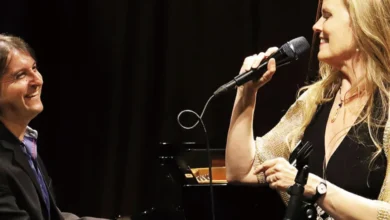
Joe Lovano, a titan of the tenor saxophone whose career has spanned several decades and multiple influential labels including Blue Note and Soul Note, continues his prolific relationship with ECM through the Paramount Quartet. This ensemble represents a cross-generational meeting of minds. Lovano, performing on tenor and soprano saxophones as well as the tarogato—a traditional Hungarian woodwind—is joined by Julian Lage, a guitarist known for his meticulous phrasing and technical fluidity. The rhythm section features Santi Debriano on bass and Will Calhoun on drums, the latter of whom is widely recognized for his work with the rock group Living Colour, here demonstrating his versatility within a high-level jazz context.
The album’s repertoire consists of seven tracks, including original compositions and tributes to jazz icons Charlie Haden and Wayne Shorter. Analysts of the session have noted a distinct atmospheric quality to the recording, particularly in pieces like "Amsterdam." The track is characterized by an abstract theme that evolves into a free-form interplay. Critical observation of the performance highlights Lage’s "studied linearity" and Debriano’s "fleet pizzicato," which anchor the more experimental tendencies of the group. While some segments of the album, such as "The Call," lean toward a spare, tender dynamic, other tracks like "Fanfare For Unity" and "Congregation" provide a more traditional rhythmic drive. "Congregation," in particular, has been cited for its "swing-sprung" and "funky grooves," offering a contrast to the more academic explorations found elsewhere on the disc.
Reinterpreting the Masters: Haden and Shorter
A significant portion of the Paramount Quartet’s debut is dedicated to the interpretation of works by Lovano’s peers and predecessors. The inclusion of Charlie Haden’s "First Song" serves as a poignant nod to the late bassist, though archival experts have noted that the album’s documentation omits the full title, "First Song (For Ruth)." The performance of this rubato ballad invites inevitable comparisons to the 1991 recording by Stan Getz and Kenny Barron. Lovano’s approach is described as being less diversely inflected than Getz’s "majestic" rendition, focusing instead on a more singular, fluttering melodic line.
The quartet also tackles Wayne Shorter’s "Lady Day," a piece originally featured on Shorter’s 1965 Blue Note album, The Soothsayer. In this version, Lovano utilizes a "floating and fluttering" tenor technique, which is complemented by what some observers consider Julian Lage’s finest contributions to the session. The creative energy of this modern interpretation stands in contrast to the 60-year-old original, which was famously sequenced between high-energy tracks, providing a different context for the pensive ballad than the one found in the Paramount Quartet’s more pensive arrangement.
Chronology of Joe Lovano’s ECM Tenure
Joe Lovano’s association with ECM has been a defining feature of his late-career output. Beginning with his participation in sessions led by others, he eventually transitioned into a leader role for the label, most notably with his Trio Tapestry featuring pianist Marilyn Crispell and drummer Carmen Castaldi. The Paramount Quartet represents a departure from the sparse, chamber-like intimacy of Trio Tapestry, moving toward a fuller, albeit often abstract, quartet sound. The recording at Studios La Buissonne in the South of France follows the label’s tradition of utilizing high-fidelity environments to capture the natural resonance of acoustic instruments.
Bill Connors and the Luminessence Reissue Series
In tandem with new releases, ECM has prioritized its Luminessence series, a project dedicated to reissuing essential titles from its deep archive on high-grade vinyl. The latest addition is Bill Connors’ Of Mist and Melting, an album that has seen various iterations since its original 1977 release. This third reissue restores the original visual identity of the album, featuring the striking photography of Daniel Lienhard and the iconic design of Barbara Wojirsch, which had been replaced in previous CD versions by abstract designs.
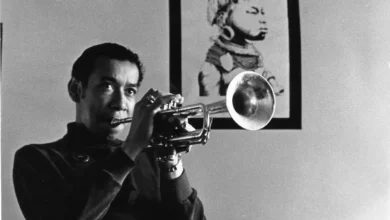
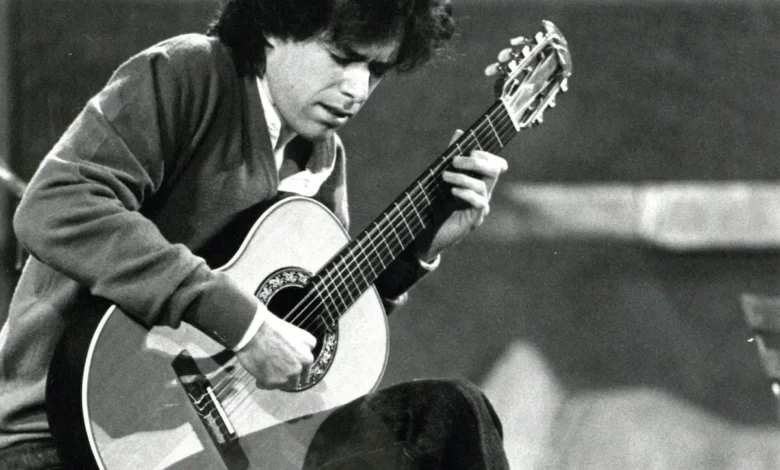
The reissue is accompanied by an extensive essay by Friedrich Kunzmann, which provides critical biographical context for Connors. Best known to many as the original guitarist for Chick Corea’s Return to Forever, Connors made a significant stylistic pivot in the mid-1970s. Disillusioned with the volume and technical saturation of the burgeoning fusion movement, Connors turned his focus toward the classical guitar and a more contemplative, acoustic-based compositional style. Of Mist and Melting is considered the pinnacle of this transition.
Collaborative Synergy in the 1977 Sessions
Recorded in Oslo in December 1977, Of Mist and Melting features a lineup that reads like a "who’s who" of the ECM stable during that era. Saxophonist Jan Garbarek, bassist Gary Peacock, and drummer Jack DeJohnette provide a sophisticated backdrop for Connors’ classical guitar work. The chemistry of the group is frequently highlighted by jazz historians, particularly the way DeJohnette’s polyrhythmic sensitivity and Peacock’s "rooted figures" create a "rolling launching pad" for Garbarek’s modulated saxophone lines.
The album’s six compositions, all penned by Connors, showcase a range of moods. "Melting" and "Cafe Vue" are driven by Garbarek’s tenor saxophone, while "Face In The Water" and "Unending" feature his soprano work. The rhythmic interplay is characterized by Connors’ tendency to phrase behind the beat, a technique that adds a layer of tension and release when paired with the precision of Peacock and DeJohnette.
Technical Specifications and Archival Impact
The technical execution of these releases reflects ECM’s commitment to audiophile standards. The Paramount Quartet album, under the catalog number ECM 2825, runs approximately 44 minutes, a concise duration that mirrors the LP-oriented sequencing of the label’s classic era. The Bill Connors reissue, cataloged as ECM 1120 (with the Luminessence number 674 3064), maintains its original two-side structure, with Side A clocking in at 24:26 and Side B at 22:36.
The implications of these releases extend beyond mere commercial availability. For the Paramount Quartet, the album serves as a document of Joe Lovano’s ongoing evolution and his ability to integrate younger virtuosos like Julian Lage into his sound world. For the Bill Connors reissue, it serves as a corrective to the historical narrative that often overlooks his acoustic contributions in favor of his brief, high-profile stint in the fusion world.
Broader Implications for ECM Records
The simultaneous promotion of new work and archival reissues demonstrates a strategic balance for ECM Records. By utilizing the Luminessence series to highlight the "Touchstones" of their catalog, the label reinforces its brand identity as a purveyor of "the most beautiful sound next to silence." The inclusion of Friedrich Kunzmann’s liner notes in the Connors reissue also signals a shift toward more scholarly and reflective documentation, allowing artists to "speak for themselves" through historical interviews and reflections.
As the jazz industry continues to navigate the digital age, the emphasis on high-grade vinyl and meticulous artwork suggests a continued demand for physical media among a dedicated segment of the listenership. The Paramount Quartet’s debut and the return of Of Mist and Melting ensure that both the future and the past of the ECM aesthetic remain accessible to global audiences.
Discographical Summary
Joe Lovano: Paramount Quartet
- Personnel: Joe Lovano (tenor sax, soprano sax, tarogato); Julian Lage (electric guitar); Santi Debriano (double bass); Will Calhoun (drums).
- Tracklist: First Song; Amsterdam; The Call; Fanfare For Unity; Lady Day; The Great Outdoors; Congregation.
- Recorded: Studios La Buissonne, February 2025.
- Label: ECM 2825.
Bill Connors: Of Mist And Melting
- Personnel: Bill Connors (acoustic guitar); Jan Garbarek (tenor sax, soprano sax); Gary Peacock (double bass); Jack DeJohnette (drums).
- Tracklist: Side A: Melting; Not Forgetting; Face In The Water. Side B: Aubade; Cafe Vue; Unending.
- Recorded: Oslo, December 1977.
- Label: ECM 1120 (Luminessence Reissue).