The Historical Context of the British Blues Boom and Dave Thomas
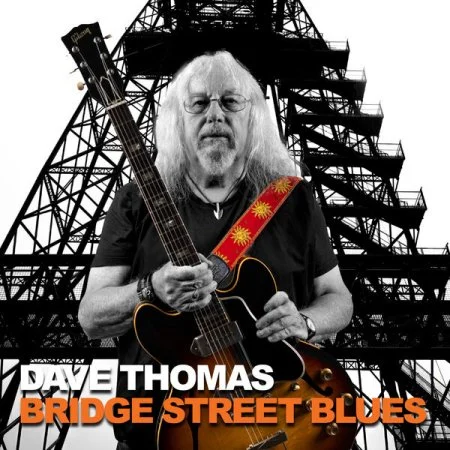
To understand the weight of Bridge Street Blues, one must look back to the mid-1960s, a period often referred to as the British Blues Boom. This era saw a generation of young musicians in the United Kingdom—including John Mayall, Eric Clapton, and Peter Green—reinterpreting American blues for a European audience. Dave Thomas emerged from this same fertile ground, establishing himself as a formidable singer, guitarist, and songwriter.
Thomas’s early career was marked by the high-energy, guitar-driven atmosphere of the 1960s club circuit. His bands were contemporaries of the legends of the genre; notably, one of his early ensembles was supported by a nascent Fleetwood Mac. This connection to the "holy trinity" of British blues guitarists—Clapton, Green, and Mick Taylor—is evident in Thomas’s technical proficiency and his deep respect for the genre’s traditions. Over the decades, Thomas has maintained a steady presence in the industry, transitioning from the high-octane band settings of his youth to more nuanced, solo-driven projects that prioritize atmosphere and lyrical depth.
The new album serves as the final installment of a trilogy that seeks to reconcile his Welsh upbringing with his lifelong devotion to African-American musical forms. By focusing on original compositions rather than covers, Thomas asserts his place not just as a student of the blues, but as a contemporary contributor to its evolving canon.
Production and Collaborative Synergy
A defining feature of Bridge Street Blues is the partnership between Dave Thomas and Declan Sinnott. Sinnott is a towering figure in the Irish music industry, renowned for his work as a producer, arranger, and guitarist for artists such as Christy Moore and Mary Black, as well as his tenure with the legendary folk-rock band Moving Hearts.
The recording sessions at Ar Neamh Studios were characterized by a minimalist approach to personnel but a maximalist approach to texture. Thomas provided the core vocals and the majority of the guitar tracks, while Sinnott took on the responsibility of playing or programming all other instruments. Sinnott also handled the mixing and mastering, ensuring a cohesive sonic identity across the ten tracks.

The decision to use programmed percussion on several tracks has been a point of analytical discussion among critics. While programmed drums can occasionally lack the organic micro-fluctuations of a human drummer, Sinnott’s programming aims for a steady, hypnotic pulse that allows Thomas’s guitar work to remain the focal point. This production choice reflects a modern reality of independent blues recording, where digital precision meets analog soul.
A Track-by-Track Analysis of Themes and Composition
The album’s narrative arc is carefully constructed, moving from the urban landscapes of Chicago to the personal memories of South Wales.
- Go To Legends: The opening track serves as a manifesto. It celebrates the Chicago blues culture, specifically referencing the iconic "Legends" club. Musically, it sets the tone for the album with a mid-paced shuffle that highlights Thomas’s clean, articulate guitar tone.
- Bridge Street Blues: The title track shifts the focus to Thomas’s birthplace, Newport, South Wales. This slow, aching blues piece acts as a tribute to his roots, demonstrating that the "blues" is a universal language capable of expressing the specificities of a Welsh upbringing.
- City Streets: Here, Thomas utilizes acoustic guitar as a subtle rhythm instrument, creating a sense of movement and urban grit. The song explores the isolation and observation inherent in city life.
- Big Fast Car: Reverting to a more driving tempo, this track uses the acoustic guitar as a percussive engine. It taps into the long-standing blues tradition of using automotive imagery as a metaphor for freedom and escape.
- Busted: A standout highlight of the collection, "Busted" strips the arrangement down to two acoustic guitars and a single voice. The lack of percussion emphasizes the raw emotion of the lyrics and the intricate interplay between the guitar parts.
- Honey: This track showcases Thomas’s vocal range. He adopts a gentle, relaxed, and laid-back delivery that complements the romantic, charming nature of the song.
- Gone For Good: This track introduces a "greasy and swampy" slide guitar sound. The interplay between Thomas’s slide work and Sinnott’s harmonica playing creates a thick, atmospheric texture reminiscent of the Delta blues tradition.
- Mr Moonchild: A masterclass in minimalist guitar fills, this song allows Thomas to demonstrate his "less is more" philosophy. Each note is given space to breathe, drawing comparisons to the nonchalant melodicism of JJ Cale.
- I Know You Through And Through: Introducing a retro element, Thomas employs a wah-wah pedal on this track. The effect adds a psychedelic tinge to the blues foundation, nodding to the experimentalism of the late 1960s.
- All Loved Up: The album concludes on a high note with a swinging, horn-infused number. Starting with a lone acoustic guitar, the song builds layers of instrumentation, showcasing the arrangement skills of both Thomas and Sinnott.
Technical Mastery and Stylistic Influences
The guitar work on Bridge Street Blues is the album’s primary technical achievement. Thomas avoids the flamboyant, high-speed shredding often found in modern blues-rock, opting instead for a style that emphasizes phrasing and tone. His approach is frequently compared to JJ Cale, an artist known for a "laid-back" style that hides a high level of technical complexity.
Thomas’s use of space is particularly noteworthy. By leaving gaps between melodic phrases, he creates a sense of anticipation in the listener. His tone is generally clean, with just enough saturation to provide sustain without masking the natural timbre of his instruments. This allows the subtle nuances of his fingerpicking and pick attack to remain audible, providing an intimate listening experience.
Vocally, Thomas does not attempt to mimic the gravelly shouts of traditional blues singers. Instead, he leans into his natural Welsh-inflected baritone, delivering lyrics with a conversational ease. This honesty in vocal delivery prevents the album from feeling like a pastiche and instead grounds it in the artist’s genuine identity.
Socio-Economic Implications for the Independent Blues Scene
The release of Bridge Street Blues through Blonde On Blonde Direct highlights the shifting landscape of the music industry. In an era dominated by streaming algorithms, veteran artists like Thomas are increasingly relying on independent labels and direct-to-consumer models to maintain creative control.

This model allows for the production of niche, high-quality projects that may not fit the commercial requirements of major labels but hold significant value for dedicated genre fans. The success of such releases suggests a sustainable path forward for "heritage" artists who continue to produce relevant work. Furthermore, the collaboration between a Welsh artist and an Irish producer, recorded in Ireland and themed around American music, underscores the international and interconnected nature of the modern blues community.
Chronology of the Trilogy
While Bridge Street Blues stands as a singular work, its significance is amplified when viewed as the conclusion of Thomas’s recent trilogy.
- Phase One: Established the foundational sounds, focusing on the standard blues forms and traditional structures.
- Phase Two: Expanded the lyrical scope, incorporating more personal narratives and experimental instrumentation.
- Phase Three (Bridge Street Blues): Synthesizes these elements, balancing the technical precision of the first phase with the emotional depth and varied textures of the second.
This three-album cycle represents a concerted effort by Thomas to document his musical philosophy for posterity. It serves as a comprehensive look at how a European musician can internalize an American art form and give it a unique, regional voice.
Final Analysis and Broader Impact
Bridge Street Blues is more than just a collection of songs; it is a testament to the longevity of the blues and the enduring skill of Dave Thomas. By eschewing modern trends in favor of timeless songwriting and masterful guitar work, Thomas has produced an album that appeals to both purists and those who appreciate the evolution of the genre.
The album’s minor flaws—such as the occasional stiffness of the programmed drums—are outweighed by the strength of the compositions and the brilliance of the guitar performances. The project successfully bridges the gap between the 1960s British blues explosion and the contemporary independent scene. As Thomas reflects on his journey from Newport to the global stage, Bridge Street Blues stands as a sophisticated, soulful, and technically accomplished milestone in a career that has spanned over half a century. It reinforces the idea that the blues is not a static museum piece, but a living, breathing medium for storytelling and artistic expression.