Revisiting the Legacy of M.O.P.’s Ante Up Remix and Its Indelible Mark on Hip-Hop Culture

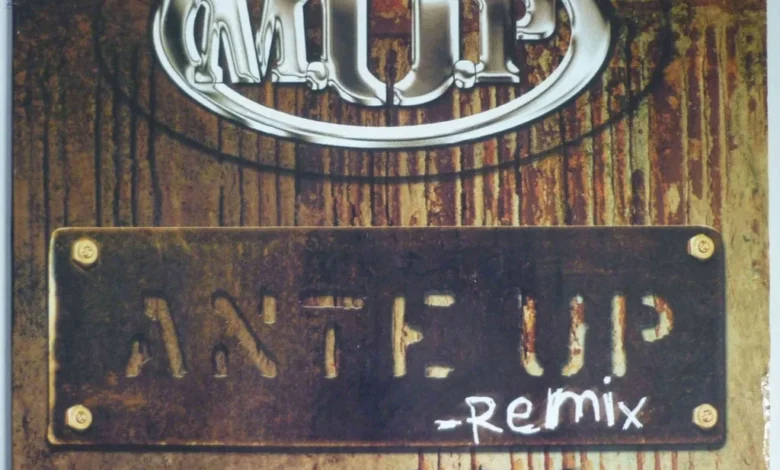
The landscape of East Coast hip-hop at the turn of the millennium was defined by a gritty, high-octane intensity, and few tracks encapsulate that era quite like the "Ante Up" remix by the Brooklyn hardcore rap duo M.O.P. Originally released on their fourth studio album, Warriorz, via Loud and Relativity Records, the track served as a masterclass in aggressive lyricism and undeniable sonic power. Composed of members Billy Danze and Lil’ Fame, M.O.P.—short for Mash Out Posse—built their reputation on commanding performances that demanded attention. When they decided to polish off the official remix of their stick-em-up anthem, they enlisted an all-star roster of heavyweights, including Terror Squad’s formidable lyricist Remy Ma (then known as Remy Martin), The Conglomerate general Busta Rhymes, and crew affiliate Teflon.
The resulting collaboration transcended standard urban radio fare, transforming into a cultural touchstone that continues to resonate across generations of music fans, athletes, and filmmakers. As cultural historians and hip-hop purists look back at the definitive anthems of the 2000s, the "Ante Up" remix stands tall as a testament to the unyielding spirit of New York City street rap, bridging the gap between underground authenticity and mainstream crossover appeal.
Main Facts and Production Genesis
At its core, the original version of "Ante Up" was already a hard-hitting street record, driven by its stark premise of financial desperation and street-level extortion. However, the decision to record a remix elevated the composition into an entirely different echelon of commercial and critical success. Produced by DR Period, the instrumental is anchored by an infectious, blaring horn sample that instantly incites a visceral, adrenaline-fueled reaction. This distinctive brass melody acts as the backbone of the song, engineered to move crowds in packed clubs just as effectively as it serves as a motivational pep track for athletes.
Legendary New York City DJ Funkmaster Flex lends his unmistakable voice to the introduction, setting an energetic, authoritative tone that primes the listener for the onslaught of verses to follow. The lyrical contributions on the remix are relentless. Billy Danze and Lil’ Fame set a ferocious pace, followed by Busta Rhymes, whose hyper-kinetic delivery and dynamic cadence added a layer of manic grandeur. Teflon held his own alongside the veterans, while Remy Ma delivered a fierce, breakout performance that foreshadowed her future dominance as one of rap’s premier lyricists. Released under the Loud and Relativity imprints—labels known for fostering some of the most uncompromising hip-hop of the 1990s and 2000s—the track benefited from a strategic push that cemented its status as a defining moment for East Coast rap at a time when Southern and Midwestern styles were beginning to capture significant commercial market share.
Chronological Context and the Warriorz Era
To fully understand the weight of the "Ante Up" remix, it is essential to examine the timeline of M.O.P.’s career leading up to the release of Warriorz in October 2000. Hailing from the Brownsville neighborhood of Brooklyn, Billy Danze and Lil’ Fame had spent the better part of the decade building a dedicated cult following through critically acclaimed underground albums such as To the Death (1994), Firing Squad (1996), and First Family 4 Life (1998). Despite their critical acclaim and respect among industry peers, commercial superstardom had largely eluded them.
By 2000, the rap industry was undergoing a transitional phase. The monolithic dominance of Bad Boy and Death Row in the mid-90s had given way to diverse regional sounds, with Roc-A-Fella Records rising in New York and Cash Money and No Limit dominating the South. Loud Records, home to Wu-Tang Clan, Mobb Deep, and Big Pun, recognized that M.O.P. possessed a unique live-performance energy that could translate into mainstream viability if packaged correctly.
Warriorz served as the commercial peak of M.O.P.’s career, debuting on the Billboard 200 and receiving widespread critical praise. While the album contained several strong cuts, it was "Ante Up" and its subsequent remix that captured the cultural zeitgeist. The track was strategically released to radio and clubs as a single following the album’s drop, rapidly climbing charts and establishing itself as a permanent fixture in DJ sets across the United States.
Visual Documentation and the Bed-Stuy Video Shoot
The accompanying music video for the "Ante Up" remix, directed by the visionary music video director Little X (now known as Director X), stands as a definitive visual document of early 2000s New York hip-hop culture. Shot on location in the Bedford-Stuyvesant neighborhood of Brooklyn, the video visually reinforced the gritty, community-centric ethos of the song.

Rather than relying on high-budget cinematic clichés, the video captured the raw essence of a neighborhood block party infused with hip-hop royalty. Beyond the primary performers—Billy Danze, Lil’ Fame, Busta Rhymes, Teflon, and Remy Ma—the visual featured an unprecedented gathering of hip-hop luminaries and media personalities who showed up to support M.O.P.
The guest cameos read like a who’s who of the golden and modern eras of East Coast rap:
- Gang Starr (Guru and DJ Premier)
- Lord Have Mercy
- Easy Mo Bee
- Ralph McDaniels (host of Video Music Box)
- DJ Green Lantern
- Buckshot of Black Moon
- Steele of Smif-N-Wessun
- Method Man of the Wu-Tang Clan
- Afu-Ra
- Tony Touch
This gathering was not merely a casting call; it was a physical manifestation of industry solidarity. The presence of artists from groups like Boot Camp Clik, Wu-Tang Clan, and Gang Starr underscored the immense respect M.O.P. commanded among their peers. The video’s gritty aesthetic, dynamic camera movements, and communal energy made it a heavy rotation staple on MTV, BET, and The Box, further cementing the track’s omnipresence in popular culture.
Broader Impact, Film Synopses, and Pop Culture Integration
The cultural footprint of the "Ante Up" remix extends far beyond the confines of traditional music charts and radio airplay. Its aggressive tempo, memorable hooks, and undeniable bravado made it a prime candidate for sync licensing in film, television, and sports entertainment. Over the subsequent two decades, the song transitioned from a street anthem to a mainstream pop culture shorthand for high-stakes competition, confrontation, and triumph.
In cinema, the track found a home in several notable silver screen projects during the early 2000s. It was prominently featured in the 2002 romantic comedy-drama Brown Sugar, starring Taye Diggs and Sanaa Lathan, which explored the deep cultural ties between hip-hop and romantic relationships. Two years later, the song injected raw energy into the dance battle film You Got Served (2004), aligning seamlessly with the film’s high-energy choreography and competitive spirit.
Television programmers likewise recognized the track’s universal appeal. It has been utilized across various networks to inject immediate momentum into scenes requiring high-octane tension or comedic exaggeration. A notable example includes its strategic placement in an episode of the critically acclaimed Fox/NBC police comedy series Brooklyn Nine-Nine, where the track’s aggressive Brooklyn aesthetic provided a humorous juxtaposition to the show’s comedic tone. Furthermore, professional sports teams across the NBA, NFL, and NCAA frequently employ the song’s blaring horn intro during pre-game warmups, utilizing its psychological impact to hype up both players and crowds.
Industry Statements, Reflections, and Legacy
In retrospective interviews over the years, members of M.O.P. and their collaborators have frequently reflected on the creation of "Ante Up" with a mix of pride and astonishment at its enduring longevity. Billy Danze and Lil’ Fame have consistently emphasized that the song was born from the same authentic lived experiences that inspired all of their music, noting that they never anticipated it would become a global sports and cinematic staple.
Industry analysts and music historians point to the track as a masterclass in collaborative synergy. By blending M.O.P.’s unhinged street aggression with Busta Rhymes’ theatrical showmanship, Teflon’s steady delivery, Remy Ma’s razor-sharp introduction to the broader public consciousness, and DR Period’s bombastic production, the remix achieved a rare alchemy. It demonstrated that hardcore, unapologetic East Coast rap could command commercial spaces without sacrificing an ounce of its integrity.
As decades pass since its initial release under the Loud and Relativity banners, the "Ante Up" remix remains a towering monument in the catalog of 2000s hip-hop. It serves as an enduring reminder of a time when the genre was driven by raw physical energy, communal unity, and an unyielding commitment to local identity. Saluting Billy Danze, Lil’ Fame, Teflon, DR Period, Busta Rhymes, Remy Ma, and the countless artists who gathered in Bed-Stuy to shoot that historic video is more than a nod to nostalgia—it is an acknowledgment of a foundational piece of modern musical history that continues to echo through stadiums, screens, and sound systems worldwide.