In Defense of Program Notes: The Evolution of Audience Engagement in Classical Music

On his first visit to London in 1851, Hector Berlioz attended several chamber music concerts at The Musical Union, a subscription series run by impresario John Ella. His dispatches from the city were effusive: “The London public is very attentive and serious in its tastes and I have been able to see for myself its excellent qualities,” Berlioz wrote, adding that he felt a kinship with music lovers who “listen to it attentively and have a keen feeling for it.” While Berlioz was marveling at the disciplined silence of the Victorian concert hall, he was also inadvertently documenting a pivotal moment in the history of music mediation: the birth of the formal program note.
The Musical Union was one of the first organizations to systematically provide written guides to the audience, a practice that would soon become a cornerstone of the Western classical concert experience. Today, the debate over the relevance, length, and pedagogical necessity of these notes has reignited as concert halls struggle to balance traditional scholarship with the changing demands of a digital-native audience.
The Genesis of the Concert Program
In the early 19th century, the relationship between the performer and the listener was largely dictated by the social customs of the salon or the theater. As music moved from the aristocratic court to the public sphere, the demographics of the audience shifted. The rise of the middle class brought listeners who were passionate but not necessarily trained in the intricacies of sonata form or harmonic development.
John Ella, the founder of The Musical Union, recognized this gap. He realized that for a subscription series to thrive, it needed to be educational. By providing analytical notes—detailing the structural themes and historical context of the works being performed—Ella empowered his audience. He transformed the act of listening from a passive reception of sound into an active intellectual engagement. This practice quickly spread across Europe. By the late 1800s, institutions ranging from the Gewandhaus in Leipzig to the New York Philharmonic had adopted the format, effectively creating a standardized “instruction manual” for high art.
A Chronology of Audience Mediation
The development of program notes did not occur in a vacuum; it paralleled the professionalization of musicology as a discipline.
- 1845: John Ella publishes the first regular series of analytical program notes for The Musical Union in London.
- 1880s: Sir George Grove begins writing his extensive notes for the Crystal Palace concerts in London, setting a high standard for narrative, biographical, and technical rigor.
- 1920s–1940s: During the era of the Workers Dance League and other socio-political arts collectives, program notes take on a radical tone, often explaining the ideological underpinnings of experimental choreography and modernist scores.
- 1960s–1980s: The "academic" style becomes the gold standard, with notes frequently written by musicologists, often prioritizing technical analysis over listener experience.
- 2000s–Present: The advent of digital devices and the internet forces a shift toward concise, accessible, and often interactive content, as concert halls experiment with apps and pre-concert digital supplements.
The Pedagogical Divide: Scholarly Rigor vs. Accessibility
The modern contention surrounding program notes is rooted in a fundamental disagreement over their purpose. Should a program note be a scholarly document, providing a definitive historical account of a symphony, or should it serve as a psychological "primer" that helps the listener navigate their emotional response to the work?
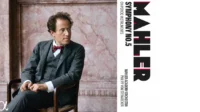
Many contemporary musicologists argue that the loss of detailed program notes leads to a degradation of the audience’s ability to appreciate complex structures. "When you remove the context—the ‘why’ and the ‘how’—you are left with a purely sensory experience," says Dr. Elena Vance, a historian of 19th-century performance practice. "For works like a late Beethoven quartet or a complex Mahler symphony, the note acts as a scaffold. Without it, a casual listener may struggle to find the thread of the narrative."
Conversely, critics of the traditional long-form program note argue that they are often alienating. Dense, jargon-heavy prose—filled with references to "diminished seventh chords" and "recapitulation sections"—can serve as a barrier to entry for new audience members. They argue that if a piece of music requires a degree in music theory to enjoy, the art form itself is failing to communicate.
Supporting Data and Audience Preferences
Recent surveys conducted by regional symphonies in North America suggest a bifurcated audience preference. A 2024 study by the League of American Orchestras found that while 62% of frequent concertgoers value traditional, informative program notes, 45% of younger audiences (ages 18–34) expressed a preference for "bite-sized" digital content, such as short video explainers or interactive mobile guides.
The data indicates that the "one size fits all" approach to printed programs is becoming increasingly inefficient. Printing costs have risen by approximately 18% over the last five years, leading many organizations to cut back on the length and frequency of their physical brochures. This economic pressure is acting as a catalyst for innovation, pushing orchestras to adopt digital-first strategies that include hyperlinked notes, audio snippets, and real-time commentary.
Implications for the Future of Concert Culture
The evolution of the program note is inextricably linked to the survival of the classical music industry. If the concert hall is to remain a relevant space in the 21st century, it must grapple with how it mediates the relationship between the composer’s intent and the listener’s experience.
There is also the question of "the defense of the note." Proponents of traditional program notes argue that their decline represents a broader anti-intellectual trend. They contend that the act of sitting down and reading a thoughtful, well-researched essay about a work of art is a form of "slow media" that provides a necessary counterbalance to the rapid-fire consumption of content on social media.
Furthermore, the pedagogical role of the program note cannot be ignored in the context of contemporary music. When an orchestra programs a new, commissioned work, the program note is often the only way the audience can grasp the composer’s aesthetic framework. Without this guidance, the risk of negative reception or audience confusion increases significantly.
The Path Forward: A Hybrid Model
The most successful institutions are currently moving toward a hybrid model. This involves providing a concise, high-level summary in the physical program—suitable for quick reading before the lights dim—while offering a "deep dive" via QR codes for those who wish to explore the history, theory, and cultural context of the music in greater detail.
This multi-tiered approach respects the diverse needs of the audience. It acknowledges that the "attentive and serious" listener, whom Berlioz admired so much, still exists, but also recognizes that the modern listener’s attention is a precious commodity. By modernizing the delivery of program notes while maintaining the high scholarly standards of the 19th-century tradition, the classical music world can bridge the gap between historical legacy and future viability.
As we look toward the next century of performance, the program note will likely remain an essential, albeit transformed, tool. It serves as a testament to the idea that music is not just a sound to be heard, but an intellectual and cultural journey to be shared. Whether delivered via ink on paper or pixels on a screen, the goal remains the same as it was in John Ella’s day: to ensure that the listener does not merely hear, but truly feels the music.