Endtroducing and the sonic revolution of 1996: How DJ Shadow redefined the architecture of hip-hop

On 13 September 1996, the global music landscape was irrevocably darkened by the death of Tupac Shakur, who succumbed to injuries sustained in a drive-by shooting in Las Vegas. The tragedy served as a brutal punctuation mark for the mid-nineties, a period when the genre of gangsta rap had ascended to the height of mainstream dominance. Yet, even as the industry grappled with the violent intersections of reality and artistic persona, the boundaries of hip-hop were being fundamentally redrawn in the quiet seclusion of a studio in Northern California. Just three days after Shakur’s passing, Josh Davis, professionally known as DJ Shadow, released his debut studio album, Endtroducing. It was a work that stood in stark contrast to the dominant rap narratives of the era, shifting the focus from lyrical autobiography to the architectural possibilities of the sampler.
The Architect of the Sonic Collage
In 1996, the production methodology of hip-hop was largely defined by the "loop and rhyme" structure. Producers typically sourced specific hooks or drum breaks, repeating them as a foundation for vocalists. DJ Shadow’s approach was radically different. Utilizing an Akai MPC60 MKII, a machine with limited memory and processing power by modern standards, he treated the sampler not as a tool for repetition, but as a compositional instrument.
Endtroducing is famously recognized by the Guinness World Records as the first album to be composed entirely of sampled sounds. This distinction is not merely a technicality; it represents a paradigm shift in how recorded music could be repurposed. By painstakingly layering thousands of disparate, often unrecognizable, audio fragments, Shadow created what are now referred to as "sonic collages." This technique required an exhaustive knowledge of music history, necessitating thousands of hours of what is known in the industry as "crate-digging."
A Chronology of Crate Digging
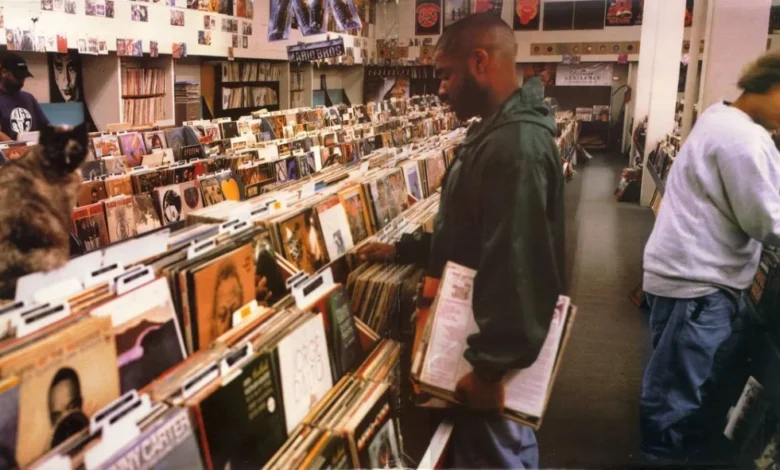
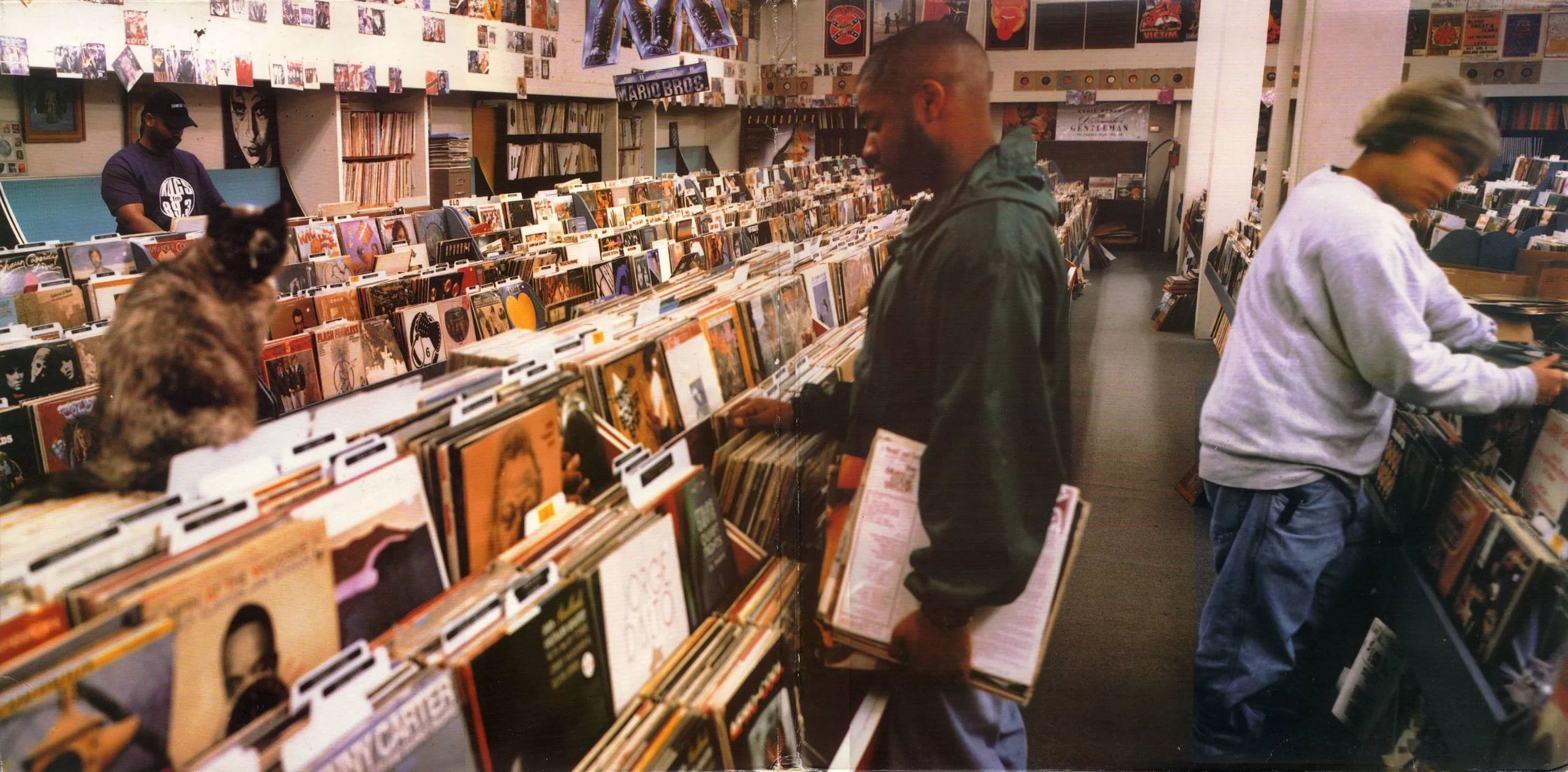
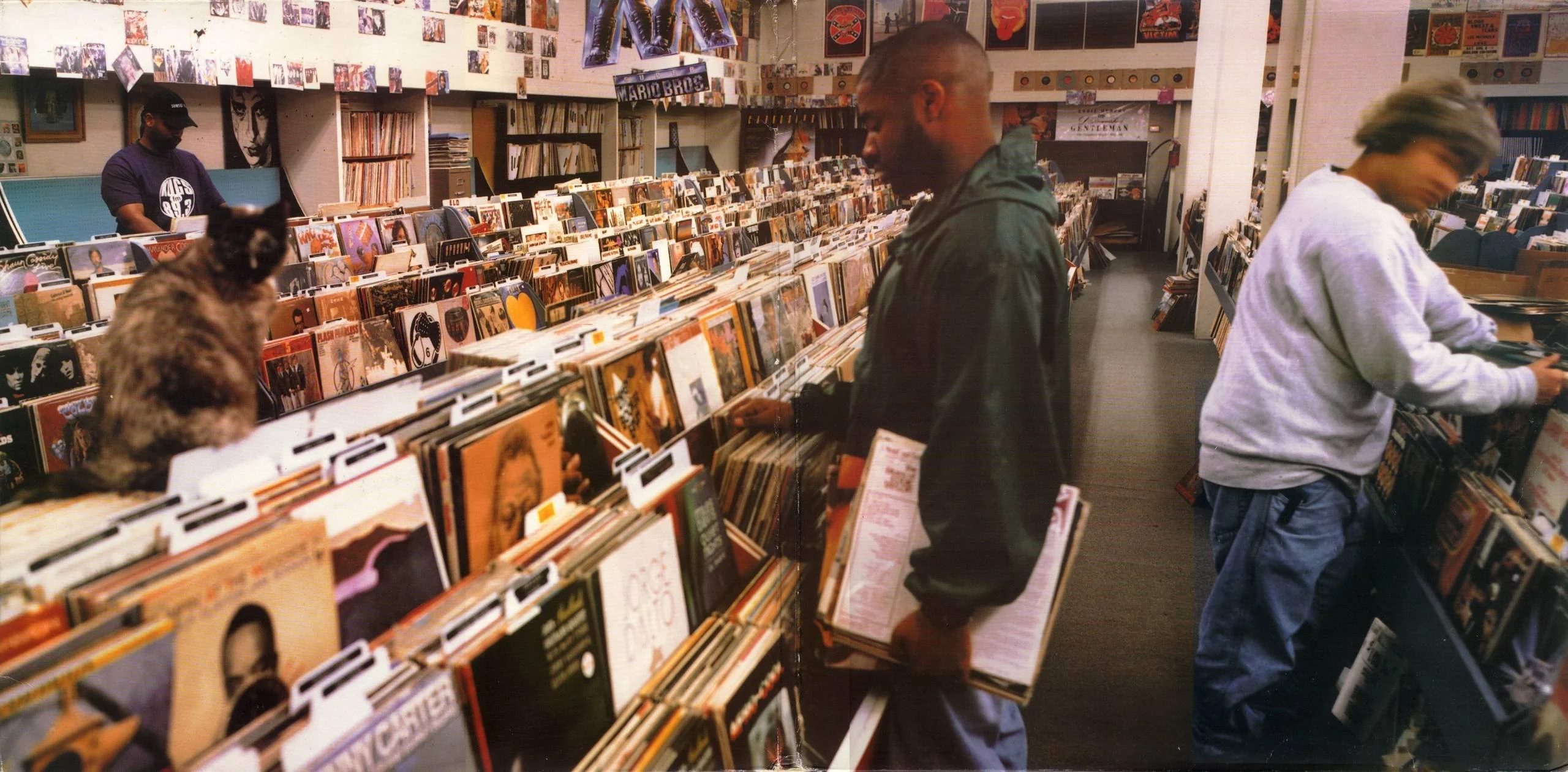
The provenance of Endtroducing lies in the bins of independent record stores, most notably Rare Records in Sacramento, California—the shop featured on the album’s iconic gatefold cover. Shadow’s personal collection, which reportedly exceeded 60,000 records nearly two decades ago, served as the library for his compositions.
The timeline of the album’s creation spans the mid-nineties, a period during which Shadow was developing his sound as part of the Mo’ Wax label, spearheaded by James Lavelle. While the world was mourning the loss of icons like 2Pac and the impending death of Notorious B.I.G., Shadow was engaged in the solitary, meticulous work of sourcing obscure jazz, psychedelic rock, and avant-garde soundscapes.
- 1993–1995: Shadow experiments with the Mo’ Wax label, releasing singles that build toward the sound of his debut.
- September 1996: Endtroducing is released in the UK, immediately garnering critical acclaim for its innovative, instrumental approach.
- Late 1996–1997: The album gains global traction, influencing a generation of producers to explore the "trip-hop" and "instrumental hip-hop" subgenres.
Technical Analysis: The Hi-Fi Standard
Beyond its historical significance, Endtroducing remains a benchmark for high-fidelity audio testing. The album’s dense layering demands exceptional clarity and dynamic range from playback equipment. For instance, the track "Building Steam With a Grain of Salt" utilizes piano samples from Jeremy Storch’s 1970s work. Shadow’s manipulation of these samples requires a sound system capable of resolving high-frequency transients and maintaining composure during the complex, stuttering drum breaks that define the track.
Similarly, "The Number Song" features a transition from a low-end-heavy drone into a bright, aggressive brass section. On entry-level systems, this transition often collapses into a muddy, indistinct wall of sound. On high-end equipment, however, the separation of the brass from the underlying bass provides a masterclass in spatial imaging. The track "Changeling" further challenges the low-end performance of speakers with its heavy, muscular bassline and expansive, atmospheric synthesizer pads.
Cultural and Musical Implications
The release of Endtroducing fundamentally altered the trajectory of independent hip-hop. It proved that instrumental music could carry the same emotional weight as traditional vocal-driven rap. Critics at the time noted that the album managed to feel both nostalgic—thanks to its reliance on vintage vinyl—and futuristic.
The track "Midnight in a Perfect World" stands as the emotional core of the project. By extracting a piano refrain from David Axelrod’s "The Human Abstract," Shadow bridged the gap between 1970s jazz-fusion and 1990s hip-hop. The result is a soundscape that is both melancholy and hopeful, illustrating how sampling, when treated with reverence and artistic intent, could produce entirely new emotional experiences.
The Broader Impact on Music Production
The implications of Shadow’s work were felt far beyond the hip-hop community. His ability to synthesize disparate genres—from the hard rock of Metallica’s "Orion" to the avant-garde textures of Björk’s "Possibly Maybe"—foreshadowed the era of genre-fluid music production. By stripping away the ego of the traditional frontman, Shadow allowed the "found sound" to take center stage, effectively turning the act of listening into an archaeological journey.
While mainstream hip-hop in 1996 was often tied to the specific geographies of the East and West Coast rivalry, Endtroducing was geographically ambiguous. It did not speak to the streets of Los Angeles or New York; it spoke to the universal experience of the listener, grounding itself in the shared history of recorded music.
Industry Recognition and Legacy
In the decades since its release, Endtroducing has appeared on virtually every list of the greatest albums of the 1990s. Its success helped validate the Mo’ Wax label’s commitment to experimental music and paved the way for artists like RJD2, Bonobo, and The Avalanches.
The album’s title itself serves as a finality. Shadow famously remarked that the name was meant to signify the end of a specific chapter in his early development, an admission that he had mastered the art of the sampler. However, as the industry transitioned into the digital era, the album became a foundational text for anyone looking to understand the interplay between hardware and creativity.
The technical constraints of 1996—limited sampling time, the necessity of analog-to-digital conversion, and the physical limitations of vinyl—forced a level of discipline that is often absent in the modern era of DAW-based production. Shadow’s reliance on the Akai MPC60 meant that every decision was deliberate, every sample was chosen for its specific character, and every layer was balanced with surgical precision.
As we look back at the history of music in 1996, the narrative is often dominated by the cultural tragedy of the gangsta rap era. Yet, the release of Endtroducing serves as a crucial reminder that the same year also birthed a new frontier in music production. It was a year of endings and beginnings, where the violence that plagued the streets was countered by a quiet, revolutionary act of creation in a bedroom studio, forever changing the way we listen to the past to construct the future of sound.