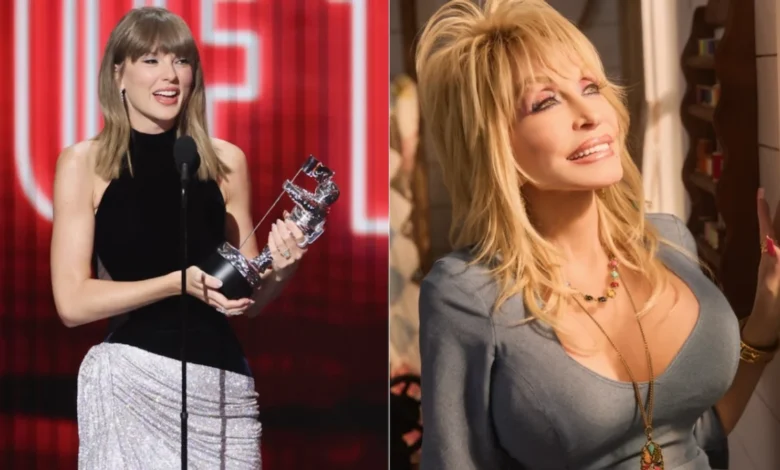
The 2026 MTV Video Music Awards reached a poignant emotional crescendo this evening when Taylor Swift, upon accepting the prestigious Video of the Year award, bypassed the standard industry accolades to deliver a heartfelt tribute to the legendary country music icon, Dolly Parton. The moment, which captivated the audience at the ceremony and generated immediate discourse across social media platforms, served as a bridge between generations of American musical storytelling. Swift’s public dedication underscored the enduring influence of Parton’s songwriting craft and her profound impact on the trajectory of modern pop and country performance.
A Night of High-Stakes Recognition
The 2026 VMAs were already shaping up to be a landmark night for Swift, who had earlier in the evening been honored with the inaugural Artist Director Award. This new accolade was created by the network to acknowledge artists who demonstrate total creative autonomy over their visual output—a hallmark of Swift’s career over the last two decades. Following this achievement, she debuted her latest cinematic endeavor, the music video for "Patient Zero." The project, noted for its complex narrative and technical ambition, served as the catalyst for her winning the night’s most coveted prize: Video of the Year.
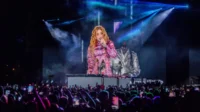
However, the tone of the evening shifted from professional celebration to personal reflection when Swift took the stage to accept the top honor. Rather than focusing on the production team or her own artistic journey, Swift centered her remarks on the legacy of Dolly Parton. "This award is for one person without whom this wouldn’t be happening," Swift stated, addressing the packed arena. "And that person is the ultimate showgirl: Dolly Parton."
The Art of Narrative Songwriting
Swift’s speech highlighted a specific facet of Parton’s career that has long served as a North Star for her own work: the ability to create vivid, cinematic narratives within the confines of a three-minute song. "Every single song that she wrote, her storytelling was so vivid and so rich," Swift remarked. "Listening to her songs, it’s like watching the best music video you have ever seen in your life, every single time you hear what she has written."
This observation resonates with musicologists who have long analyzed the structural similarities between Parton’s classic songwriting—such as the narrative depth found in "Coat of Many Colors" or "Jolene"—and the modern music video format. Swift’s comparison emphasizes the idea that a truly successful music video is merely an extension of the songwriter’s original intent, provided that the songwriting itself possesses enough imagery to sustain a visual medium. By acknowledging Parton in this context, Swift effectively elevated the craft of songwriting to the level of visual art, a sentiment that has been echoed by critics who argue that the shift toward video-centric music consumption has often overshadowed the foundational work of the composer.
Grace, Joy, and the Legacy of Gratitude
Beyond the technical prowess of her songwriting, Swift focused on the personal philosophy that has sustained Parton through over six decades in the public eye. Swift characterized Parton’s career not just by its massive commercial success, but by the manner in which she navigated the inherent pressures of fame.
"She handled this thing with such grace, and joy, and love, and gratitude for the fact that she got to do this," Swift said. "Everything that happened in her life or her career, she channeled back into love, and gratitude, and appreciation for her fans."
This reflection touches on a significant trend in contemporary celebrity culture. In an era where artists are frequently expected to maintain a constant, often exhausting public presence, Parton’s career stands as a model for sustainable longevity. By prioritizing the relationship with her audience and maintaining a consistent public persona rooted in optimism, Parton avoided many of the pitfalls that have derailed her contemporaries. Swift’s mention of being "lucky" to be a fan suggests a sense of stewardship, implying that she views her own massive platform as an extension of the values modeled by the pioneers who came before her.
The Evolution of the VMAs and Artistic Direction
The 2026 VMAs occurred during a transitional period for the music industry, where the lines between music production and film production have become increasingly blurred. The creation of the Artist Director Honor marks a significant shift in how MTV and the wider industry define success. It is no longer enough for an artist to be a performer; they are now expected to be an architect of their own brand and visual identity.
Swift’s win for "Patient Zero" represents the apex of this trend. The video, which has been praised for its high production values and thematic maturity, serves as a testament to the influence of the "auteur" model in pop music. By linking her success in this area back to Parton, Swift is essentially situating herself within a lineage of storytellers rather than just a lineage of performers. This creates a more intellectual framework for pop music, suggesting that the "showgirl" aesthetic—a term Swift used specifically for Parton—is not merely about spectacle, but about the ability to command a narrative.
Industry Implications and Cultural Impact
The immediate aftermath of the speech saw a surge in interest regarding the influence of country music on the current pop landscape. Analysts suggest that Swift’s public reverence for a traditional icon like Parton helps to legitimize the country genre’s influence on modern pop production. As streaming platforms continue to break down genre silos, the recognition of Parton at an event historically defined by urban, rock, and pop aesthetics signals a broader shift toward a more unified musical canon.
Furthermore, the sentiment expressed by Swift—that "we were all very lucky to share this planet with Dolly Parton for a time"—has ignited a widespread, positive cultural response. It serves as a reminder of the unifying power of music in an otherwise fractured political and social climate. By centering her moment of victory on a figure who is almost universally beloved, Swift effectively managed to transcend the typical competitive nature of the VMAs.
A Chronology of the 2026 VMA Highlights
- 7:00 PM: Red carpet arrivals begin, with Swift debuting a look that industry observers linked to the aesthetics of her latest project.
- 8:30 PM: MTV presents the inaugural Artist Director Honor to Taylor Swift, recognizing her work as a creative lead on her visual projects.
- 9:15 PM: The world premiere of the "Patient Zero" music video takes place, receiving immediate critical acclaim for its visual storytelling.
- 10:45 PM: Taylor Swift is announced as the winner of the Video of the Year award.
- 10:50 PM: Swift delivers her acceptance speech, dedicating the award to Dolly Parton.
- 11:00 PM: Social media engagement regarding the speech hits record highs, with clips of the tribute trending globally within minutes.
The Legacy of the "Ultimate Showgirl"
Dolly Parton, who has remained a constant presence in American culture for over 60 years, has navigated multiple transitions in the music industry—from the golden age of country radio to the era of digital streaming. Her ability to remain relevant while staying true to her roots has made her a subject of academic study in folklore and pop culture departments.
Swift’s tribute highlights the "grace" of that journey. In a climate where the half-life of a pop star is often measured in years, Parton’s longevity is an anomaly that many young artists are desperate to emulate. By explicitly naming Parton as the source of her inspiration, Swift is aligning her own long-term goals with the longevity model that Parton perfected.
Broader Perspectives on the Tribute
While Swift is known for her meticulously crafted public statements, the emotional weight of this particular tribute appeared to be unscripted and deeply felt. Colleagues in the industry have noted that Swift has become increasingly vocal about the "shoulders of giants" upon which she stands.
From an industry perspective, this dedication also serves to reinforce the importance of the songwriter’s role in a visual-first medium. As record labels and streaming platforms continue to push for short-form content, the emphasis on "vivid and rich" storytelling—the core of what Parton represents—is a necessary reminder of what keeps an audience engaged over the long term.
Conclusion: A Legacy of Connection
The 2026 Video of the Year award will likely be remembered not for the music video that won it, but for the act of homage that defined the ceremony. Taylor Swift’s decision to use her platform to honor Dolly Parton served as a poignant reminder that the most impactful art is that which creates a connection—between the artist and the song, the artist and the audience, and the artist and the pioneers who paved the way.
As the music industry continues to evolve in the face of new technologies and shifting consumer habits, the values highlighted by Swift—gratitude, storytelling, and the preservation of the craft—remain the constants that bridge the gap between generations. The night concluded with a sense of continuity, ensuring that the legacy of the "ultimate showgirl" will continue to inform the next generation of musical innovators for years to come.