The Architect of a Global Movement
Born in 1962, Juan Atkins was not merely a participant in the electronic music boom of the late 20th century; he was a primary catalyst for the genre now known globally as techno. Alongside school friends Derrick May and Kevin Saunderson, he formed the collective known as The Belleville Three. This trio, hailing from the suburbs of Detroit, is credited with synthesizing the industrial pulse of their home city with the futuristic aesthetic of European electronic pioneers like Kraftwerk and the deep, syncopated rhythms of funk outfits such as Parliament-Funkadelic.
The sound they cultivated—cold, mechanical, yet deeply soulful—provided the template for what would eventually become the bedrock of global rave culture. While Chicago was defining house music, Detroit was looking toward the stars, creating a sonic landscape that felt like a bridge between the automotive assembly lines of the Midwest and the digital frontier.
A Chronology of Innovation
Atkins’ career began in earnest in 1981 when, at the age of 18, he teamed up with Richard “3070” Davis to form Cybotron. The duo’s output remains a masterclass in early synthesis. Tracks such as Alleys of Your Mind and the seminal Clear—which famously became the basis for Missy Elliott’s Lose Control decades later—introduced the world to a rigid, quantized, and hypnotic aesthetic that would become the hallmark of the Detroit sound.
Following his departure from Cybotron, Atkins transitioned into a prolific solo career, most notably under the moniker Model 500. His 1985 track No UFO’s stands as a defining moment in the transition from electro-funk to proper techno. Throughout the late 1980s and 1990s, Atkins expanded his reach, founding the record label Metroplex. The label served as a vital incubator for the city’s burgeoning talent, ensuring that the "Detroit sound" had a centralized platform to reach international audiences, particularly in Berlin and the United Kingdom, where the music found a second home.
His collaboration with German producer Moritz von Oswald, the founder of Basic Channel, solidified his status as an international bridge-builder. Working under the name Borderland, the pair explored the intersection of dub-techno and the rhythmic precision of Detroit, proving that Atkins’ creative curiosity remained undiminished even as the genre he helped invent matured into a multi-billion-dollar global industry.
The Toolkit of a Visionary
Atkins’ influence extended beyond his compositions into the very hardware that defined the era. His early experimentation occurred during a period of rapid technological democratization. When affordable synthesizers and drum machines entered the market, Atkins was among the first to push these machines to their absolute limits.
His early studio setup was modest by modern standards, featuring a Korg MS-10, an ARP Odyssey, and a Sequential Pro-One. However, it was his mastery of the Roland TR-808 and TR-909 rhythm composers that cemented his legacy. In a 2012 interview, Atkins highlighted a less celebrated but equally crucial piece of gear: the Boss DR-55 drum machine. He described it as a “quantum innovation,” emphasizing the empowerment he felt in finally being able to program his own rhythms rather than relying on session drummers or pre-programmed patterns. This democratization of production tools allowed Atkins to bypass traditional gatekeepers, a philosophy that remains at the heart of independent electronic music production today.
Broader Impact and Industry Reflection
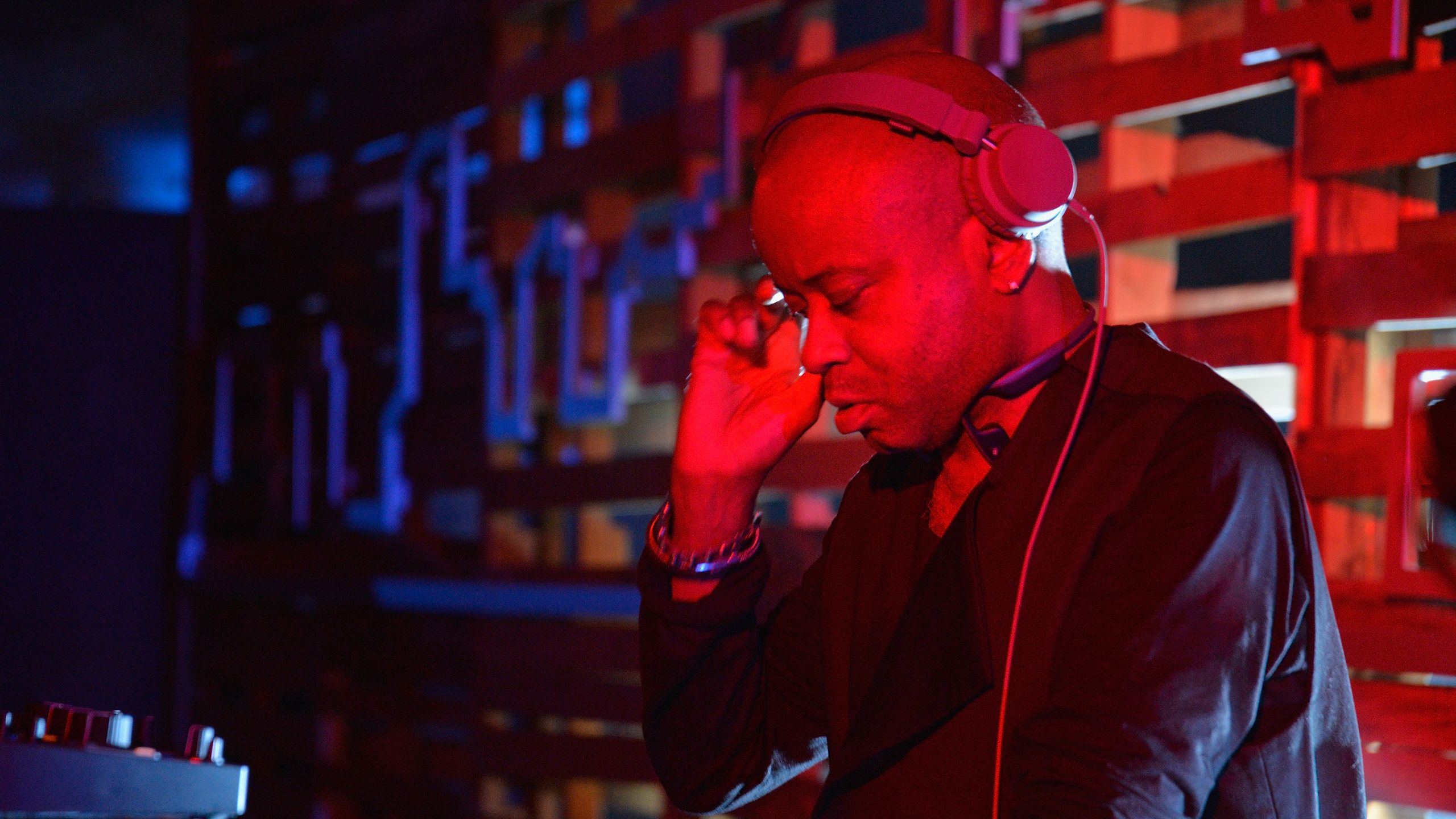
The passing of Juan Atkins marks the end of an era for the Detroit electronic community. His death has prompted an outpouring of grief from peers and contemporary artists who recognize his foundational contributions. While official statements from his management confirmed the tragedy, the global electronic music industry has collectively begun to acknowledge the profound vacuum his absence creates.
From an analytical perspective, Atkins’ legacy is not found in the sales charts, but in the structural DNA of modern dance music. Every producer currently utilizing a digital audio workstation to sequence percussion or manipulate synthesized waveforms is, in some capacity, operating within the framework Atkins helped codify in the early 1980s. He transformed the synthesizer from a novelty instrument into a tool for emotional and social expression, effectively soundtracking the post-industrial decay and technological optimism of Detroit.
Furthermore, his influence on the European scene cannot be overstated. By forging deep connections with Berlin’s underground, Atkins ensured that the Detroit sound was not confined to a single city. This cross-pollination paved the way for the development of minimal techno and, later, the massive commercial expansion of EDM in the 21st century.
Remembering the Pioneer
The circumstances of his death in Mexico City—while preparing to step onto a stage—serve as a poignant reminder of his dedication to the craft. Even at 64, Atkins was an active, touring artist, still deeply involved in the culture he helped establish four decades prior.
The loss of Juan Atkins is a reminder of the fragility of the pioneers of electronic music. As the genre continues to evolve, the historical record of his contributions will likely be re-examined with even greater reverence. For now, his death leaves the music community in a state of reflection, looking back at a career that bridged the gap between the analog past and the digital future.
As the industry mourns, focus will likely shift to the preservation of his extensive archive. With a discography that spans over forty years and numerous aliases, the challenge for music historians and archivists will be to ensure that the depth of his contribution—from his early days with Cybotron to his late-career collaborations—is properly cataloged and recognized.
The legacy of Juan Atkins is not a static point in time, but a continuous loop. Through his record label, his collaborations, and the thousands of hours of music he leaves behind, the "Originator"—a nickname he earned for his pivotal role in the techno movement—will continue to influence the pulse of dance floors across the globe. The music he championed, defined by its relentless drive and futuristic soul, remains a testament to his vision of a world where technology and human creativity are inextricably linked.