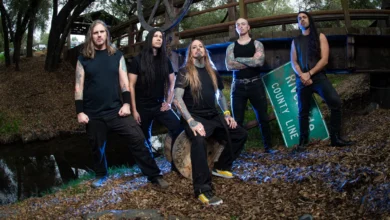
Poppy’s Upheaval Festival Performance Disrupted by Hazardous Wildfire Smoke, Forcing Instrumental Set Amidst Michigan Air Quality Emergency


The planned performance by genre-bending artist Poppy at Michigan’s Upheaval Festival on Friday, July 17, took an unexpected turn as severe wildfire smoke engulfed Grand Rapids, leading to "hazardous" air quality conditions and forcing the singer to withdraw from her scheduled set. The incident marks another significant disruption for Poppy this festival season, highlighting the increasing vulnerability of outdoor music events to extreme environmental factors. While Poppy herself was unable to take the stage due to the dangerous atmospheric conditions, her band bravely performed an instrumental set, donning respirator masks beneath their characteristic stage attire, a poignant visual testament to the challenging environment.
Unforeseen Environmental Challenges at Upheaval Festival
The Upheaval Festival, a prominent rock and metal event held annually in Grand Rapids, Michigan, was set to host a lineup of heavy-hitting acts, with Poppy scheduled to perform ahead of French progressive metal giants Gojira. However, the skies above West Michigan, and indeed much of the state, were clouded by thick haze, a direct consequence of ongoing wildfires, primarily originating from Canada. These wildfires have been a recurring and escalating issue across North America in recent years, with smoke plumes frequently drifting across borders and impacting air quality far from the fire lines.
On July 17, the Air Quality Index (AQI) in Grand Rapids soared to alarming levels, reaching and even exceeding 350 at points during Poppy’s scheduled performance slot. According to the U.S. Environmental Protection Agency’s (EPA) AirNow system, an AQI reading above 300 is classified as "Hazardous," representing the most severe category on the scale. This level triggers a "health warning of emergency conditions," where the entire population is deemed "more likely to be affected" by adverse health impacts. Fine particulate matter (PM2.5), the primary pollutant in wildfire smoke, is particularly concerning as its microscopic particles can penetrate deep into the lungs and even enter the bloodstream, posing serious risks to respiratory and cardiovascular health.
Poppy’s Withdrawal and Her Band’s Resilient Performance
Responding to the dire conditions, Poppy took to Instagram Stories to explain her unavoidable absence, stating, "Due to ‘hazardous’ AQI reaching 350+ around our set time I was unable to join my band on stage. I was unable to breathe in those conditions." Her candid statement underscored the immediate and severe health risks posed by the smoke. The decision to prioritize her health and safety, while disappointing for fans, resonated with the gravity of the environmental threat.
Despite Poppy’s necessary withdrawal, her band demonstrated remarkable resilience and dedication. They proceeded with an instrumental rendition of the planned set, a powerful display of commitment to the festival-goers who had braved the smoky conditions. The sight of the musicians performing in respirator masks, strategically worn beneath their usual stage masks, became an iconic and sobering image of the night. It visually communicated the extreme measures required to even attempt a performance in such an environment, drawing a stark picture of the challenges artists and crews face when confronted with climate-related disruptions.
Festival Organizers Grapple with Dynamic Conditions
Leading up to the event, Upheaval Festival organizers had issued communications to attendees, acknowledging the air quality concerns but indicating their intention for the festival to proceed. Their pre-event weather update assured fans that "Your safety is our number one concern" and advised attendees to pace themselves and look out for one another. At the time, officials were monitoring the situation, and available information suggested that air quality might improve throughout the day. However, as the afternoon progressed and evening performances neared, the anticipated improvement did not materialize, with conditions instead deteriorating to hazardous levels.
The challenges faced by festival organizers in such dynamic environmental scenarios are immense. Balancing the desire to deliver a promised event with the paramount responsibility for public health and safety requires constant vigilance and swift decision-making, often under pressure. The statewide air quality alert issued by Michigan authorities, coupled with forecasts from the West Michigan Clean Air Coalition predicting hazardous conditions in parts of the state and "very unhealthy" conditions across the Lower Peninsula on Friday, provided a clear context for the severity of the situation. While the festival continued, individual artists and crews were left to make difficult choices based on their direct assessment of the immediate risks.

A Troubling Trend: Environmental Disruptions in Live Music
This incident at Upheaval Festival is not an isolated event for Poppy, nor for the wider music industry. It marks the second time this festival season alone that environmental conditions have directly impacted one of her performances. In May, her set at Welcome to Rockville in Daytona Beach, Florida, was cut short less than a minute in due to severe weather and lightning protocols being activated. These repeated disruptions underscore a growing and concerning trend: outdoor music festivals and concerts are increasingly vulnerable to extreme weather events, ranging from torrential rains and lightning storms to heatwaves and, as seen in Grand Rapids, widespread wildfire smoke.
The implications for artists, promoters, and attendees are far-reaching. For artists, cancellations or truncated sets can disrupt touring schedules, impact revenue, and disappoint dedicated fans. For festival organizers, such events pose significant logistical and financial hurdles, including potential refunds, insurance claims, and reputational damage. For fans, the experience of travel, accommodation, and anticipation culminating in a partial or canceled show can be deeply frustrating. The industry is being forced to confront the realities of a changing climate, necessitating more robust contingency planning, advanced weather monitoring systems, and potentially a re-evaluation of outdoor event feasibility in certain regions or seasons.
Poppy’s Enduring Artistic Momentum Amidst Setbacks
Despite these environmental setbacks, Poppy continues to maintain a strong presence and significant momentum in the rock music landscape. Her recent chart successes on Billboard highlight her growing influence and critical acclaim. Her collaboration "End of You" with Evanescence’s Amy Lee and Spiritbox’s Courtney LaPlante, for instance, made an impactful debut at No. 1 on Billboard’s Hot Hard Rock Songs chart dated September 20, 2025. This track further etched its place in history on the Mainstream Rock Airplay chart, where Poppy, Lee, and LaPlante became the first three women or women-led acts to collectively top the ranking. This achievement is particularly significant in a genre traditionally dominated by male artists, signaling a shift towards greater diversity and recognition for female talent.
Poppy’s artistic evolution has been marked by a distinctive blend of heavy, industrial, and alternative sounds, constantly pushing boundaries and defying genre conventions. Her latest studio album, Empty Hands, released in January via Sumerian Records, serves as a testament to this continued creative trajectory. The album, which followed 2024’s Negative Spaces, features production from notable figures such as Jordan Fish and Stephen Harrison, further cementing her reputation for innovative and boundary-pushing musical output. These consistent artistic achievements and chart performances underscore her dedicated fanbase and critical appreciation, making the live performance disruptions even more impactful for those eager to experience her unique artistry firsthand.
Broader Implications and Future Adaptations
The incident at Upheaval Festival serves as a stark reminder of the escalating environmental challenges confronting the live entertainment industry. As climate change continues to manifest in more frequent and severe weather patterns, wildfire seasons intensify, and air quality deteriorates in various regions, festival organizers, artists, and attendees will increasingly need to adapt.
Future considerations for the industry might include:
- Enhanced Monitoring and Early Warning Systems: Implementing sophisticated, real-time environmental monitoring for air quality, severe weather, and other natural phenomena.
- Robust Contingency Planning: Developing comprehensive plans for partial or full event cancellations, including clear communication protocols, refund policies, and alternative indoor venue options where feasible.
- Venue Selection and Design: Re-evaluating the suitability of certain outdoor venues in specific seasons or regions, or exploring designs that offer better protection from environmental hazards.
- Artist and Crew Safety Protocols: Establishing clearer guidelines for performers and technical staff regarding safe working conditions under adverse environmental circumstances, including mandatory use of protective gear.
- Public Health Awareness Campaigns: Educating attendees on how to monitor local air quality and weather forecasts, and providing on-site resources like first aid stations equipped for respiratory issues.
- Sustainable Practices: Accelerating the adoption of sustainable practices within the festival ecosystem to mitigate the industry’s own environmental footprint.
While the immediate disappointment for fans and artists is undeniable, these events also foster a heightened awareness of environmental issues. They compel the music industry, known for its ability to reflect and influence cultural shifts, to actively engage with and adapt to the realities of a changing planet, ensuring the long-term viability and safety of live music experiences for all. The image of Poppy’s band performing through respirator masks will likely endure as a powerful symbol of this new era of environmental resilience in live performance.