88emu, Noise Engineering Legio, Organic Sequencing & More: Synth Journal


The modern landscape of electronic music production and sound design is currently experiencing a fascinating convergence of nostalgic emulation, generative hardware innovation, and modular flexibility. As software developers and hardware manufacturers continue to push the boundaries of what is possible in both digital and analog realms, recent weeks have brought a wave of significant announcements. From the revival of coveted 1990s video game sound modules to massive firmware expansions for established Eurorack platforms, creators have a wealth of new tools at their disposal. This edition of Synth Journal explores four standout developments shaping the current trajectory of music technology: The Usual Suspects’ 88emu project, Human Motives’ botanical hardware sequencer, Noise Engineering’s unprecedented firmware drop for the Legio series, and Shakmat Modular’s multi-engine percussion module, Lancer’s Lash.
The Usual Suspects 88emu: Reengineering the Sound Canvas Legacy
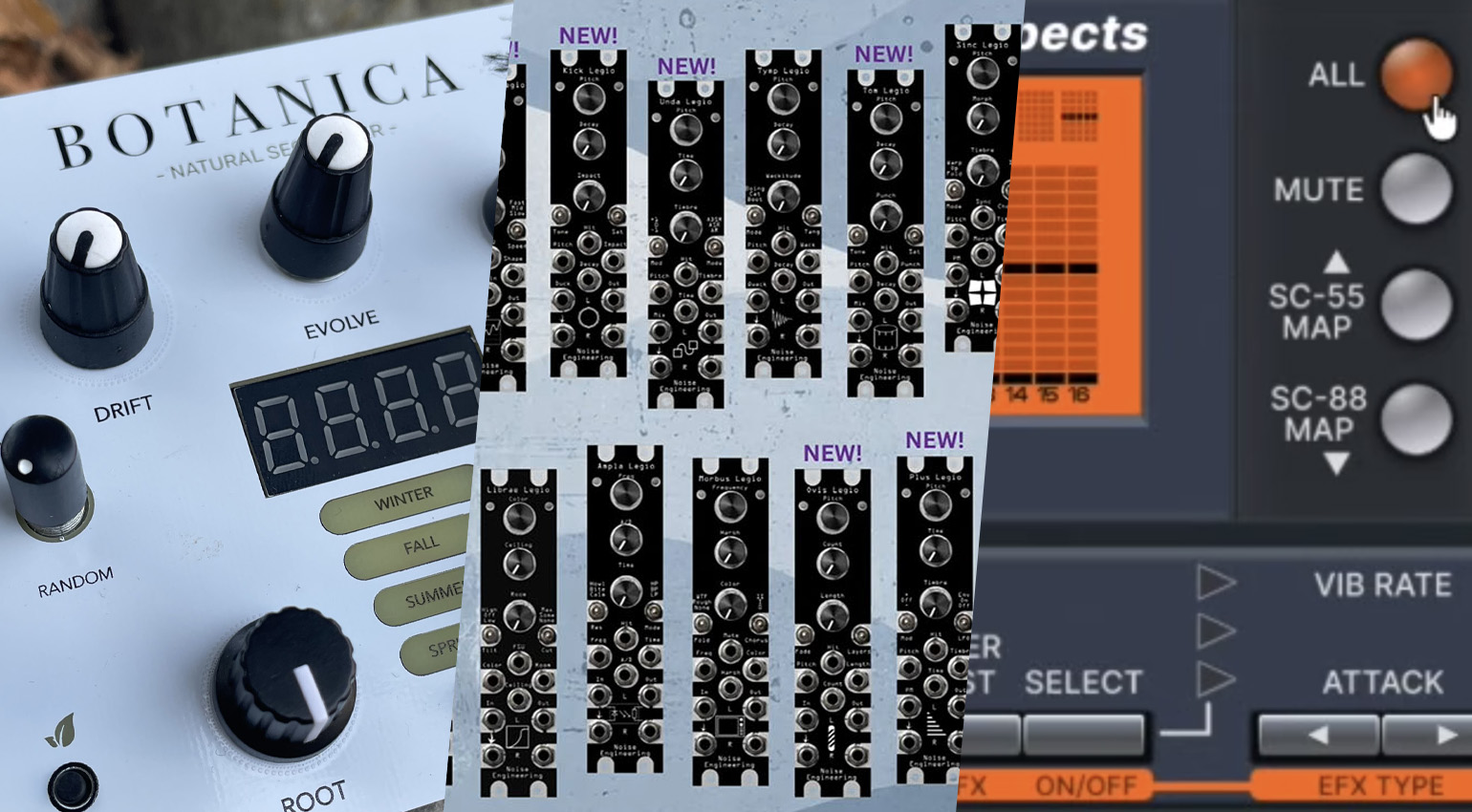
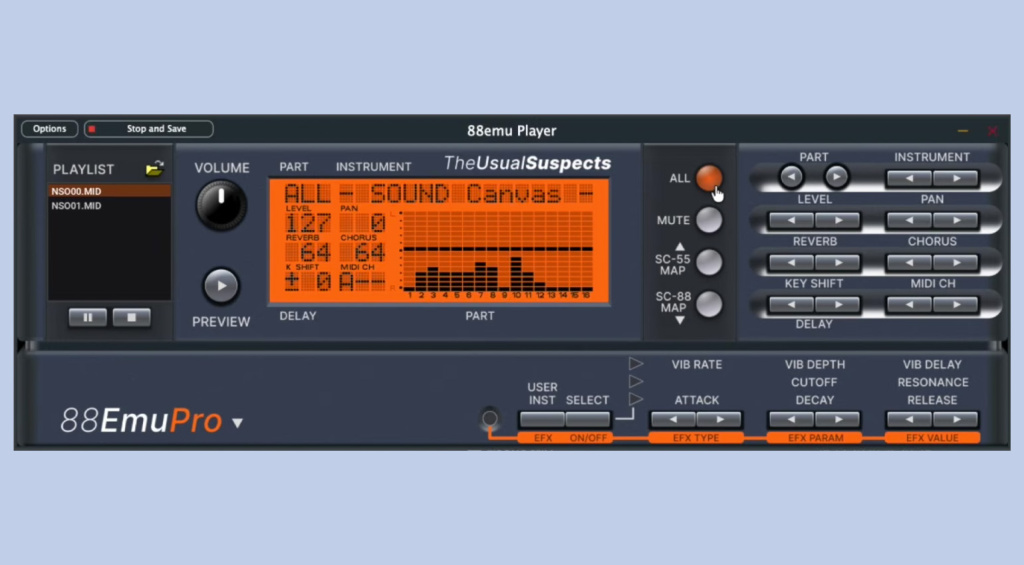
Long before modern video games featured fully orchestrated cinematic scores recorded by live symphony orchestras, the sonic identity of 1990s PC gaming, multimedia applications, and early home studio compositions was defined by a single piece of hardware: the Roland Sound Canvas series. Models such as the SC-55 and SC-88 became the gold standard for General MIDI playback, providing the iconic soundtracks for countless role-playing games, strategy titles, and MIDI files distributed across early bulletin board systems and the nascent internet.
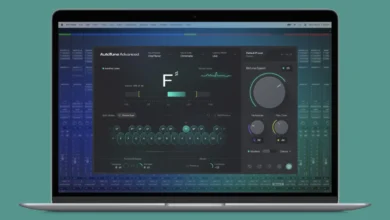
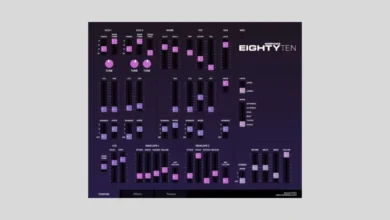
Following their recent development teasers for the Blue Giant—an upcoming software emulation of the legendary Novation Supernova synthesizer—developer collective The Usual Suspects has turned its attention to the Roland Sound Canvas lineage. Entering early alpha testing, their new software plugin, 88emu, aims to fill a long-standing void in the market for authentic retro sound module emulators.
Unlike traditional sample-based virtual instruments that merely load static audio recordings of the original ROM presets, the 88emu Player employs a meticulous, reverse-engineered low-level hardware emulation approach. By recreating the internal architecture and synthesis behavior of the original Roland hardware chips, the software achieves a level of authenticity that surpasses even Roland’s own officially released, yet now discontinued, Virtual Sound Canvas. This granular approach ensures that timing nuances, filter behaviors, and multi-timbral polyphony characteristics match the vintage hardware as closely as possible. Currently, the 88emu Player remains in a closed alpha phase, accessible primarily to dedicated project supporters via the development team’s community Discord channel, with a wider public release anticipated following further stability testing.
Botanica: Cultivating Generative Melodies in Hardware
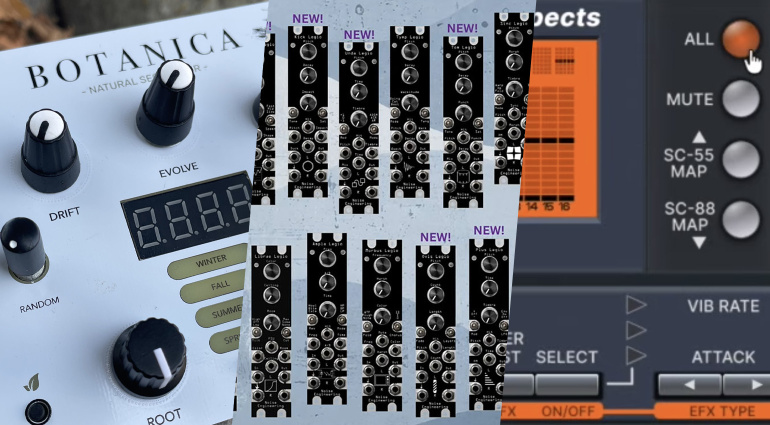
While software developers look backward to preserve historical synthesizer architectures, hardware designers are increasingly exploring novel interfaces for real-time generative composition. Among the most imaginative upcoming hardware releases is Botanica, a standalone generative sequencer currently in development by Dutch multidisciplinary artist and designer Human Motives.
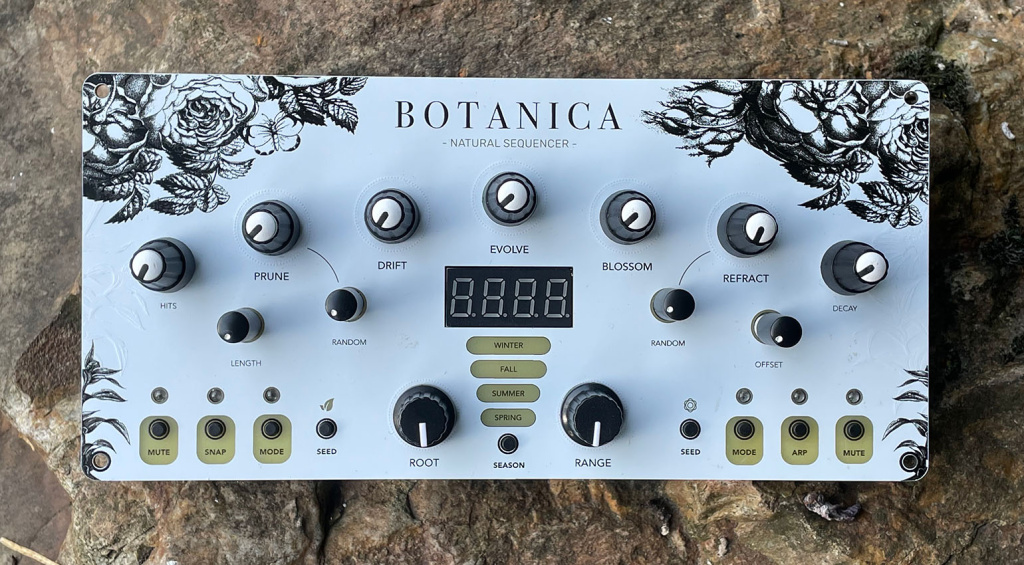
Conceived as an organic instrument designed to grow simple musical patterns into sprawling, evolving compositions, Botanica departs radically from traditional grid-based or step-sequencing paradigms. The device’s physical interface features a dedicated "Season" button—allowing users to switch between Winter, Fall, Summer, and Spring—which fundamentally alters the underlying harmonic structures and scalar ranges of the generated sequences.
Botanica is designed to function as a self-contained music production unit thanks to a built-in internal synth voice. The creative workflow centers on the "Seed" button: users define a root note, a pitch range, and a scale (or season), and the device takes over, generating evolving melodic phrases of up to 64 steps in length. Performance interaction is handled through a series of tactile controls carrying unconventional, horticultural-inspired nomenclature, including "Prune," "Blossom," "Evolve," and "Refract." These parameters allow musicians to dynamically prune unwanted notes, encourage harmonic growth, or mutate rhythmic phrasing on the fly. Currently progressing through the prototype phase, Botanica represents a compelling intersection of generative algorithmic composition and organic, tactile hardware design.
Noise Engineering Legio Series: Sixteen New Firmwares Expand Modular Horizons
In the realm of Eurorack modular synthesis, Noise Engineering has long been recognized as a pioneer of swappable firmware architecture. Through their Versio, Alia, and Legio platforms, the manufacturer introduced a consumer-friendly hardware philosophy: purchase a single physical module, and gain access to an entire ecosystem of distinct operational personalities simply by flashing new firmware via a web browser. Printable panel overlays ensure the hardware remains clearly labeled regardless of its current software state.
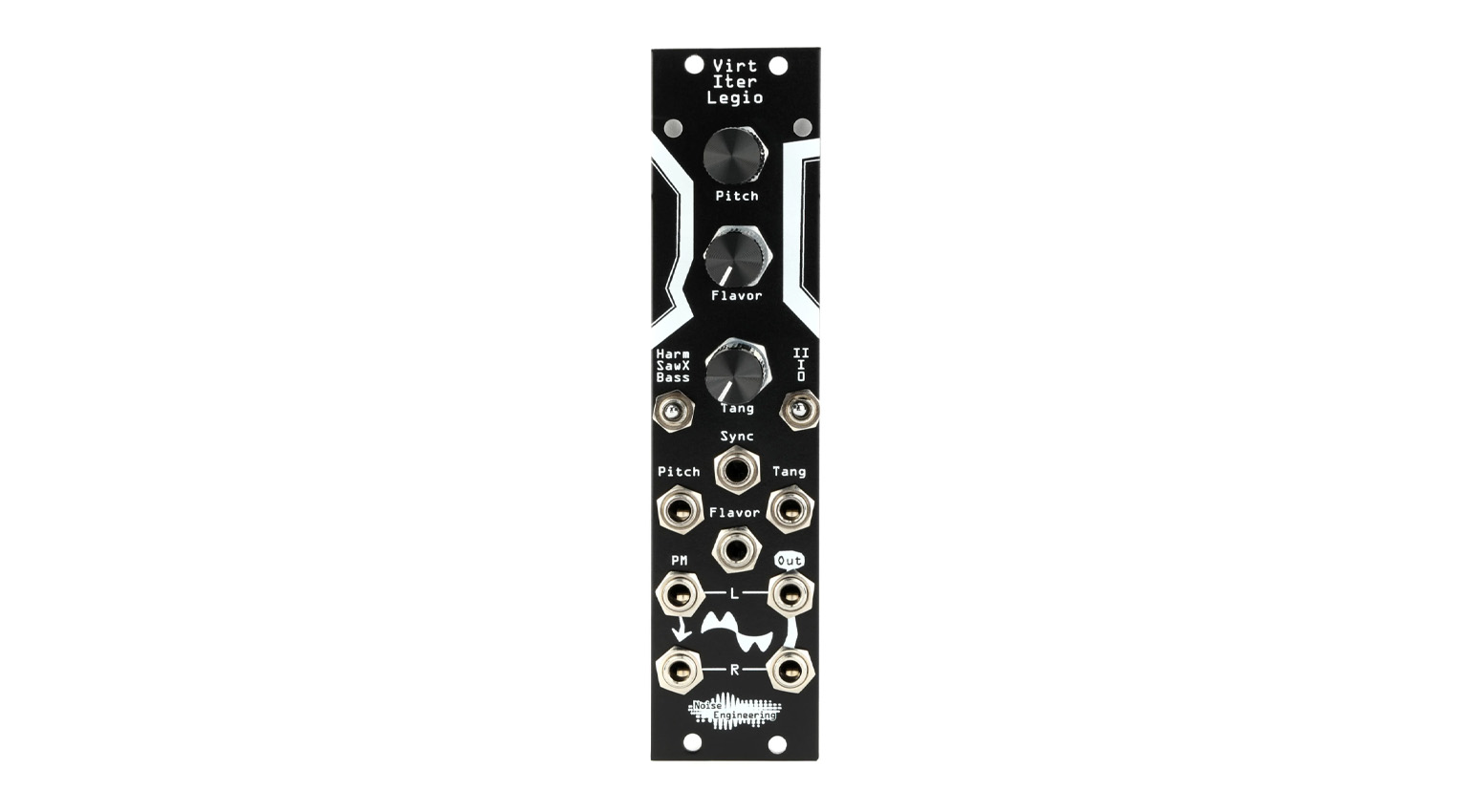
The Legio platform, housed in a compact 6 HP format, stands out as the most space-efficient of these families. Featuring three primary control knobs with dedicated control voltage (CV) inputs, a gate/trigger input, two toggle switches, and stereo inputs and outputs, every Legio module shares identical core hardware.
In a massive update for modular synthesizer enthusiasts, Noise Engineering has released sixteen brand-new firmwares for the Legio series simultaneously, bringing the platform’s total software library to 23 distinct modules. This unprecedented expansion transforms the utility of a single physical purchase. Among the new additions are advanced oscillator models featuring phase modulation, Karplus-Strong physical modeling, and additive synthesis architectures. Furthermore, the update introduces a comprehensive suite of dedicated drum and percussion voices, alongside specialized dynamics processing and spatial effects. Modular practitioners can now theoretically configure an entire percussion-focused Eurorack setup using identical Legio hardware modules running different firmware variants. The complete library of new firmware updates is available immediately via the official Noise Engineering website.
Shakmat Modular Lancer’s Lash: A Multi-Engine Eurorack Snare Solution

Complementing the broader expansion of modular percussion tools, Shakmat Modular has introduced Lancer’s Lash, a powerful and versatile snare drum module designed for Eurorack systems. Serving as a natural companion to the manufacturer’s previously released Battering Ram kick drum and Archer’s Rig hi-hat modules, Lancer’s Lash tackles one of the most demanding synthesis tasks in electronic percussion: generating a convincing, highly expressive acoustic or electronic snare sound within a compact 8 HP footprint.
Lancer’s Lash achieves its sonic versatility by incorporating multiple distinct synthesis engines. Users can choose between virtual analog models inspired by classic vintage drum machines, a Modal synthesis model that meticulously recreates the physical harmonic resonances of an acoustic snare drum, resonator-based physical modeling, frequency modulation (FM), granular synthesis, and a sample-based Blend model that emulates the crunchy character of vintage samplers.
To ensure that repetitive patterns avoid the mechanical monotony often associated with electronic percussion—frequently referred to as the "machine gun effect"—the module includes an integrated random modulation engine capable of introducing subtle, organic variations between consecutive hits. Each synthesis model is paired with a dedicated suite of internal effects, including waveshaping and distortion. Performance control is facilitated via dedicated audio outputs, trigger and velocity inputs, and comprehensive CV patch points covering Pitch, Decay, Timbre, Color, and Preset selection. Lancer’s Lash is currently available through major audio equipment distributors worldwide.
Broader Implications and Industry Trends
The simultaneous arrival of these hardware and software milestones highlights several broader trends within the contemporary music technology market. First, the appetite for historical preservation—exemplified by The Usual Suspects’ deep emulation work—demonstrates that vintage digital architectures hold as much cultural and sonic currency for modern producers as traditional analog circuits. Second, the shift toward multi-purpose modular hardware, as seen in Noise Engineering’s massive firmware expansion and Shakmat’s multi-engine percussion design, reflects a growing consumer demand for maximum functional flexibility within increasingly compact physical footprints. As generative sequencing concepts like Human Motives’ Botanica continue to bridge the gap between algorithmic automation and tactile performance, the boundaries between sound design, composition, and interactive hardware engineering remain as porous and innovative as ever.